


Flemish Brass Lighting
These pieces of flemish brass lighting bring heavy metal warmth and historic candlelight engineering straight into modern rooms.
Flemish Brass Lighting
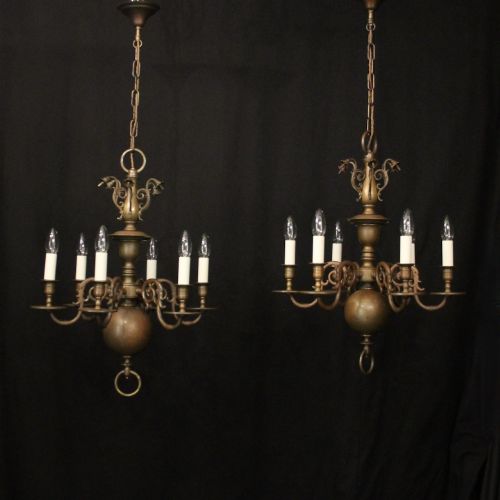
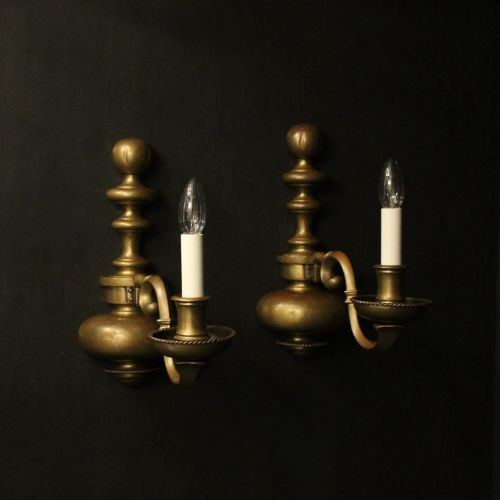
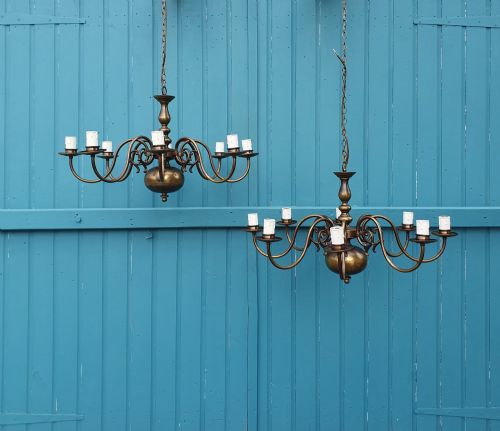
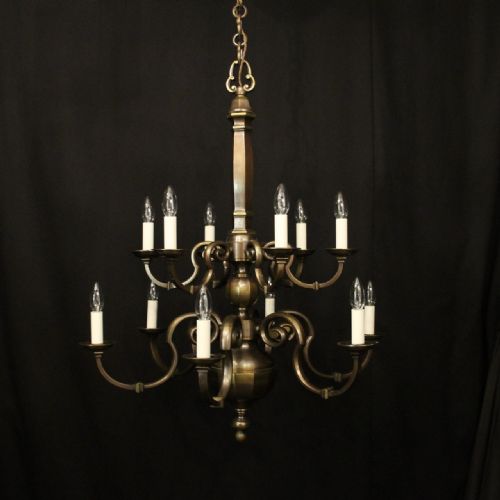
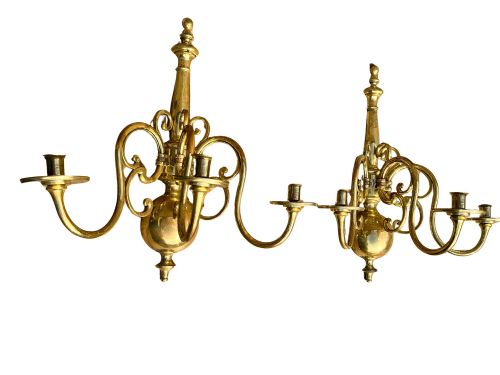
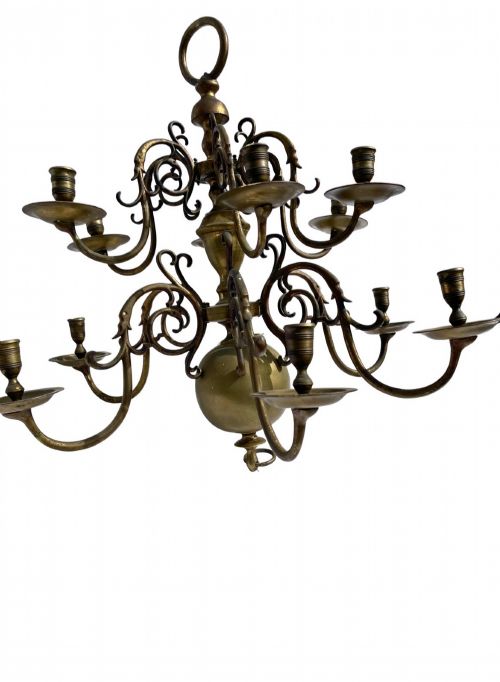
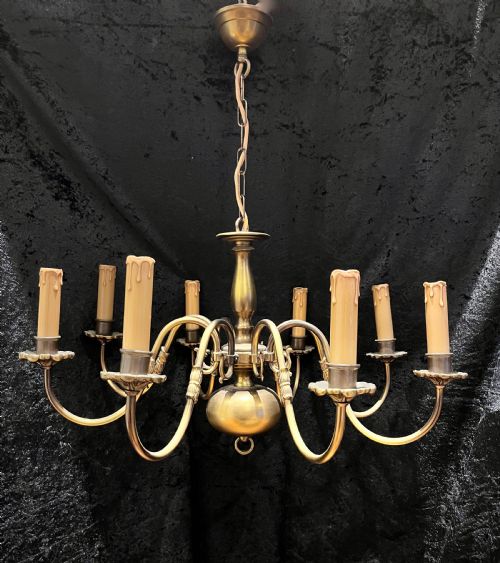
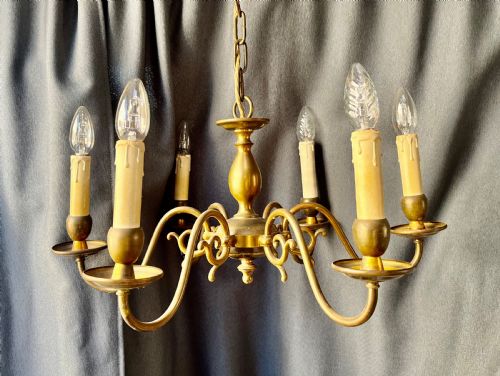
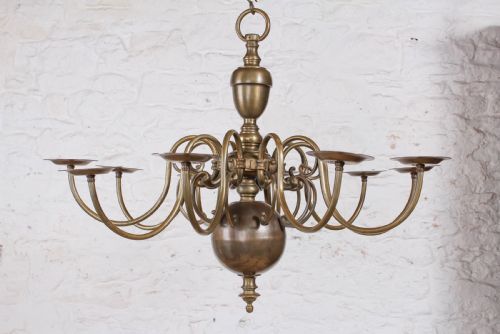
Flemish brass lighting encompasses multi-armed chandeliers, wall sconces, and pricket candlesticks originating from the Low Countries or following historic Dutch and Flemish Baroque styles. The selection ranges from robust seventeenth-century originals to revival pieces produced through the Edwardian era and the early twentieth century.
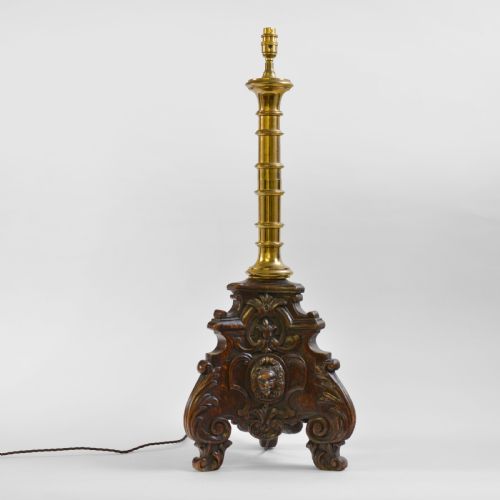
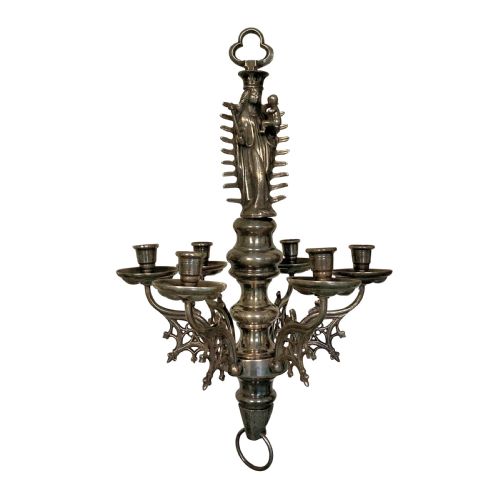
Chandeliers dominate the offerings, appearing in configurations from three branches up to large twelve-arm designs, alongside smaller wall brackets and table lamps. Buyers encounter both solid brass construction and silver-plated variations, reflecting domestic and ecclesiastical origins across several centuries.
How they were made
The primary metalwork relies on cast and turned brass, utilising techniques developed by metalworkers in the Low Countries over centuries. Secondary materials such as carved oak and glass appear alongside the dominant metal structures.
Surface treatments include silver plating over a brass base for specific ecclesiastical or high-status pieces, while structural components are joined using period mechanical fasteners and traditional assembly methods.
Some seventeenth-century candlesticks have survived centuries of use simply because someone dropped them behind a heavy oak panel.
What varies in quality
Quality rests on the crispness of the original casting and the integrity of the metal components across the arms and central stems. Period originals from the seventeenth and eighteenth centuries display hand-finished surfaces that differ noticeably from later twentieth-century revival interpretations.
The weight of the solid brass and the proportion of the branches dictate the visual balance of the piece, particularly in larger multi-tier chandeliers where structural harmony is essential.
The Flemish Brass Lighting Glossary
- Pricket
- A sharp metal spike on a candlestick designed to secure the base of a candle. This form is common in early ecclesiastical lighting before socket candlesticks became standard.
- Collar
- A prominent raised ring or band encircling the stem of a candlestick. It serves both a structural reinforcement purpose and a decorative transition.
- Chandelier
- A branched suspended lighting fixture designed to hold multiple candles or lamps. Historic examples use heavy central stems with scrolling arms.
- Baroque
- An ornate design style spanning the seventeenth and eighteenth centuries characterised by dynamic movement and rich surface detail. Flemish and Dutch variations emphasise robust, curving brass forms.
Flemish Brass Lighting: Frequently Asked Questions
How do I hang a heavy brass chandelier?
Historic brass fixtures require secure ceiling joist attachment and appropriate structural hooks to support their considerable metal weight.
Professional installation ensures the internal wiring and structural suspension meet modern safety standards without compromising the historic stem.
Are these lights wired for electricity?
Many surviving chandeliers and wall brackets have been adapted for electric lighting during the twentieth century while retaining their original brass bodies.
Conduit and wiring are routed carefully through the central columns and arms to preserve the external historic appearance.
How do I clean antique brass?
Dusting with a soft dry cloth maintains the surface without removing the aged patina that accumulates over centuries of handling.
Avoid aggressive chemical polishes that strip the historic surface character from seventeenth and eighteenth-century metalwork.
How do I identify a seventeenth-century piece?
Early pieces from the Low Countries show distinct casting irregularities, hand-finished tool marks, and specific pricket or collar configurations typical of the period.
Comparison with documented examples from the Low Countries helps distinguish seventeenth-century originals from later revival work.