

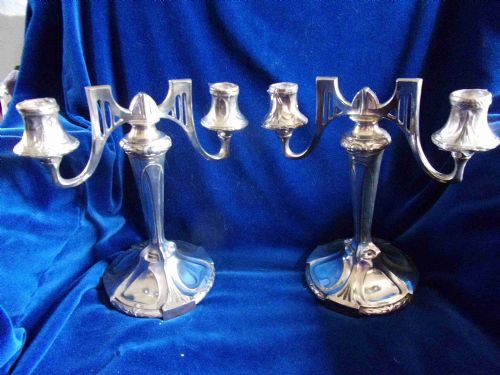


Silver Plated Candelabra Light
These silver plated candelabra light pieces bring polished presence to a dining table, and you are most likely to meet Victorian and Edwardian examples here.
Silver Plated Candelabra Light
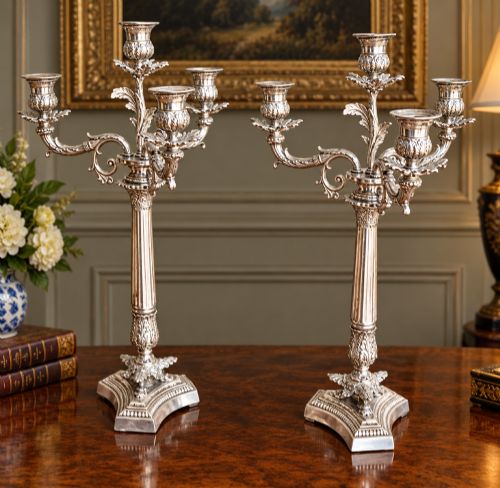
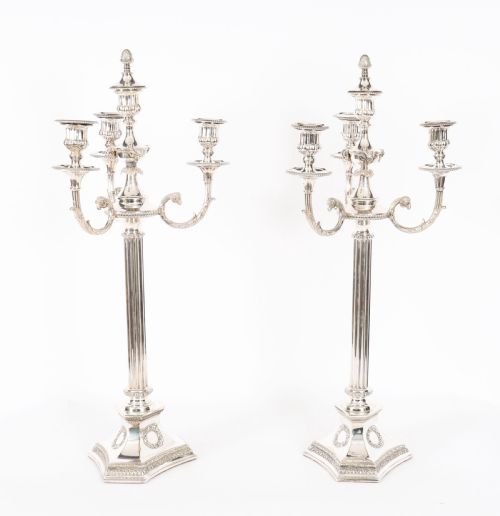
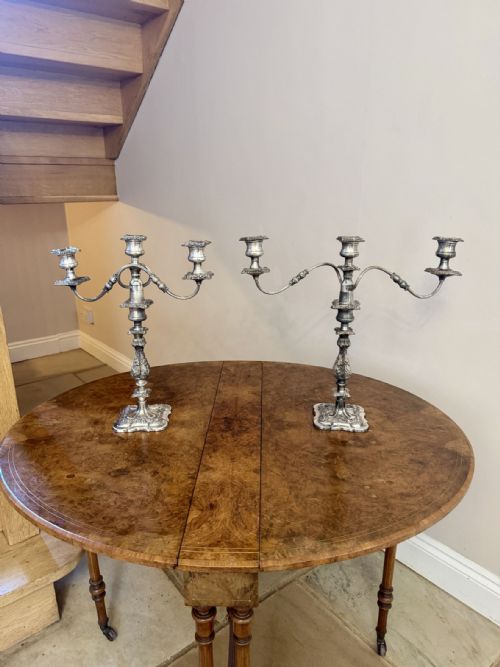
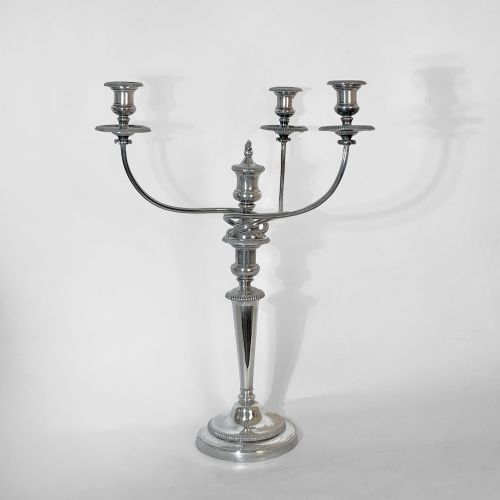
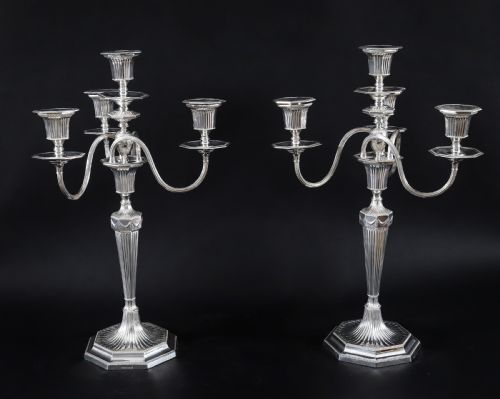
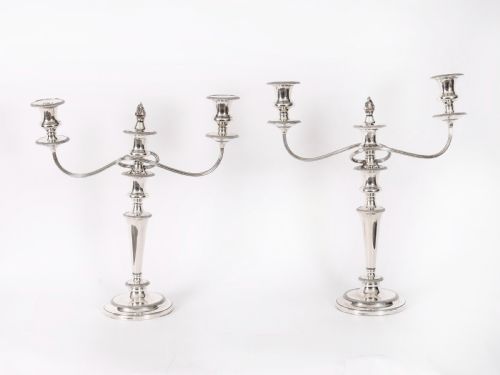
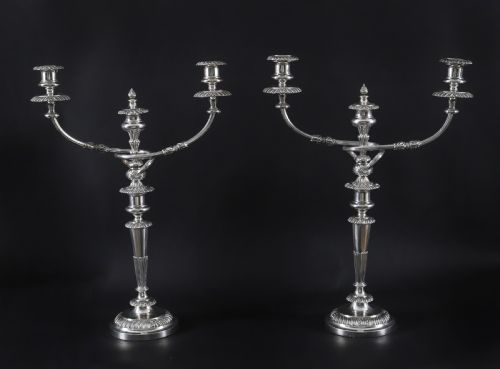
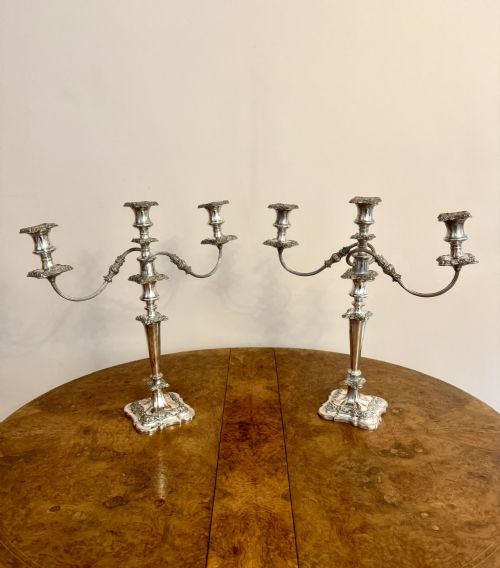
A silver plated candelabra light provides multi-flame illumination through branched arms held on a central column or base, often doubling as a formal table centrepiece. These items appear primarily in Victorian and Edwardian iterations alongside earlier Georgian and Regency designs.
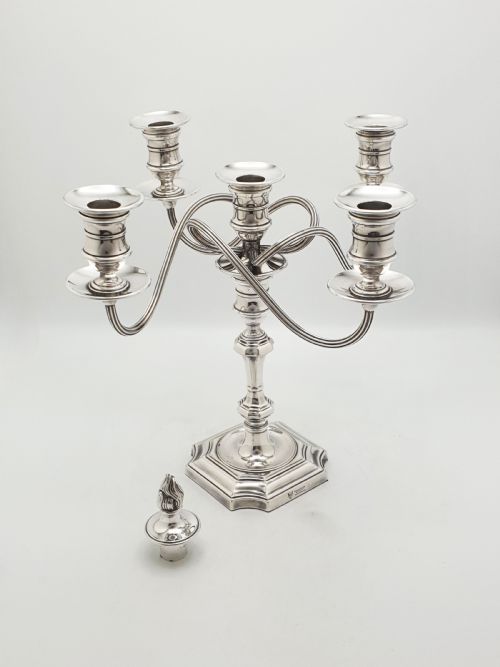
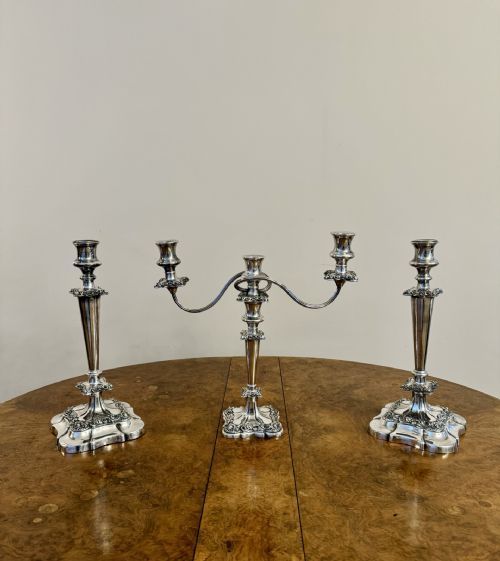
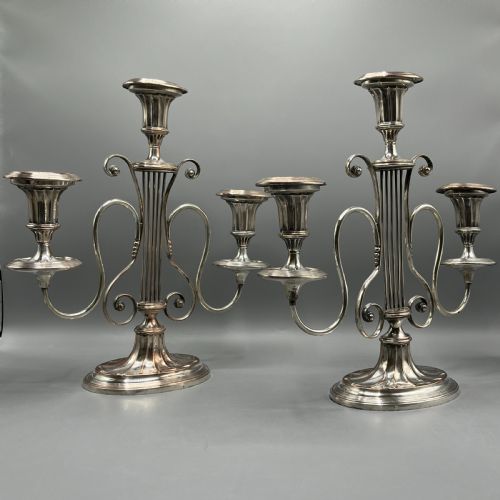
The selection ranges from two-light table pieces to grand multi-branch suites, incorporating detachable sconces and circular or lyre-shaped bases. Wall sconces, chandeliers, and standard lamps also surface among the traditional candelabra forms.
Makers utilised copper, brass, and nickel silver as base metals beneath the silver plating, leading to varied patinas across different production decades. Buyers find both matching pairs and single centrepiece items suited to dining rooms.
How they were made
Early items rely on Old Sheffield Plate production, fusing a thin sheet of silver onto a copper core before shaping and soldering the structural components. This method yields distinct warm copper tones showing subtly through worn highlight edges.
Later nineteenth-century pieces adopt electroplated nickel silver, known as EPNS, depositing a uniform silver layer over a hard white metal base via an electrical current. Manufacturers combined this plating technique with heavy cast ornamentation, including figural cherubs, floral scrolls, and classical motifs.
Listings feature items spanning the eighteenth, nineteenth, and early twentieth centuries, utilising copper, brass, and silver plate.
What varies in quality
The weight and balance of the branched arms dictate the structural integrity of a piece, distinguishing sturdy formal items from lighter domestic variations. Solid casting at the junctions prevents drooping over decades of holding heavy candles.
The thickness and preservation of the silver coating determine the longevity of the surface finish. Pieces retaining crisp, deep chasing on the original mounts demonstrate superior workshop execution.
Hawksworth Eyre·Garrard & Co·Matthew Boulton·Smith & Sissons & Co·Barker Ellis·Elkington·Blagden Hodgson & Co·A G Dufva·Hodd & Linley·Tiffany
The Silver Plated Candelabra Light Glossary
- Old Sheffield Plate
- An early method of fusing silver to a copper ingot before rolling them into sheets together. This technique creates a distinctive edge where the underlying copper shows through.
- EPNS
- Electroplated Nickel Silver, a durable base metal alloy coated in silver using an electrical current. It became widely adopted during the Victorian era for mass-produced tableware.
- Candelabra
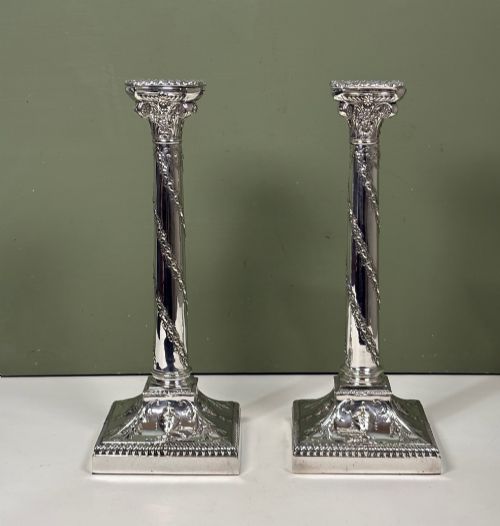
- A branched candlestick holder designed to support multiple candles simultaneously. Many examples feature removable upper branches to convert into simple single candlesticks.
- Sconce
- A wall-mounted bracket fixture designed to hold candles or lights. These pieces project outward to cast illumination across surrounding wall panels.
Silver Plated Candelabra Light: Frequently Asked Questions
What is Old Sheffield Plate?
Old Sheffield Plate is an early composite material made by thermally fusing a sheet of silver to a thick copper ingot. This combined metal was then rolled into thin sheets for silversmiths to fashion into lighting.
The resulting items display subtle warmth where the copper base naturally shows through the thinning silver at high points over time.
How do I clean plated candelabras?
Clean silver plated candelabras gently using a soft cloth and a mild cream specifically formulated for silver plate. Avoid harsh abrasive dips that strip away the remaining metal layer.
Regular, light dusting prevents tarnish build-up in the intricate crevices of Victorian and Edwardian cast ornamentation.
Are the branched arms removable?
Many multi-light candelabras feature detachable upper arms fitted into a central socket. This allowed Victorian households to convert the lighting piece into a standard pair of candlesticks.
Checking the central well reveals whether the design was intended to transform between a single taper holder and a branching display.
How can I tell the period?
Dating relies on stylistic clues like neoclassical urns, Regency lyres, or heavy Victorian Rococo Revival scrolls, paired with base metal characteristics. Electroplated nickel silver markings typically point toward the later nineteenth and early twentieth centuries.
Maker marks stamped into the undersides provide direct attribution to specific workshops operating during those decades.