





Victorian Ecclesiastical Lighting
Victorian ecclesiastical lighting brings heavy brass, bronze and Gothic revival design into domestic spaces through authentic church candlesticks, lamps and chandeliers.
Victorian Ecclesiastical Lighting
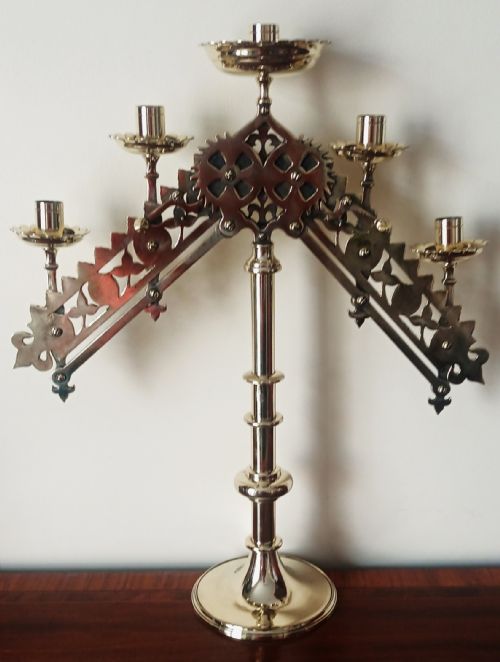
Victorian ecclesiastical lighting encompasses heavy metal church furnishings adapted for devotional or domestic use. When searching for victorian ecclesiastical lighting, buyers encounter large altar sticks, pricket candlesticks, candelabra and chandeliers originating from the nineteenth century.
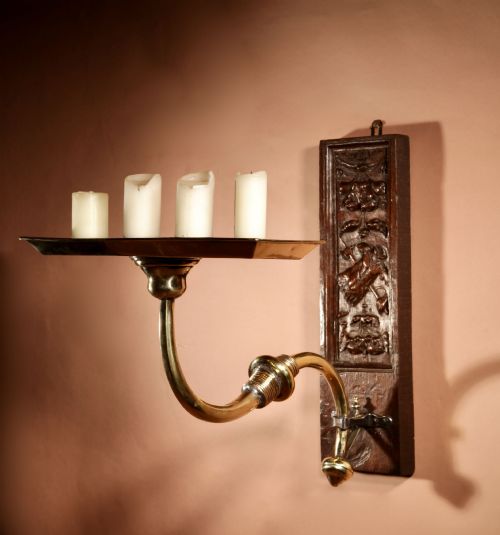
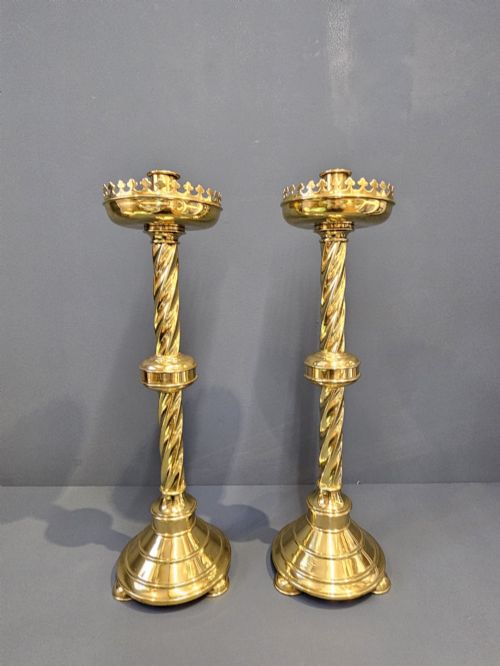
The objects listed on this page lean heavily towards brass and bronze construction under Gothic revival and Victorian styles. Candlesticks and candle holders dominate the current selection, alongside occasional chandeliers and wall sconces.
Many surviving pieces date from the mid-nineteenth century up to nineteen-thirty, reflecting long periods of use in chapels and churches. Makers such as Joseph Wilmotte and T Thomason & Co occasionally mark these substantial devotional pieces.
How they were made
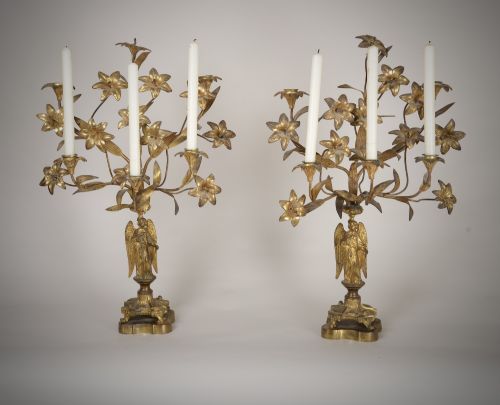
Makers utilised cast brass, bronze and gilt brass to build rigid, heavy frames designed to support large candles safely on altars. Metal components were often assembled in sections, allowing for articulated joints or multi-tiered candelabra arms.
Surface treatments included enamelling and gilding over bronze and brass bases, while auxiliary elements incorporated oak timber and fabric components. Some later conversions paired heavy metal candle holders with opaline glass or silk fringe lamp fittings.
Victorian Ecclesiastical Lighting Retail Price Guide 2026
Typical asking prices for victorian ecclesiastical lighting among the pieces listed under this phrase on Sellingantiques today, from the lower quarter to the upper quarter. They describe what is for sale here now, not the wider market.
Listings span from the nineteenth century into the twentieth, featuring brass, bronze, oak and opaline materials under Gothic revival styles.
What varies in quality
The distinction between ordinary production and high-grade ecclesiastical metalwork lies in the crispness of the Gothic casting and the heft of the bronze or brass used. Ornate piercing, clean chasing on the metal surface, and complete matching sets separate superior altar pieces from standard single sticks.
Maker attribution elevates certain pieces above anonymous foundry output, particularly when names like Joseph Wilmotte or T Thomason & Co are associated with the metalwork. The structural integrity of articulated arms and heavy pricket spikes also dictates the desirability of surviving items.
Joseph Wilmotte·T Thomason & Co
The Victorian Ecclesiastical Lighting Glossary
- Pricket candlestick
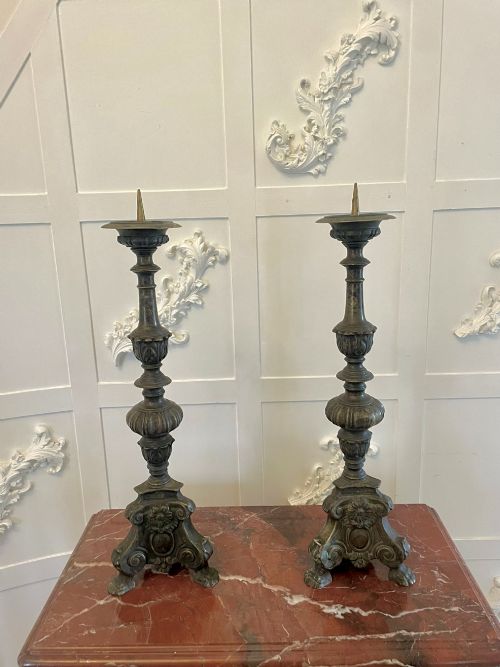
- A candlestick featuring a sharp metal spike on top to secure a candle, commonly found on church altars. This design ensures thick wax candles remain upright during long services.
- Gothic revival
- An architectural and decorative style popular during the nineteenth century that mimics medieval pointed arches, tracery and vertical lines. It heavily influences the ornamentation on church metalwork.
- Candelabra
- A branched candlestick holding multiple candles on separate arms. These large metal fixtures were designed to illuminate deep chancels and altars.
- Gilt brass
- Brass that has been treated with a thin layer of gold or gold-coloured wash to enhance its lustre. This finish provides a rich sheen without the full cost of solid gold.
Victorian Ecclesiastical Lighting: Frequently Asked Questions
What is a pricket candlestick?
A pricket candlestick uses a sharp metal spike instead of a socket to hold the candle in place. This design was standard for large altar candles in nineteenth-century churches.
Today, these heavy metal spikes give church candlesticks a distinct silhouette that sets them apart from standard domestic table lighting.
How do I convert church lights to lamps?
Conversion usually involves running electrical wiring through the hollow central shaft of a brass candlestick or mounting a bulb fitting securely to the top. Many pieces retain their original pricket spikes while serving functional table lamp roles.
Careful adaptation preserves the antique metal body while adding modern domestic utility to heavy chapel furnishings.
Are these pieces solid brass?
The listings feature substantial items made predominantly from cast brass, gilt brass and bronze. These heavy metals provided the stability required for large church candlesticks and multi-branched chandeliers.
Occasional pieces incorporate wooden elements like oak alongside the predominant metalwork structures.
What defines the Gothic revival style?
Gothic revival design draws directly from medieval architecture, incorporating pointed arches, trefoils and heavy vertical proportions. Nineteenth-century ecclesiastical metalworkers applied these motifs heavily to church candlesticks and wall sconces.
This aesthetic gives the lighting its characteristic solemnity and ornate decorative detailing.