


Gothic Brass Candleholders
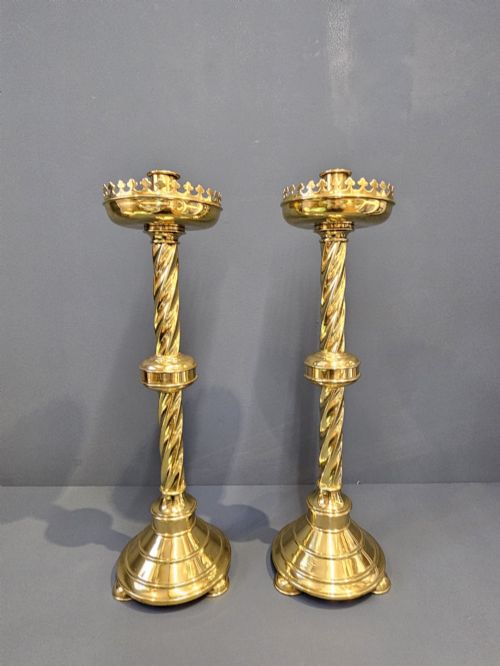
These gothic brass candleholders bring heavy ecclesiastical dignity to a room, forged in brass and bronze to anchor a dark mantelpiece.
Gothic Brass Candleholders
When you search for gothic brass candleholders, you encounter robust ecclesiastical metalwork shaped by Victorian revivalists and later makers. These pieces originate largely from the nineteenth century, drawing heavily on medieval church architecture and altar fittings.
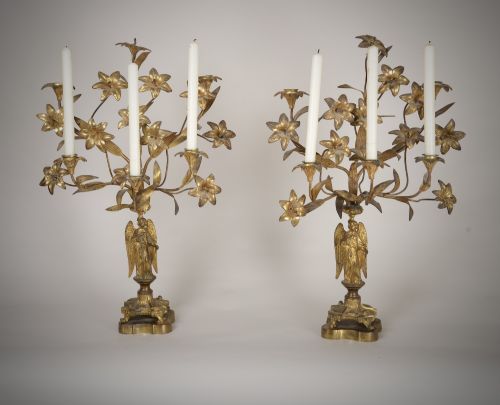
The selections on this page appear mostly as pairs of heavy candlesticks, alongside multi-branch candelabra, altar pieces, and wall sconces. Most carry strong architectural lines or figural details rooted in Gothic Revival, Renaissance Revival, and Arts and Crafts styles.
How they were made
Foundries utilised cast brass, solid bronze, and ormolu to achieve the substantial weight and sharp detail demanded by ecclesiastical designs. Many examples combine cast components with applied gilt or enamelled highlights to catch the flickering light.
Makers employed pricket tops, socket cups, and multi-tiered bases, assembling heavier pieces from multiple sections bolted together beneath the base. Surface finishes range from polished gilt-brass to patinated bronze and unpolished cast brass.
Solid bronze cobra candlesticks occasionally slither into the Gothic lineup, bringing an unexpected serpentine twist to the altar.
What varies in quality
Quality rests in the crispness of the casting and the thickness of the metal rather than surface shine alone. Earlier nineteenth-century examples often display sharper relief work in their Gothic tracery and deeper chasing on the brass stems.
Proportion and scale dictate the visual impact of a pair, with heavier, well-balanced altar pieces standing apart from lighter domestic adaptations. The integrity of the original assembly and the preservation of the patination define the better specimens.
T Thomason And Co
The Gothic Brass Candleholders Glossary
- Pricket
- A sharp metal spike on a candlestick designed to impale the base of a wax candle. This form derives directly from medieval church altars.
- Ormolu
- Finely ground high-purity gold applied to a bronze base using a mercury amalgamation technique. The method creates a durable, warm metallic lustre.
- Candelabra
- A branched candlestick holding multiple candles on separate arms. These pieces offer greater light output than single sticks.
- Gothic Revival
- An architectural and decorative style reviving medieval forms, pointed arches, and ecclesiastical motifs. It dominated nineteenth-century design.
- Wall Sconce
- A light fixture affixed directly to a wall surface to hold candles or lamps. They project outwards to illuminate hallways and parlours.
Gothic Brass Candleholders: Frequently Asked Questions
How do I clean them?
Dust gently with a soft dry cloth to preserve the natural patination built up over decades. Avoid aggressive metal polishes that strip away the aged character from recessed cast details.
Water and harsh chemicals can damage enamel or lift delicate gilt surfaces. Let the metal age naturally rather than seeking a bright mirror finish.
Are they safe for modern candles?
Standard taper candles fit most socket styles, though pricket sticks require candles with a hollow base or pierced centre. Ensure the candle sits firmly on the spike before lighting.
Keep burning candles away from drafts and monitor the wax pool, especially on antique altar sticks with shallow drip pans.
How do I date an antique pair?
Examine the casting method, base construction, and screw threads beneath the piece. Nineteenth-century examples often use hand-cut threads and heavier sand castings.
Stylistic cues such as Arts and Crafts restraint or heavy Victorian Gothic ornamentation help narrow the period alongside maker marks where present.
Where should I place them?
These substantial pieces anchor a mantelpiece, sideboard, or heavy wooden dining table with vertical architectural presence. Their dark metal tones pair well with timber and stone surfaces.
Wall sconces suit hallways or flanking a fireplace where their reflective brass backplates amplify low evening light.