







Goldscheider Terracotta Statue
These goldscheider terracotta statue pieces bring expressive Art Nouveau and Victorian character to a room through finely modelled clay and painted detail.
Goldscheider Terracotta Statue
A goldscheider terracotta statue brings together late nineteenth and early twentieth century Austrian sculpture with detailed figurative design. Buyers seek these pieces for their strong representation of Art Nouveau and Classical Revival styles.
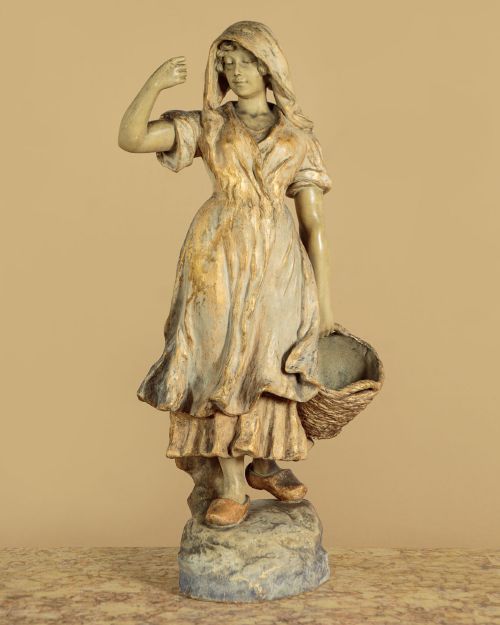
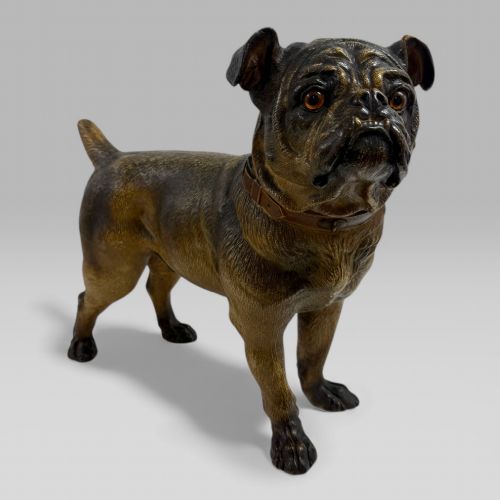
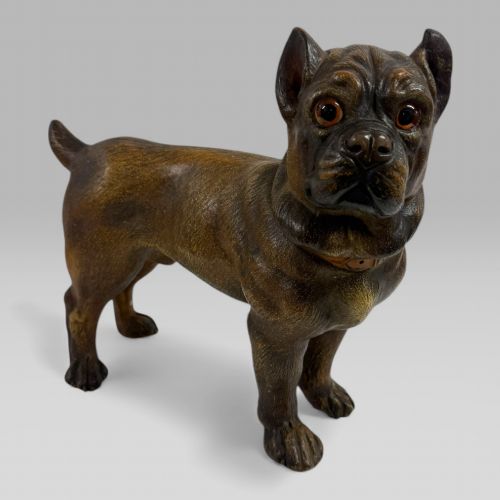
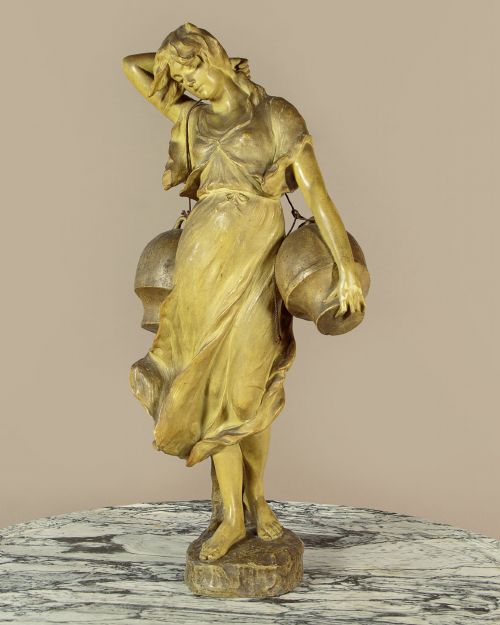
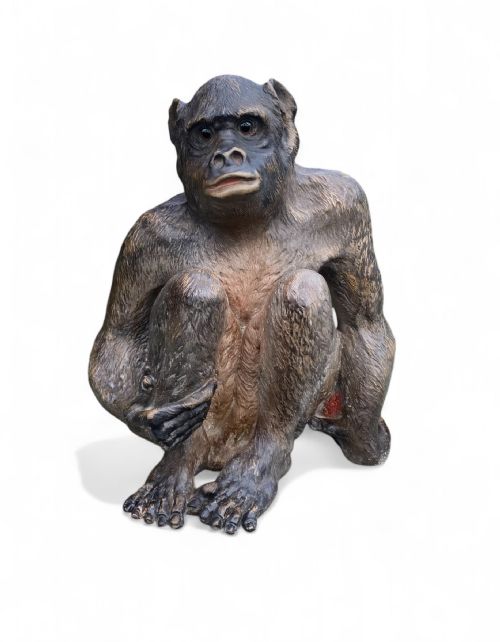
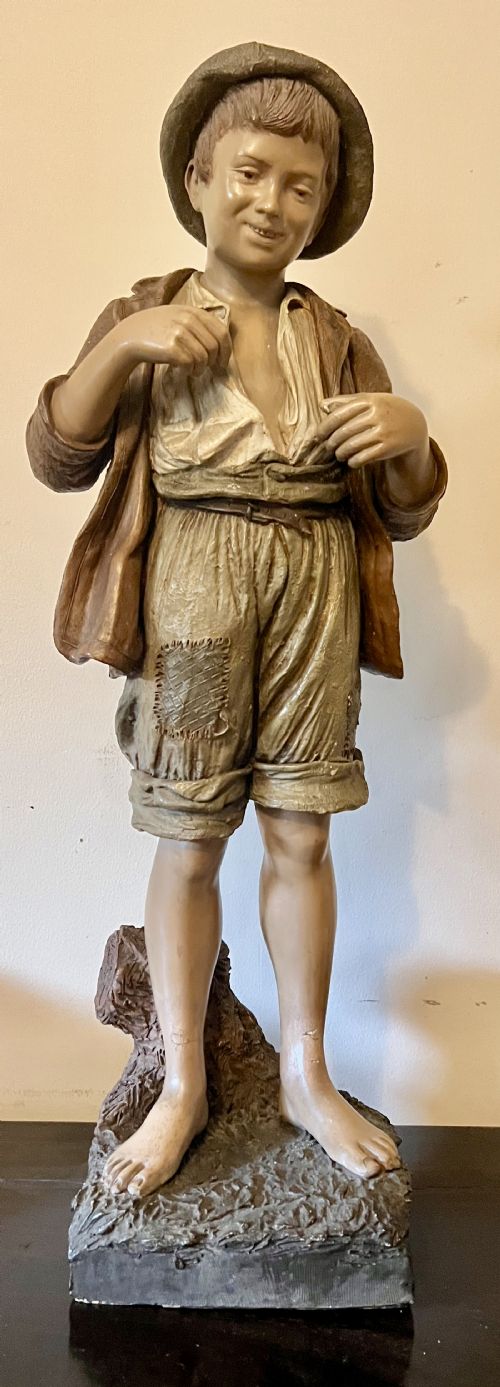
The selection here centres on figures of young women, country maidens, and water carriers, alongside animalier subjects such as pug dogs and chimpanzees. Most examples originate from the period around eighteen ninety to nineteen ten.
Life-size animal sculptures and larger human figures dominate the forms found in this group. These works demonstrate the ambition of the Vienna manufactory during the height of its production.
Materials and production methods
Makers utilised slip casting and modelled terracotta to shape the sculptural body of each piece. This technique allowed the Vienna factory to capture intricate details in the clay before firing.
Surfaces were finished with polychrome paint, pigments, and bronzed finishes to create lifelike skin tones and textured clothing. Some examples also incorporate glazed ceramic elements alongside painted decoration.
Alongside classical maidens and elegant figures, the Vienna manufactory produced a life-size terracotta chimpanzee with undeniable charm.
Assessing quality and execution
The preservation of original polychrome pigment and surface details dictates the distinction between standard production pieces and exceptional workshop examples. Wear to delicate painted areas alters the visual balance of the figure.
Friedrich Goldscheider·Frederic Goldscheider
The Goldscheider Terracotta Statue Glossary
- Terracotta
- Fired clay used as a medium for sculptural works. It allows for detailed modelling and accepts painted finishes readily.
- Slip cast
- A manufacturing process where liquid clay slip is poured into a plaster mould. This technique permits the replication of complex sculptural forms.
- Bronzed finish
- A metallic coating applied to ceramic or terracotta to simulate cast bronze. This treatment was common on early twentieth-century figures.
- Art Nouveau
- A design style characterised by flowing lines and organic motifs. It heavily influences the human figures from this period.
Goldscheider Terracotta Statue: Frequently Asked Questions
Where were these statues made?
Production took place primarily in Vienna, Austria, during the late nineteenth and early twentieth centuries.
The firm established a reputation for combining traditional terracotta work with contemporary sculptural designs.
How should I clean painted terracotta?
Dust the surface gently with a soft, dry brush to avoid disturbing fragile polychrome paint or bronzed finishes.
Water and chemical cleaners should be kept away from the porous clay and pigment layers.
What subjects are most common?
Human figures include young women, water carriers, and classical Roman subjects from the turn of the twentieth century.
Animal sculptures feature life-size domestic dogs and exotic animals modelled in realistic Victorian styles.