
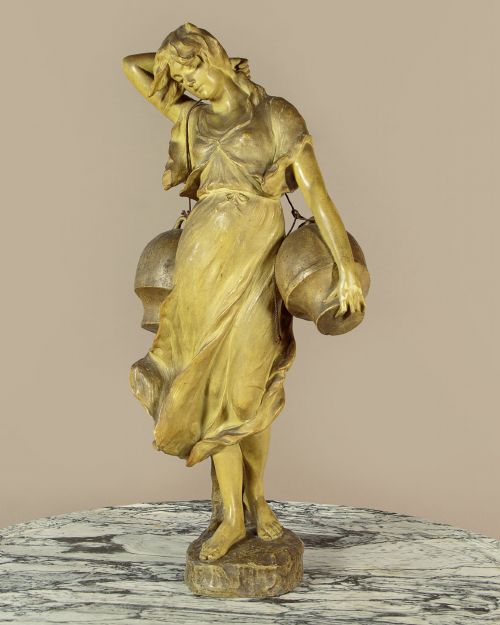


Antique Female Water Bearer
These antique female water bearer figures combine classical poise with the sculptural weight of bronze, terracotta, and marble.
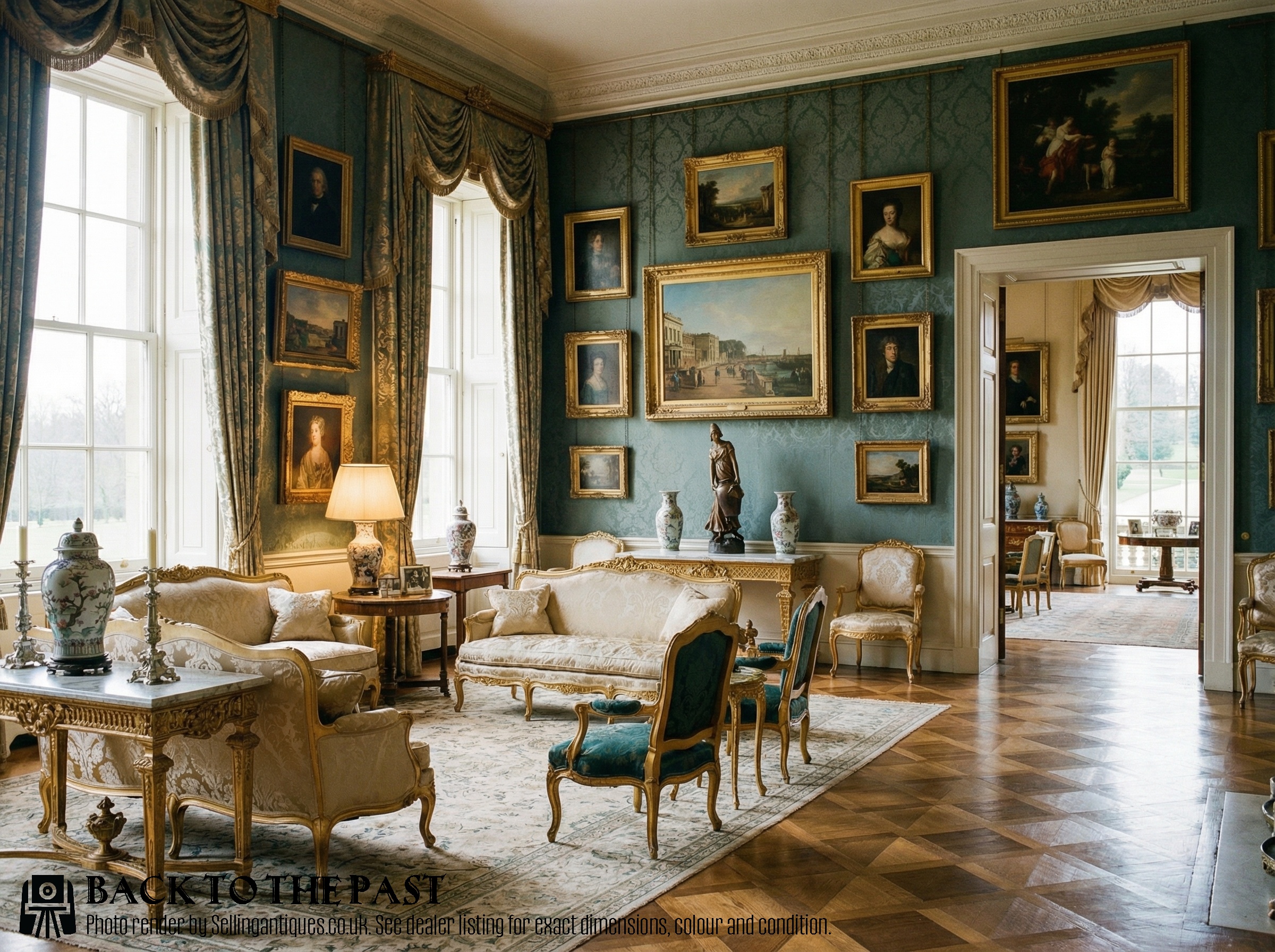
Antique Female Water Bearer
The examples gathered here span several distinct periods, most notably the Victorian era and the turn of the twentieth century. You will find forms ranging from grand cabinet bronzes to large terracotta and plaster statues produced across Europe.
How they were made
Foundries and studios utilised traditional casting and modelling methods, working in bronze, terracotta, alabaster, and porcelain. Metal pieces were cast using the lost-wax method or sand casting before receiving patination, while ceramic figures relied on careful kiln firing and hand-applied enamel or gold leaf details.
Makers integrated various materials to achieve different textural effects, combining carved marble elements or mounting plaster figures on stable bases. The physical weight and rigidity of these materials dictated the fluid drape of garments and the balance of the water vessels carried by each figure.
What varies in quality
The standard of modeling distinguishes a masterwork from a commercial workshop piece, visible in the articulation of the drapery and the realistic weight of the figure. Finer sculptures display precise anatomical observation and subtle facial expressions that convey the effort of the labour.
Casting cleanup and patination also drive the hierarchy of value, as skilled finishers spent hours chasing the bronze surface to sharpen details. Inferior versions often exhibit softer contours and flat, uniform patinas that obscure the underlying texture of the material.
Goldscheider·Messina Roma·Guillot·Royal Dux·Hans Schork·Dalou
The Antique Female Water Bearer Glossary
- Amphora
- A two-handled jar used in ancient times for the storage and transport of liquids. This vessel serves as the defining attribute held by the female figures in these sculptures.
- Patina
- The surface coloration and sheen developed on bronze or metal through age or chemical treatment. Artisans deliberately applied specific patinas to enhance the depth of the drapery and skin tones.
- Neoclassical
- An artistic movement drawing inspiration from the classical art and culture of ancient Greece and Rome. This style dictates the poised stances and classical drapery seen on many of the water carrier figures.
- Terracotta
- A porous, fired clay body used extensively for sculptural works. Sculptors valued this medium for its ability to capture immediate hand-modelled textures before glazing or painting.
- Orientalist
- An artistic style depicting scenes and subjects from the Middle East and North Africa. This aesthetic accounts for the specific regional costumes and Nubian or Arab attributions found among the statues.
Antique Female Water Bearer: Frequently Asked Questions
What is an antique female water bearer?
These pieces are sculptural representations of maidens, goddesses, and regional figures carrying vessels, produced primarily during the nineteenth and early twentieth centuries.
They reflect the period's fascination with classical antiquity, mythology, and orientalist travel, utilising media such as bronze, terracotta, and porcelain to render the human form.
Where were these sculptures displayed?
Victorian and Edwardian collectors placed these figures in drawing rooms, libraries, and grand hallways as focal points of interior decoration.
Larger terracotta and bronze statues typically stood on pedestals or marble columns, while smaller porcelain and bronze figurines occupied mantelpieces and cabinet tops.
How do I identify the period?
Dating relies upon stylistic markers, foundry marks, and the specific material palette typical of distinct manufacturing eras.
Nineteenth-century pieces often exhibit academic realism or Victorian orientalism, whereas items from around nineteen hundred shift toward the flowing organic lines of Art Nouveau.
How do I care for bronze and terracotta?
Maintenance requires gentle dusting with a soft, dry cloth to prevent the accumulation of grime on delicate patinas and porous surfaces.
Harsh chemical cleaners and excessive moisture must be avoided, particularly on terracotta and plaster, which absorb liquids and risk permanent staining.