


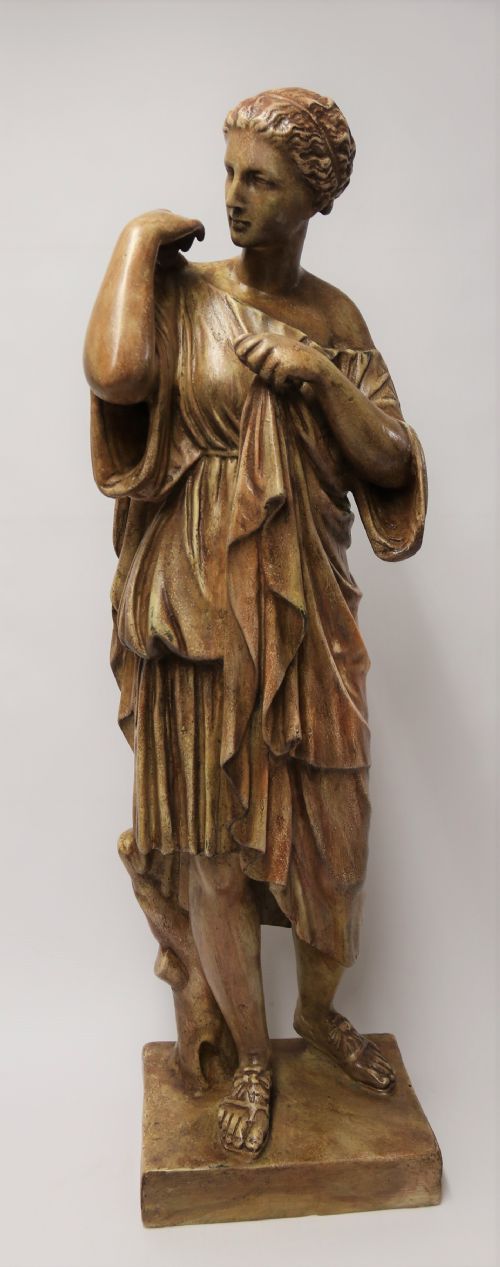


Terracotta Female Statue
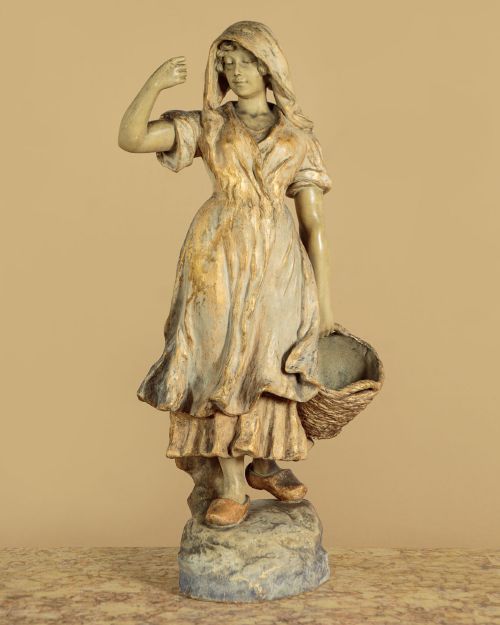
A terracotta female statue brings warmth and classical grace to a room, capturing human form through fired earth from the nineteenth and early twentieth centuries.
Terracotta Female Statue
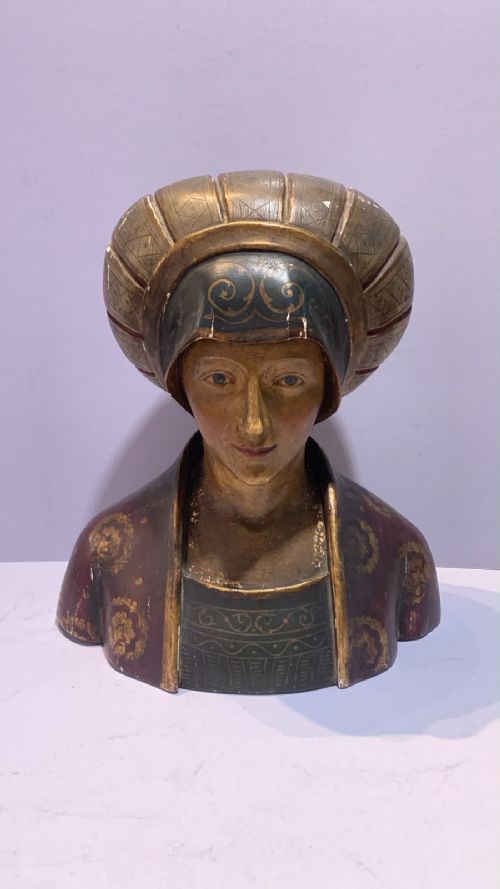
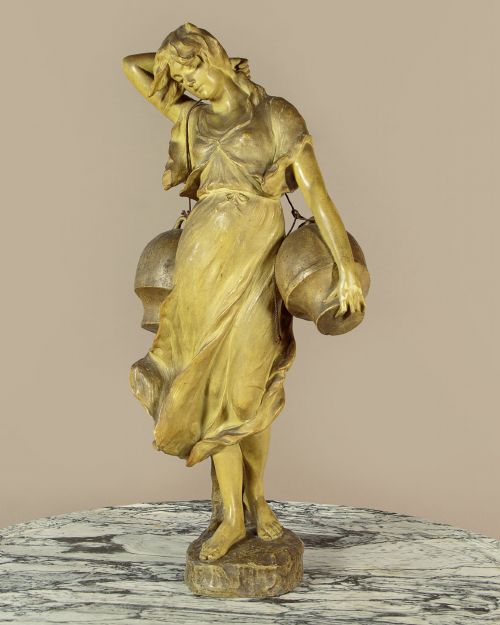
A terracotta female statue embodies sculptural interpretations of women, ranging from classical busts to full-length Art Nouveau maidens and mythological figures. When exploring terracotta female statue options, one encounters pieces spanning the late nineteenth century through the early twentieth century, alongside select historical and revival styles. The material grants a distinct reddish-brown earthen texture that gives each sculpture a grounded presence.
The selections here frequently showcase subjects like water carriers, fisher girls, dancers, and noblewomen shaped during periods such as the Edwardian era and the peak of Art Nouveau. Makers and factories applied varied finishes, including polychrome paint, gilt, and bronzed patination, to alter the appearance of the raw fired clay. These works function primarily as decorative art objects, displayed on pedestals, consoles, and mantelpieces.
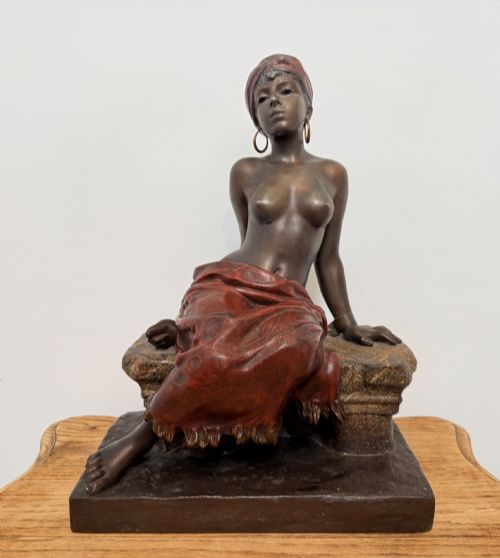
Most examples originate from European workshops and potteries, particularly Austrian and French foundries, though diverse regional influences appear across the inventory. Stylistic expressions stretch from strict Neoclassical restraint to flowing Art Nouveau curves and Orientalist motifs. A buyer selecting a terracotta female statue engages with a tradition of European decorative sculpture that values expressive gesture and detailed drapery.
How they were made
Makers shaped these figures using refined earthenware clay, which was pressed into moulds or hand-modelled before undergoing high-temperature firing in kilns. This baking process hardens the material into durable terracotta, establishing the characteristic porous body and warm earthen palette seen across the pieces. Some figures incorporate related ceramic components or draw upon porcelain traditions, as observed in works from prominent factories.
Surface treatment defines the final aesthetic, with artisans applying paint, gilt highlights, or bronzed patination over the fired clay to simulate metal or stone. Certain workshops utilised glazes, such as sancai finishes on pottery figurines, to introduce vibrant colour variations. Wood and plaster occasionally supplement the primary ceramic structure in bases or structural supports.
Listings feature works spanning the 1870s to the 1930s, encompassing Neoclassical, Art Nouveau, and Edwardian styles executed in terracotta and earthenware.
What varies in quality
The execution of the painted or bronzed surface finish dictates visual success, with master workshops achieving subtle tonal gradations and convincing patination that complement the terracotta body. Secondary materials, such as fitted wooden bases or gilt accents, demonstrate the overall care invested in the manufacture of the sculpture. Workshop attribution and documented sculptural designs further elevate the standing of individual statues within the broader range.
Goldscheider·E Villanis·Bernard Bloch·Ernst Whaliss·Georges Morin
The Terracotta Female Statue Glossary
- Terracotta
- Fired unglazed earthenware clay, typically reddish-brown in colour, used extensively for sculpture and architectural decoration. It provides a durable medium that accepts surface paints and patinas readily.
- Art Nouveau
- A decorative art style prevalent from the late nineteenth century to the First World War, characterised by fluid, organic lines and floral motifs. Figures from this movement often feature flowing hair and stylised drapery.
- Neoclassical
- A style inspired by the classical art and architecture of ancient Greece and Rome, emphasising proportion, restraint, and classical dress. Busts and statues in this mode frequently depict mythological heroines or historical figures.
- Patination
- The surface appearance or coloration developed on a sculpture over time or applied artificially by an artist to simulate age or metal. Bronze-effect patination is common on earthenware figures to mimic cast metal.
- Earthenware
- Porous pottery fired at relatively low temperatures, forming the base ceramic material for terracotta and majolica objects. It requires finishing with paint, glaze, or slip to seal the surface.
Terracotta Female Statue: Frequently Asked Questions
How do I clean a terracotta female statue?
Dust the surface gently using a soft, dry brush to prevent particulate accumulation without disturbing the delicate patination or paint layers.
Avoid using water or chemical solvents on unglazed terracotta or painted surfaces, as the porous clay absorbs moisture readily.
What is the difference between terracotta and bronze?
Terracotta is a fired earthenware ceramic material shaped from clay, offering a warm, matte surface texture and lighter weight.
Bronze is a cast metal alloy that provides greater tensile strength, a metallic sheen, and a different method of foundry production.
Where were most of these statues made?
The majority originate from European workshops active in Austria, France, and Bohemia during the nineteenth and early twentieth centuries.
Prominent commercial potteries and individual artists produced these decorative figures to serve the bourgeois interior design market.
Can these statues be displayed outdoors?
These decorative interior sculptures are generally unsuited for outdoor placement due to their porous earthenware composition and delicate surface finishes.
Frost, moisture, and direct weather exposure will cause the terracotta body to degrade and the painted patinas to flake away.