
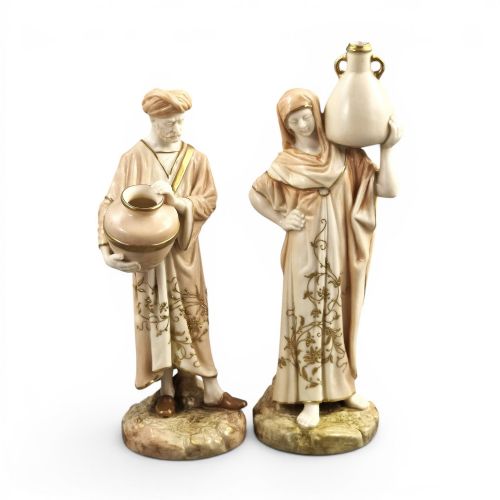
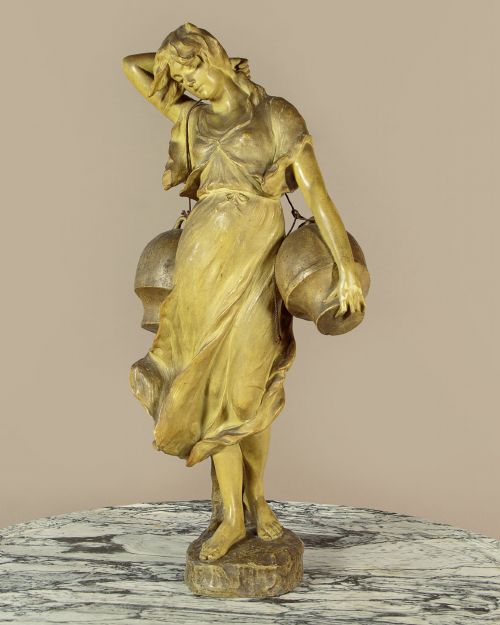


Ceramic Water Carrier Statue
These ceramic water carrier statue figures depict traditional figures bearing vessels, offering a striking display of sculptural form from the nineteenth and early twentieth centuries.
Ceramic Water Carrier Statue
A ceramic water carrier statue represents female figures bearing jugs, jars, or baskets, typically rendered in porcelain, biscuit porcelain, or terracotta. When searching for a ceramic water carrier statue, collectors encounter pieces primarily originating from Victorian, Edwardian, and turn-of-the-century periods.
The aesthetic embraces diverse movements including Art Nouveau curves and Victorian Orientalist motifs. Figures range from single decorative figurines to substantial pairs produced by notable European manufacturers.
The most prevalent examples on this page reflect late nineteenth-century and early twentieth-century ceramic traditions, often depicting women in flowing robes or regional dress with their vessels.
Materials and methods
Makers utilised fine porcelain, biscuit porcelain, and terracotta to shape these intricate sculptural forms. These materials allowed artisans to model delicate drapery, facial expressions, and textured elements such as wicker baskets or water jugs.
Surface decoration frequently incorporated enamel, gilt, and gold leaf highlights, alongside specialised finishes like Patent Metallic glazes. Turn-Teplitz and other continental potteries employed these techniques to accentuate the contours and decorative details of each figure.
Several figures manage to look profoundly elegant while permanently burdened with heavy water jugs.
Assessing quality and execution
Scale and ambition also differentiate the range, with large pairs and marked prototypes demonstrating greater sculptural presence. The sophistication of the glaze work, whether a matte biscuit finish or a rich metallic sheen, determines the visual depth of the piece.
Royal Worcester·James Hadley·Goldscheider·Royal Dux·Turn Porcelain
The Ceramic Water Carrier Statue Glossary
- Biscuit porcelain
- Unglazed porcelain fired once, resulting in a matte, marble-like surface that highlights fine sculptural detail.
- Art Nouveau
- A stylistic movement characterised by flowing, organic lines and asymmetrical natural forms popular around nineteen hundred.
- Orientalism
- An artistic style incorporating themes and motifs from Middle Eastern and North African cultures.
- Terracotta
- A porous fired clay body ranging in colour from orange-red to buff, often used for unglazed sculptural figures.
- Gilding
- The decorative application of gold leaf or gold powder onto the ceramic surface to enhance specific details.
Ceramic Water Carrier Statue: Frequently Asked Questions
What is a ceramic water carrier statue?
A ceramic water carrier statue is a figural sculpture depicting a person, usually a woman, carrying a vessel such as a jug, jar, or basket.
These pieces were produced primarily as decorative ornaments during the Victorian and Edwardian eras by major European ceramic factories.
How were these figures displayed?
These statues served as interior decorative objects for Victorian and Edwardian homes, often positioned on mantelpieces, pedestals, or occasional tables.
Pairs were frequently manufactured to flank a fireplace or anchor a symmetrical display on a sideboard.
How do I identify the period?
Dating relies on stylistic clues such as the sweeping organic lines of Art Nouveau or the exotic drapery of Victorian Orientalism.
Factory marks, registration numbers, and specific material finishes like biscuit porcelain or Patent Metallic glazes also help narrow down the decade of production.
What materials are used?
The primary materials found in these sculptures include traditional porcelain, matte biscuit porcelain, and durable terracotta.
Makers enhanced these ceramic bodies with hand-applied enamel colours, gilt accents, and specialised metallic finishes.