


Water Carrier Figurines
These water carrier figurines capture Orientalist and classical subjects in porcelain, bronze, and terracotta from the nineteenth and early twentieth centuries.
Water Carrier Figurines
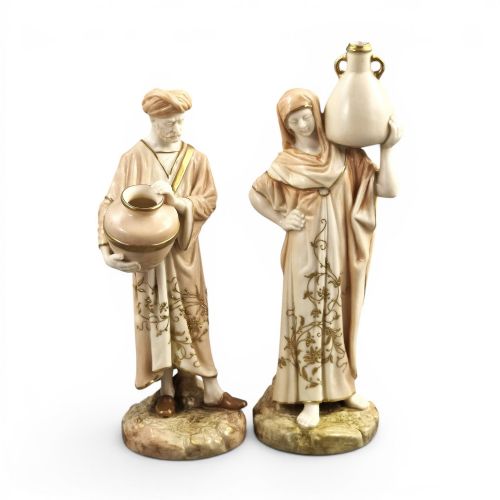
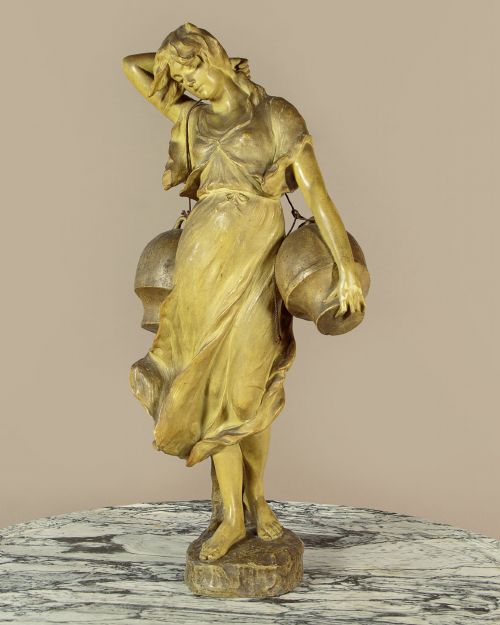
Water carrier figurines depict figures holding jugs, jars, or baskets, spanning nineteenth-century academic realism through to Art Nouveau aesthetics. Collectors searching for water carrier figurines encounter works produced by major European factories and named sculptors working in bronze or ceramic.
The materials range from bronze and terracotta to fine porcelain enhanced with blush ivory and gilding. Most examples date from the late nineteenth century into the Edwardian period, capturing regional dress and classicised forms.
How they were made
Bronze figures are cast from modelled metal, frequently signed by the sculptor and finished with patination. Ceramic examples utilise moulded porcelain, earthenware, or terracotta.
Factories apply hand-painted details, enamel, and gold leaf to porcelain surfaces, particularly on pieces from makers such as Royal Worcester and Royal Dux. Biscuit porcelain provides an unglazed matte finish that highlights sculpted drapery and anatomical detail.
Several figures carry baskets rather than jugs, proving that even in bronze, carrying groceries remains an enduring sculptural theme.
What varies in quality
Quality rests in the crispness of the casting in bronze or the precision of the mould and hand-painting in ceramic pieces. Finer works display subtle tonal gradations in enamel and careful application of gold leaf.
Figurines with specific named makers, factory ciphers, or documented museum provenance distinguish standard production items from exceptional sculptural examples.
Royal Worcester·James Hadley·Goldscheider·Royal Dux·Guillot·Vincenzo Gemito·Hans Schork
The Water Carrier Figurines Glossary
- Orientalism
- An artistic style depicting scenes and subjects from the Middle East and North Africa. It gained popularity across European sculpture and decorative arts during the nineteenth century.
- Blush Ivory
- A specialised porcelain finish developed by Royal Worcester featuring soft peach and cream tints beneath a glazed surface. It often combines with gilt highlights.
- Biscuit Porcelain
- Un-glazed fired porcelain that presents a smooth, matte texture resembling marble. It allows sculptural details to remain sharp and unmasked by glossy glazes.
- Patina
- The surface coloration and sheen developed on bronze sculpture through age or chemical treatment. It adds depth to the metal contours.
Water Carrier Figurines: Frequently Asked Questions
What materials are used for water carrier figurines?
These figures appear in cast bronze, terracotta, and various forms of porcelain including biscuit porcelain and glazed ceramic.
Decoration often involves enamel, gilding, gold leaf, and blush ivory finishes depending on the factory or foundry.
Which periods do these sculptures date from?
The available pieces originate primarily from the nineteenth century, extending into the Edwardian era and the 1920s.
Commonly represented stylistic movements include Art Nouveau, Victorian Orientalism, and academic realism.
How do I identify Royal Dux water carriers?
Royal Dux pieces often feature characteristic pink triangular triangular pads or factory markings impressed into the ceramic body.
They frequently depict figures with vessels or wicker baskets, rendered in porcelain with painted and gilt details.
What is the difference between bronze and porcelain figures?
Bronze statues are metal castings created by sculptors and foundries, often bearing signatures and patinated surfaces.
Porcelain figurines are ceramic objects shaped in moulds, fired, and hand-painted with glazes or enamels.