


Orientalist Ceramic Statue
An orientalist ceramic statue brings exotic character to a room through finely modelled figures captured in rich nineteenth and early twentieth century detail.
Orientalist Ceramic Statue
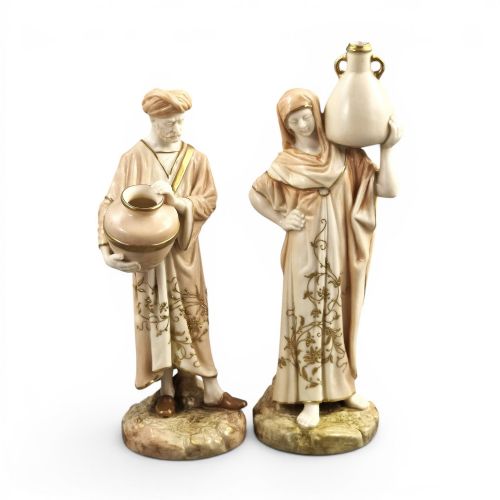
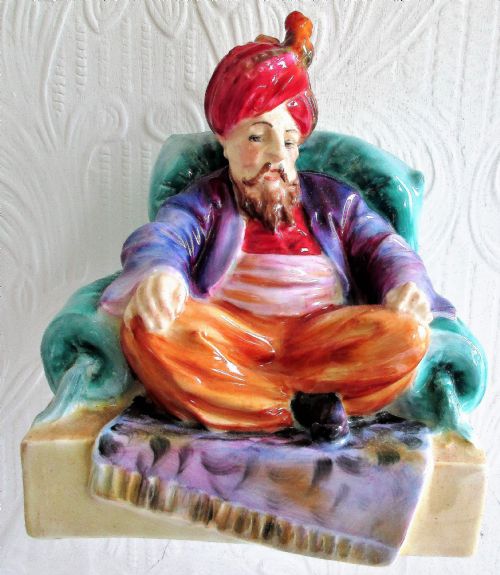
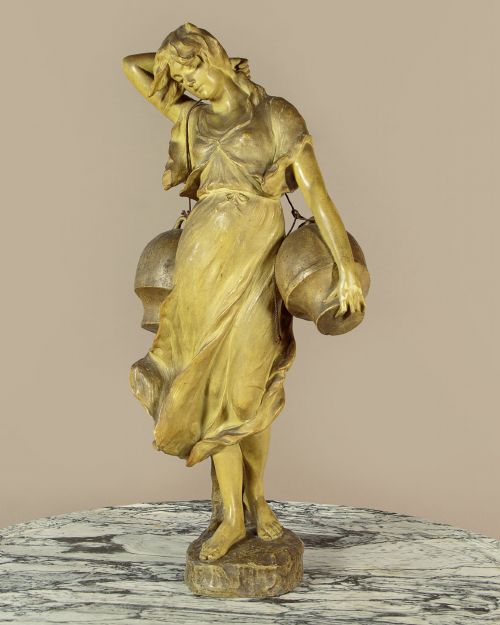
An orientalist ceramic statue represents human figures in traditional Middle Eastern, North African or South Asian attire, focusing heavily on water carriers, musicians, and water bearers. When searching for an orientalist ceramic statue, buyers encounter elaborate nineteenth and early twentieth century works produced by major European factories.
The objects take the form of porcelain figurines, earthenware sculptures, and decorative pairs designed for domestic display during the Victorian, Edwardian, and Art Deco periods. These pieces reflect a strong fascination with eastern cultures through meticulously painted garments and naturalistic postures.
Most examples originate from renowned makers such as Royal Worcester, Royal Dux, and Goldscheider, capturing specific cultural tropes of the period. Buyers most frequently meet large terracotta sculptures and delicate glazed porcelain figures featuring intricate surface ornamentation.
What varies in quality
An elephant wearing full ceremonial harness occasionally wanders into the lineup, proving that orientalist ceramic art extends far beyond human water carriers.
Royal Worcester·Royal Dux·Goldscheider·Carl Thieme Dresden·Turn Porcelain
The Orientalist Ceramic Statue Glossary
- Terracotta
- A porous reddish-brown earthenware clay used unglazed or painted for sculptural figures. It allowed artists to achieve deep undercut details and substantial scale.
- Gilding
- The application of gold leaf or gold powder to ceramic surfaces. This technique highlighted borders, garments, and accessories on nineteenth century figures.
- Polychrome
- Decoration utilising multiple distinct colours painted onto the ceramic body. Enamels were fired onto the glaze to secure vibrant hues.
- Figurine
- A small modelled statue depicting a human or animal form. These pieces served as decorative ornaments in period interiors.
- Prototype
- An initial trial model produced by a factory before mass production begins. These unique items often display experimental glazes or modelling variations.
Orientalist Ceramic Statue: Frequently Asked Questions
What subjects do these statues depict?
These pieces primarily portray water carriers, musicians, water bearers, and artisans dressed in traditional nineteenth century eastern attire. Figures such as snake charmers and craftsmen also appear frequently.
The imagery reflects European artistic interest in North African and Middle Eastern cultures during the Victorian and Edwardian eras. Artists rendered these subjects with careful attention to regional garments and accessories.
Which factories produced these figures?
Major European ceramic works produced these sculptures, notably Royal Worcester in England and Goldscheider in Vienna. Other notable manufacturers include Royal Dux and Dresden porcelain studios.
Each factory employed distinct regional styles, moving from Victorian naturalism into Art Nouveau flowing lines and later Art Deco geometric simplicity.
How should I display a large terracotta sculpture?
Large terracotta and ceramic figures require stable, sturdy surfaces capable of supporting substantial weight, particularly for pair arrangements. Placement away from direct heat sources protects the painted and gilded surfaces.
Allowing adequate clearance around the sculpture lets the detailed modelling of garments and bases remain fully visible in the room.
How can I identify the period of a piece?
Period identification relies upon observing stylistic indicators such as Victorian realism, Art Nouveau sinuous curves, or Edwardian decorative restraint. Markings, factory stamps, and registration numbers inscribed on the base provide precise chronological evidence.
Comparing the glaze types, colour palettes, and costume details against documented factory production years helps narrow down the exact decade of manufacture.