
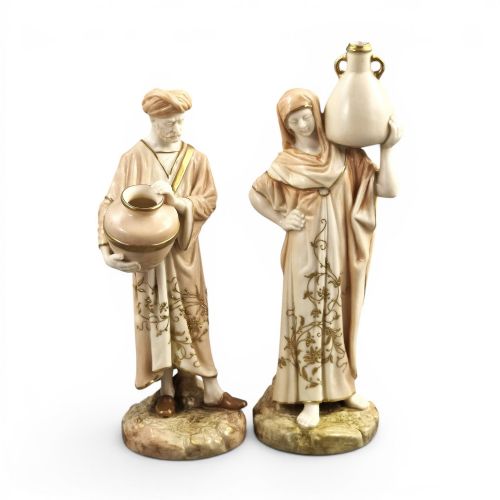


Orientalist Porcelain Sculpture
These orientalist porcelain sculpture pieces capture exotic subjects through glazed ceramic and gilt detailing, offering tangible glimpses of nineteenth and twentieth century aesthetic tastes.
Orientalist Porcelain Sculpture
When you search for orientalist porcelain sculpture, you encounter figures and decorative lamps depicting figures from Eastern traditions, water carriers, musicians, and animals produced during the nineteenth and early twentieth centuries. These pieces reflect Victorian Orientalism, Edwardian tastes, and later Art Deco styling through elaborate costume and modelling.
The objects on this page span from Victorian works by Royal Worcester and Royal Dux to French Art Deco perfume lamps and Dresden ceramic productions. You will frequently find figures such as Cairo water carriers, Egyptian musicians, and elephant tamers modelled in glazed ceramic and porcelain.
How they were made
These pieces utilise porcelain and glazed ceramic bodies that are shaped into detailed figures and statuettes before firing. Makers apply enamel colours alongside gold leaf, gilding, and gilt highlights to accentuate the intricate clothing and accessories of the subjects.
Snake charmers, elephant tamers, and water carriers quietly populate the ceramic shelves, bringing unexpected drama to the mantelpiece.
What varies in quality
Quality in these figures rests upon the crispness of the modelling and the precision of the hand-painted enamels and gilding. Superior examples maintain sharp facial details and clean application of gold leaf without blurring the underlying ceramic form.
The scale and ambition of the piece also define the tier, with large figures and complex pairs demonstrating greater sculptural accomplishment than standard decorative statuettes.
James Hadley·Royal Worcester·Royal Dux·Argilor Paris·Carl Thieme Dresden·Turn
The Orientalist Porcelain Sculpture Glossary
- Glaze
- A glassy coating fused to the ceramic surface during firing to seal the material and provide colour or shine.
- Gilt
- A thin layer of gold applied to the porcelain surface to highlight ornamental details and edges.
- Enamel
- Opaque vitreous material fused to the ceramic body to create coloured painted decoration on the figures.
- Figurine
- A small modelled statuette representing a human or animal figure, commonly produced in porcelain.
- Patent Metallic
- A specialised surface finish applied to ceramics to produce a metallic visual effect on the sculpture.
Orientalist Porcelain Sculpture: Frequently Asked Questions
What periods do these pieces date from?
The objects span the nineteenth century, including Victorian and Edwardian eras, alongside later Art Deco items from the nineteen-twenties and thirties.
Production dates recorded in the evidence range from eighteen-eighty through to nineteen-thirty.
How were orientalist porcelain figures used?
These pieces served as decorative statuettes and table ornaments within domestic interiors, reflecting contemporary fascination with Eastern subjects.
Some specialised examples also functioned as perfume lamps or veilleuses during the Art Deco period.
What materials make up these sculptures?
Makers utilised porcelain, ceramic, and glazed ceramic as the primary structural bodies for these figures and lamps.
Surfaces were frequently enhanced with enamel, gold leaf, gilding, and gilt highlights.
Which manufacturers produced these sculptures?
Prominent factories and makers represented include Royal Worcester, Royal Dux, Carl Thieme Dresden, Turn-Teplitz, and Argilor of Paris.
Individual modellers like James Hadley also signed specific nineteenth century designs.