
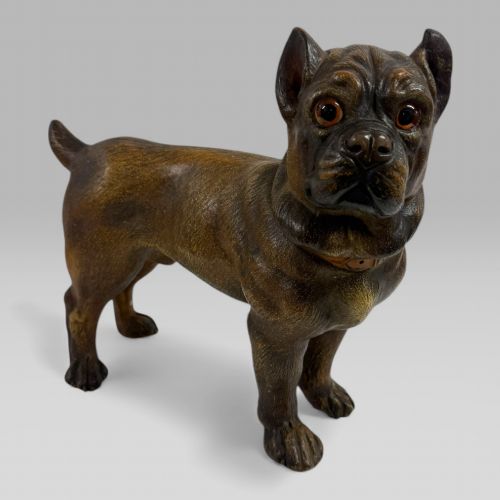
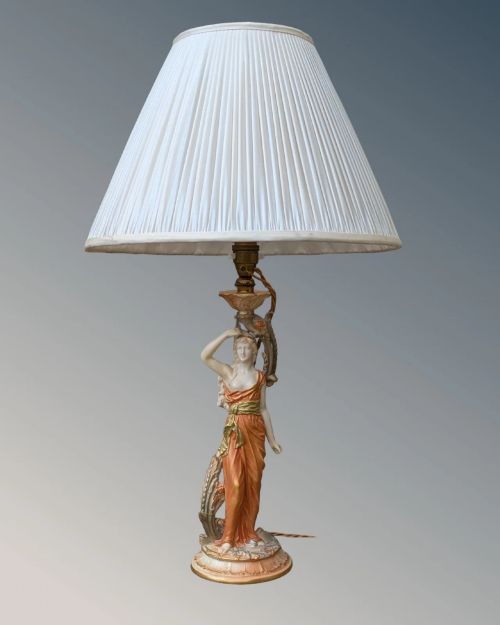
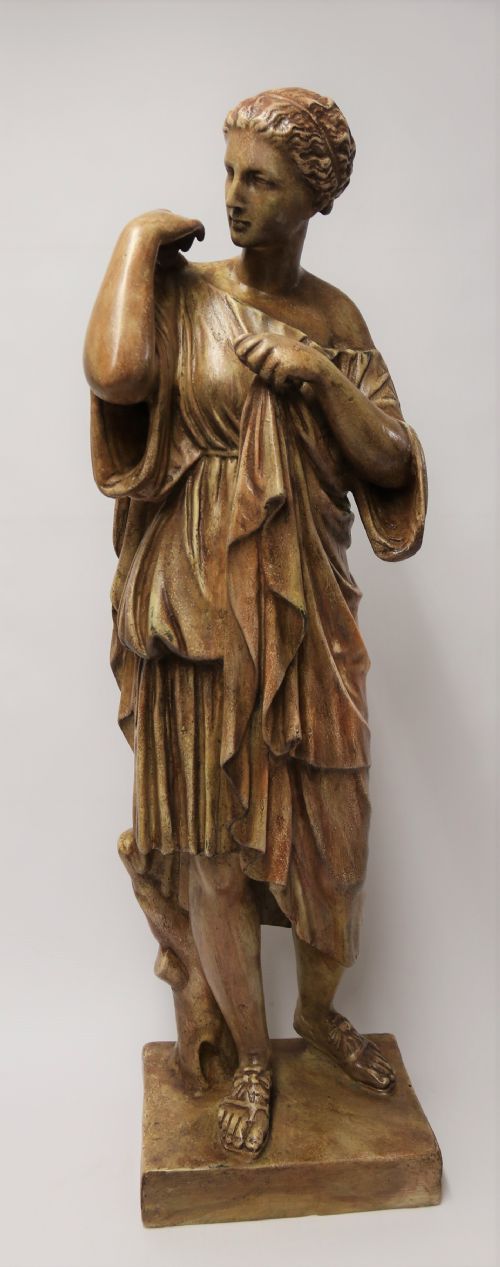

Victorian Terracotta Figure
These nineteenth-century pieces bring physical presence into a room, capturing human and animal subjects in fired earth.
Victorian Terracotta Figure
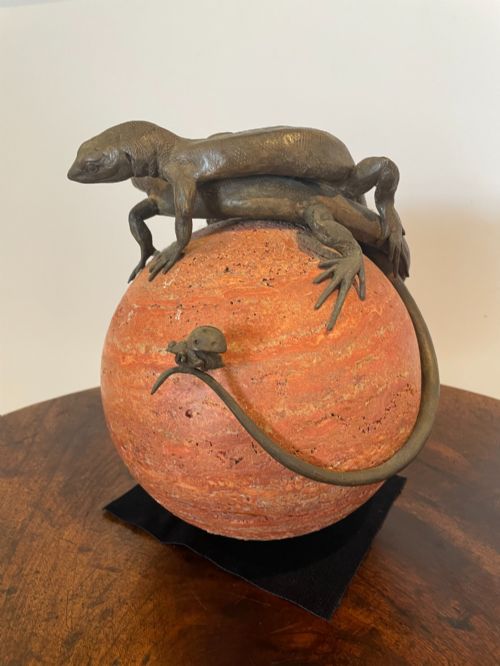
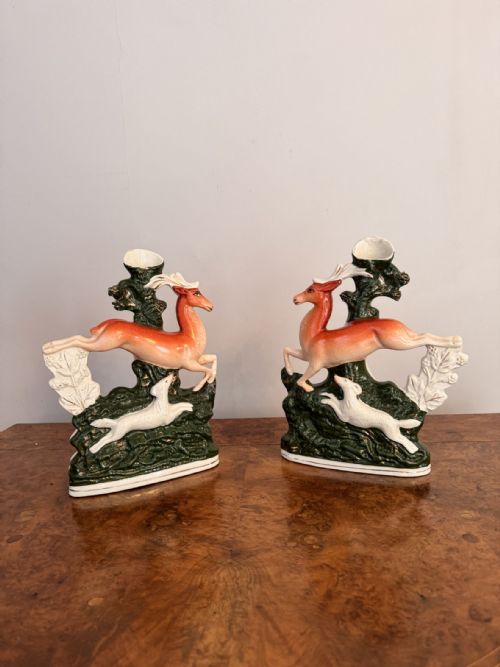
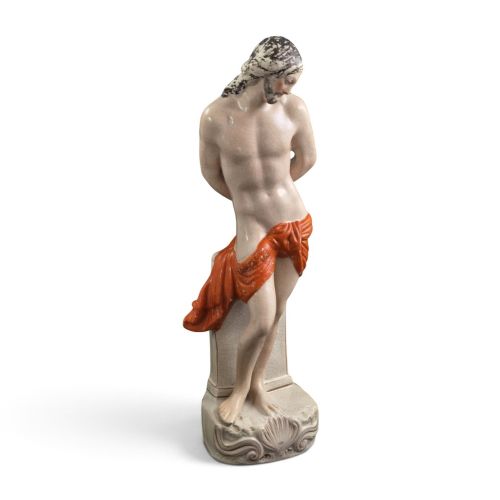
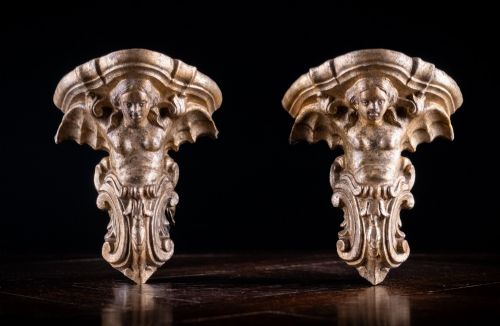
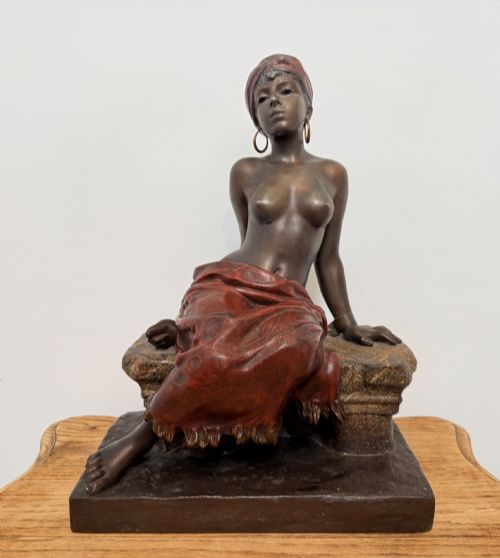
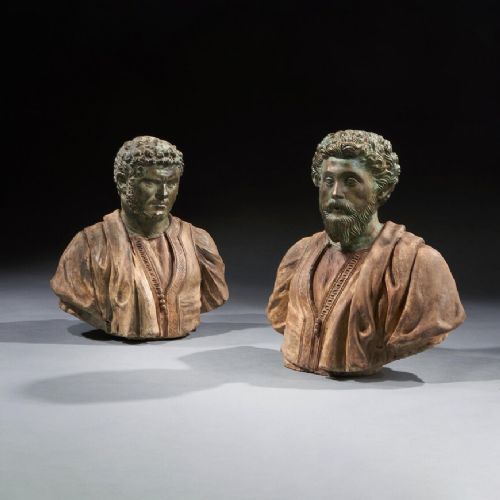
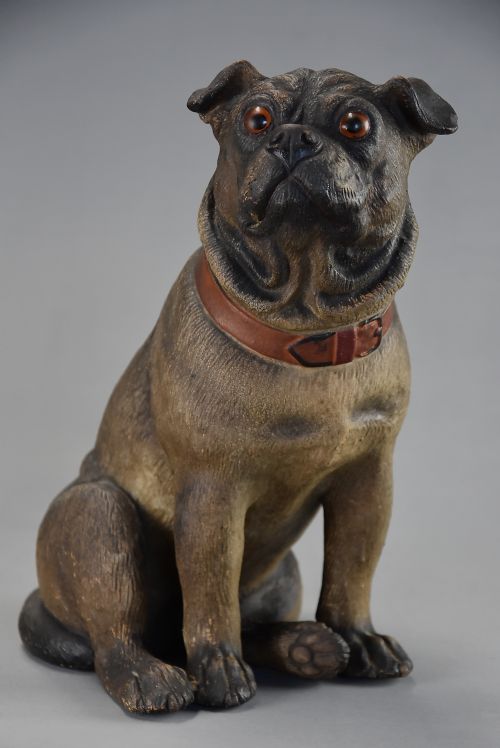
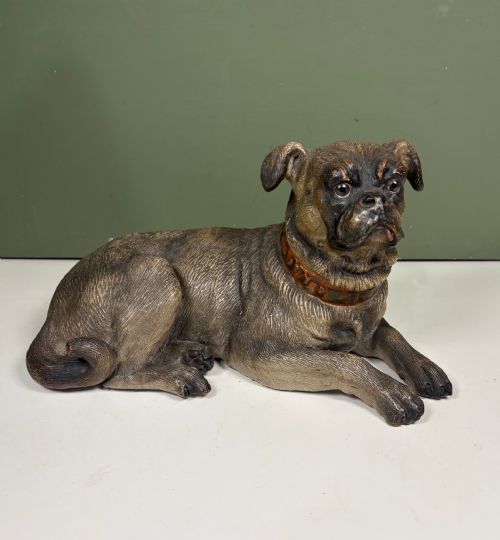
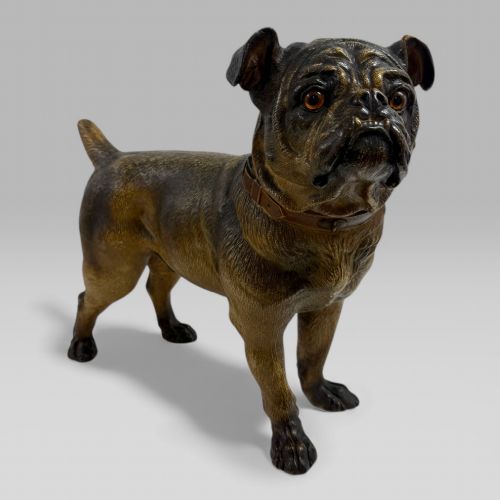
A victorian terracotta figure represents sculptural work produced during the nineteenth century, ranging from domestic animals to classical busts. The selection includes seated pugs, large lions, human subjects, and architectural brackets rendered in fired clay.
Moulded earthenware and terracotta items from this period reflect diverse styles such as Austrian terracotta, Animalier, and classical revival forms. Buyers encounter both freestanding sculptures and functional objects like bookends and wall brackets.
How they were made
These pieces utilise fired terracotta and earthenware, often shaped in moulds to capture fine anatomical details in subjects such as dogs, figures, and busts. Artisans applied glazes, paint, or gilt finishes to enhance the surfaces of the fired clay.
Continental workshops, particularly in Austria, combined moulding techniques with cold-painted decoration or naturalistic glazing. English makers relied on similar ceramic traditions to produce durable figures and sculptural groups.
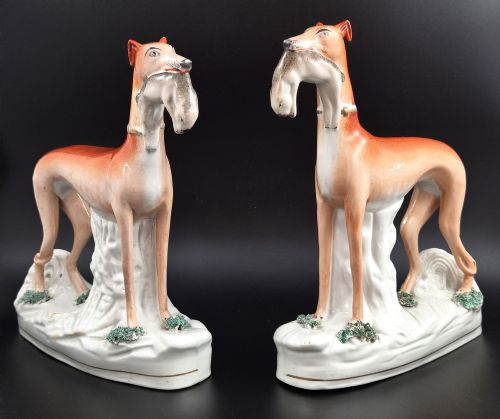
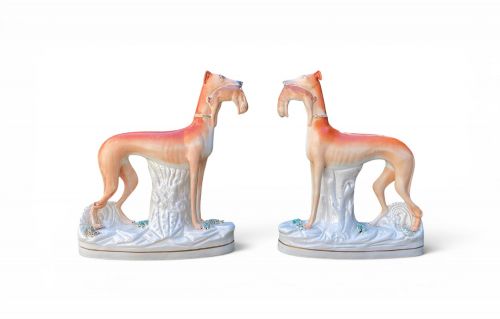
Several grumpy-looking pugs and attentive greyhounds wait patiently in the current selection, keeping watch over nineteenth-century bookshelves.
What varies in quality
The preservation of original surface finishes, whether cold-painted pigments, gilt, or glaze, determines the visual integrity of the piece. Subtle hand-finishing after moulding separates standard production items from finer sculptural works.
Thomas Parr·Goldscheider·Ernst Wallace·Bernard Bloch·Royal Dux
The Victorian Terracotta Figure Glossary
- Terracotta
- Fired, unglazed or glazed clay of a brownish-red colour used widely for nineteenth-century sculpture and decorative objects. It provides a robust medium for detailed modelling.
- Animalier
- A nineteenth-century artistic style focusing on the realistic portrayal of animals, particularly dogs, lions, and wildlife. Sculptors in this tradition studied anatomy closely.
- Cold-painted
- A technique where paint is applied to a bronze or terracotta object after firing, without being refired in a kiln. This method allows for delicate polychrome details.
- Earthenware
- Porous pottery fired at lower temperatures than stoneware or porcelain, commonly used for Victorian figures and vessels. It requires a glaze or paint layer to become impermeable.
- Grand Tour
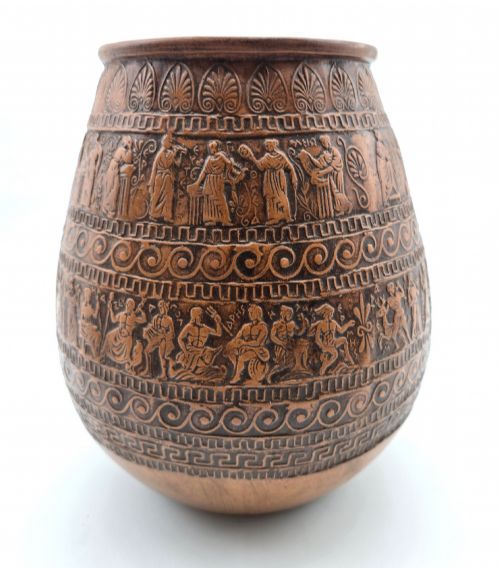
- Cultural travel undertaken by nineteenth-century Europeans to study classical antiquities, inspiring replica vases and figures. These items reflect classical Greek and Roman aesthetics.
Victorian Terracotta Figure: Frequently Asked Questions
Where were these figures displayed?
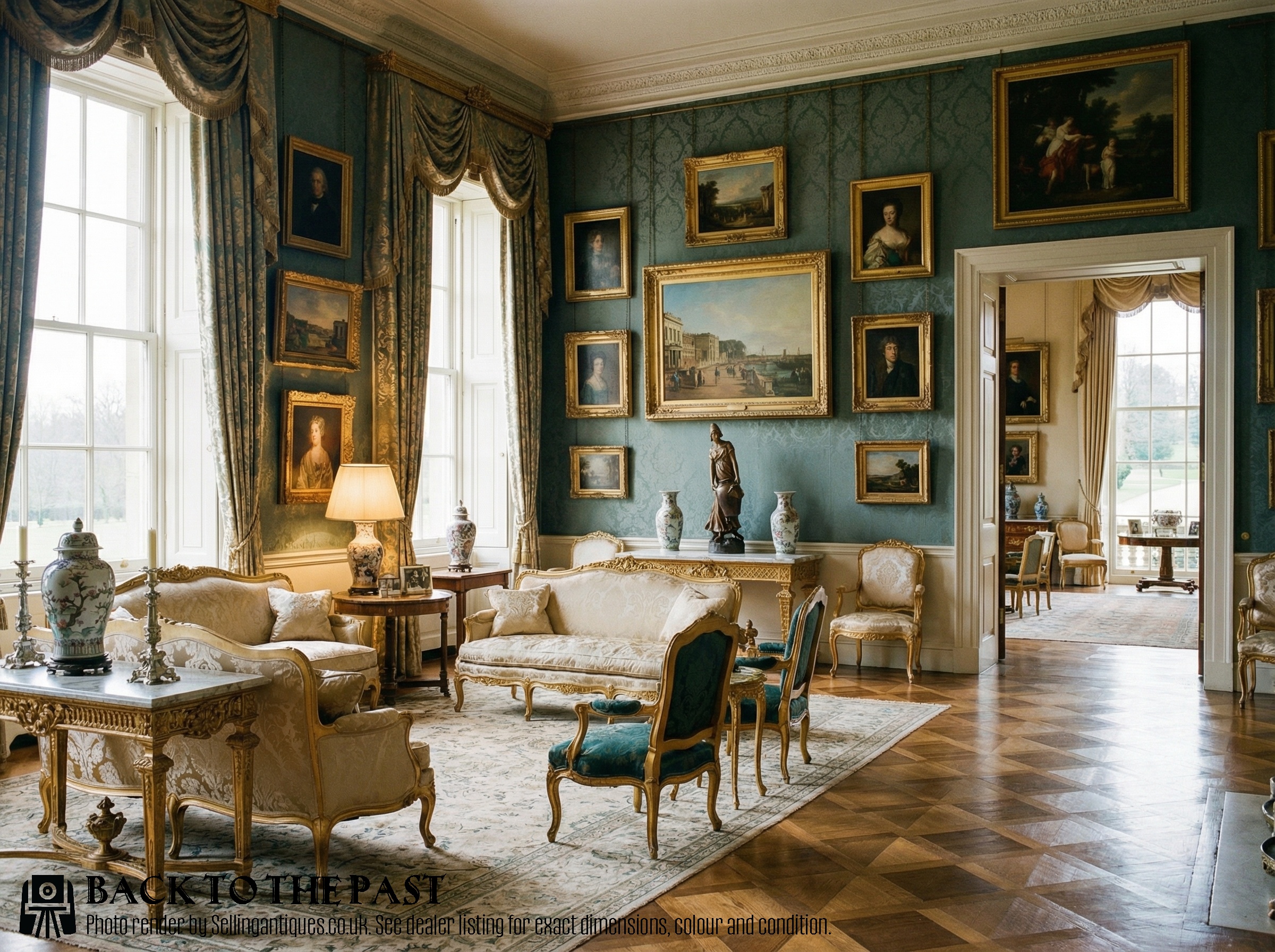
Victorian households placed terracotta sculptures on mantelpieces, entrance halls, and library tables to display artistic taste.
Larger figures and life-size dog sculptures stood directly on floors or hearths as prominent interior ornaments.
How do I clean terracotta?
Dust surfaces gently with a soft dry brush to prevent dirt accumulation within the textured clay.
Avoid using water or liquid cleaners, particularly on cold-painted or glazed finishes that may lift.
Are these pieces waterproof?
Most nineteenth-century decorative terracotta and earthenware objects were designed for indoor display rather than garden use.
Exposure to moisture can damage the porous fired clay and degrade painted or gilt surface treatments.
What subjects are most common?
Domestic animals, particularly pugs, greyhounds, and lions, appear frequently alongside human figures and classical busts.
Mythological characters and portrait subjects also feature prominently within nineteenth-century sculptural production.