






Goldscheider Terracotta Figure
A goldscheider terracotta figure brings Vienna's sculptural mastery into a room, offering expressive human and animal forms that define turn-of-the-century artistry.
Goldscheider Terracotta Figure
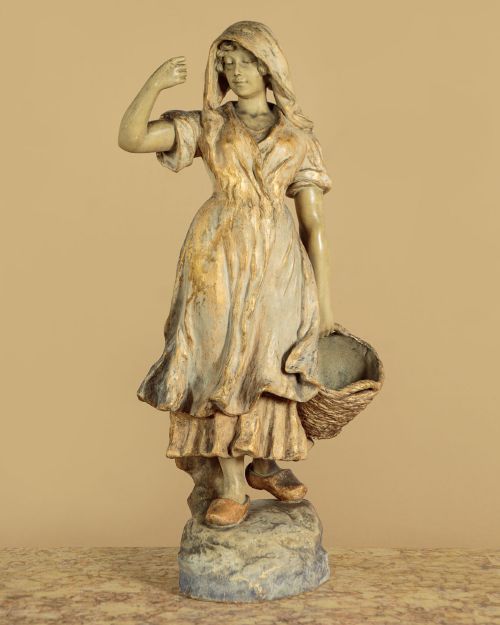
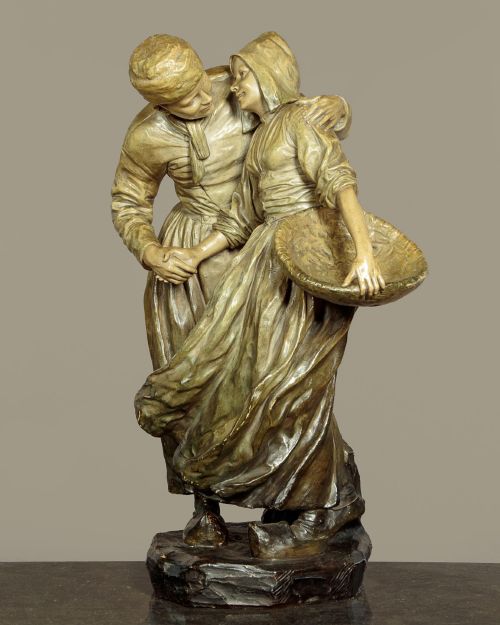
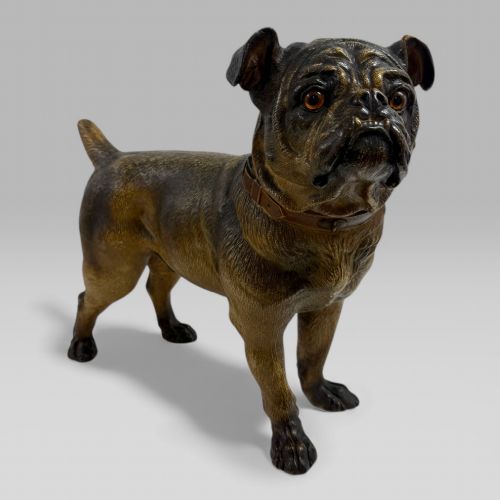
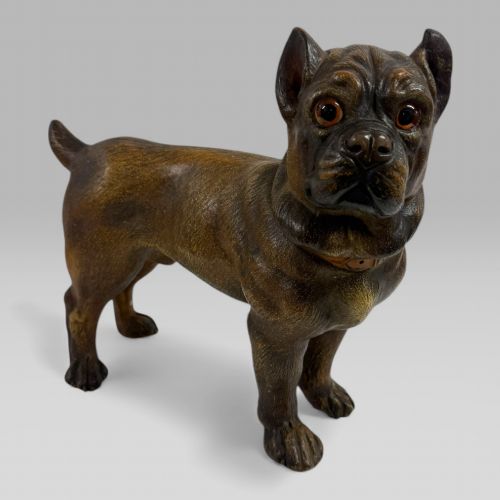
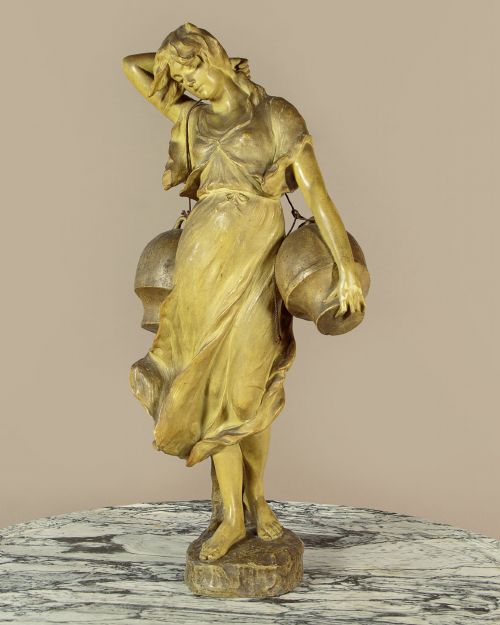
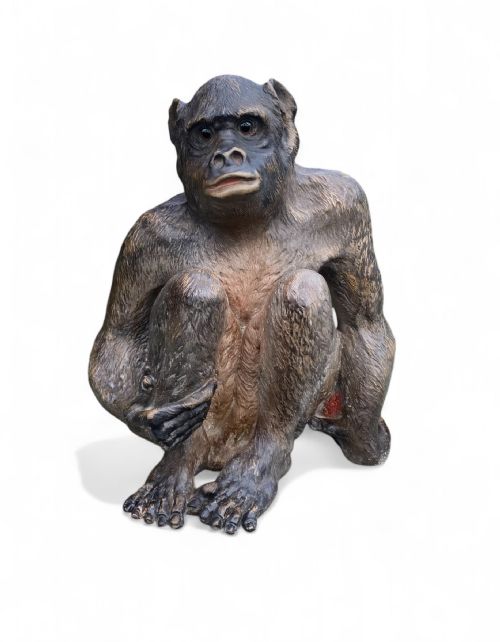
When you search for a goldscheider terracotta figure, you encounter Austrian sculptural ceramics spanning the late nineteenth century and the early twentieth century. These works range from life-size animal sculptures like pug dogs and chimpanzees to classical Roman subjects, Orientalist figures, and Art Nouveau maidens.
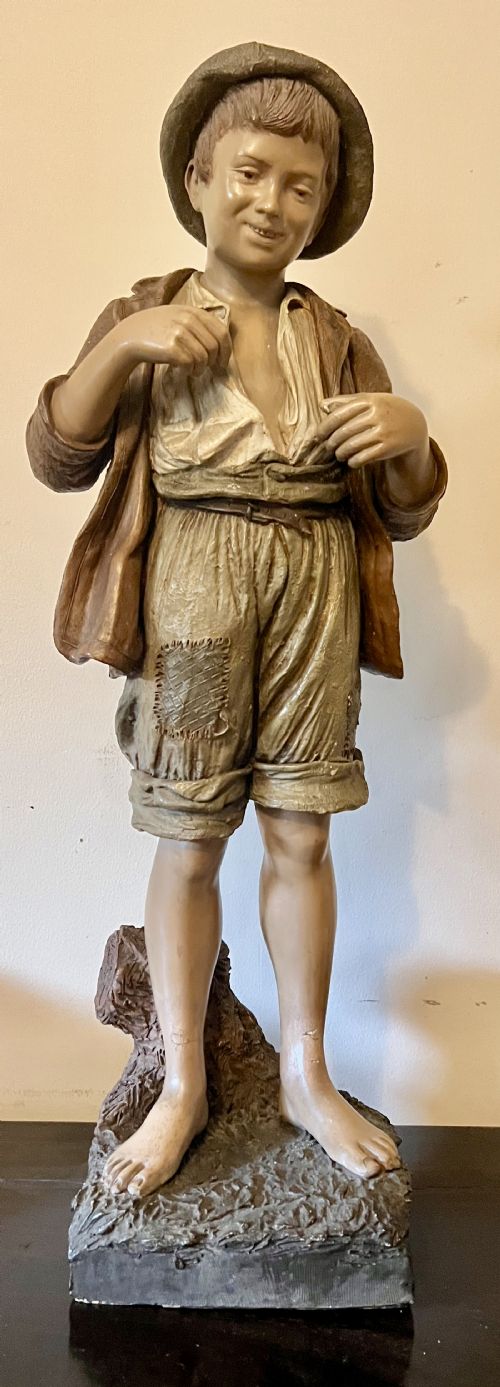
The pieces appearing on this page most frequently date from around 1900, capturing the aesthetic shifts of the Victorian era and the flowing lines of Art Nouveau. You will find single figures of young women and boys alongside impressive group sculptures.
Makers and designers of the period produced both cabinet-sized figurines and monumental life-size works. Each category reflects the rigorous output of the Viennese manufactory.
Materials and methods
Makers utilised terracotta and earthenware as the primary medium for these sculptures, often shaping them through slip casting techniques. This allowed for precise replication of intricate details across complex forms like animal fur and draped garments.
Surface decoration involved polychrome paint, pigments, and bronzed finishes applied directly to the fired clay. Some examples also incorporate glazed ceramic elements or glass details to enhance the visual texture.
Among the elegant maidens and classical Romans, a life-size terracotta chimpanzee stands ready to supervise your hallway.
Qualities that distinguish the works
The refinement of the modelling and the precision of the facial expressions set the finest examples apart from standard production. Master modellers achieved a psychological depth in portraits and animalier subjects that lesser workshop output lacks.
The preservation of the original hand-painted polychrome or bronzed finish dictates the desirability of a piece. Intact surface pigment maintains the intended artistic effect of the Austrian studio.
Friedrich Goldscheider·Frederic Goldscheider·Goldscheider
The Goldscheider Terracotta Figure Glossary
- Terracotta
- Fired clay used as a medium for sculptural works. It allows for sharp detail capture before the application of surface finishes.
- Bronzed finish
- A metallic coating applied to earthenware to simulate cast bronze. It gives the lightweight clay the appearance of heavy metalwork.
- Slip cast
- A manufacturing method where liquid clay is poured into a plaster mould. This process enabled the mass production of complex sculptural forms.
- Orientalist
- An artistic style depicting Middle Eastern and North African subjects. These figures often feature elaborate regional attire and dramatic poses.
Goldscheider Terracotta Figure: Frequently Asked Questions
How do I clean a terracotta figure?
Dust the surface gently with a soft, dry brush to prevent accumulation. Avoid liquid cleaners that might disturb historic paint or bronzed finishes.
Keep the sculpture away from direct moisture and damp environments to protect the porous earthenware body.
How do I identify a authentic piece?
Look for factory stamps, impressed model numbers, and artist signatures typically found on the base or reverse of the sculpture. Comparing the weight, clay density, and painting style against known examples helps confirm origin.
Examine the casting seams to ensure they match the production methods of the Viennese manufactory.
Where should I display these sculptures?
Position them on sturdy furniture away from high-traffic walkways where accidental knocks might occur. Stable indoor environments with consistent temperature protect the painted surfaces from degradation.
Lighting should highlight the modelling and polychrome details without exposing the piece to prolonged direct sunlight.