



Bronzed Terracotta Figure
A bronzed terracotta figure gives you the warmth of clay with the rich metallic finish of cast bronze, bringing sculptural presence to any room.
Bronzed Terracotta Figure
When you search for a bronzed terracotta figure, you encounter sculptural works that use an applied metallic finish over a fired clay base to mimic solid metal. These objects range from classical portrait busts and mythological subjects to Orientalist and Art Nouveau studies of the human form.
You are most likely to meet 19th-century and early 20th-century European productions on this page, alongside occasional earlier examples and animalier subjects. The forms include full-length figurines, decorative table lamps, and imposing busts.
The makers and studios represented in these pieces utilised sculptural modelling to capture movement, drapery, and character in earthenware before applying patination. Collectors prize the interplay between the tactile warmth of the ceramic body and the metallic sheen of the surface.
How they were made
Potters and sculptors formed these pieces using terracotta, earthenware, and slip casting techniques to shape the initial clay body before firing. Once fired, the surface received a bronzed finish, paint, or verdigris patina to simulate aged metal.
Many works incorporate marble bases or structural supports to elevate the ceramic figures and provide stability. Artisans applied patination carefully by hand to highlight the modelled details of hair, fabric, and expression.
Bronzed Terracotta Figure Retail Price Guide 2026
Typical asking prices for bronzed terracotta figure among the pieces listed under this phrase on Sellingantiques today, from the lower quarter to the upper quarter. They describe what is for sale here now, not the wider market.
Listings feature terracotta and earthenware pieces enhanced with bronze finishes, paint, and marble.
What varies in quality
The distinction between ordinary and exceptional pieces lies in the crispness of the initial modelling and the depth of the patination. Master modellers achieved subtle facial expressions and natural drapery that cheaper commercial casts lack.
Surface preservation dictates much of the appeal, as applied metallic finishes and paint layers are vulnerable to wear over time. Original patination that has aged naturally without heavy overpainting commands greater attention from serious collectors.
Friedrich Goldscheider·E Villanis
The Bronzed Terracotta Figure Glossary
- Terracotta
- A porous, fired red earthenware clay used widely for sculptural figures and architectural ornaments. It provides an accessible medium for detailed modelling before any surface finish is applied.
- Patinated Bronze
- A chemical or applied surface treatment that darkens or colours metal to simulate age and wear. On these pieces, a similar finish is applied directly to the clay body.
- Slip Cast
- A manufacturing method where liquid clay slip is poured into a plaster mould to create hollow figures with uniform walls. This technique allowed workshops to produce multiple copies of popular sculptural models.
- Animalier
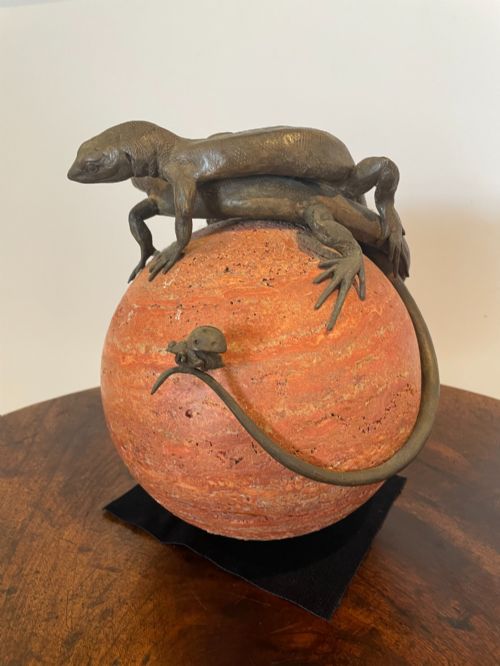
- A 19th-century sculptural style dedicated to the realistic depiction of animals in motion or repose. Lizards, horses, and domestic creatures often appear in this genre.
- Orientalist
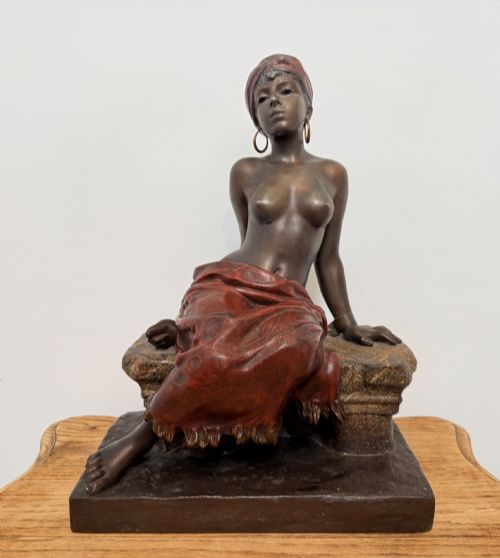
- An artistic movement inspired by the cultures of the Middle East and North Africa, frequently depicting figures in traditional regional dress. These subjects were popular across European ceramic studios.
Bronzed Terracotta Figure: Frequently Asked Questions
How do I clean a bronzed terracotta figure?
Dust the surface gently with a soft, dry brush to prevent dirt buildup in the crevices. Avoid using water or liquid cleaners, as moisture can damage the applied finish and the porous clay beneath.
Keep the piece away from direct sunlight and damp environments to protect the painted or metallic patination from fading or flaking over time.
Are these figures solid bronze?
These pieces are made from fired clay rather than cast metal. Workshops applied a bronzed finish or paint to terracotta or earthenware to give the visual weight and appearance of bronze at a lower cost.
Lifting or examining the underside often reveals the reddish-brown ceramic body where the surface coating has worn thin or was left unpainted.
What periods do these sculptures come from?
The selection spans from ancient artefacts to late 19th-century and early 20th-century European works. Victorian and Art Nouveau periods are particularly well represented through figurative studies and portrait busts.
Stylistic details, clothing, and foundry marks help distinguish between 19th-century interpretations and earlier historical pieces.
How were Art Nouveau styles incorporated?
Art Nouveau pieces focus on fluid, organic lines, flowing hair, and natural motifs such as plants and drapery. Sculptors integrated these sinuous forms into the posture of female figures and decorative lamps.
The aesthetic prioritised emotional expression and graceful movement over strict classical symmetry.