
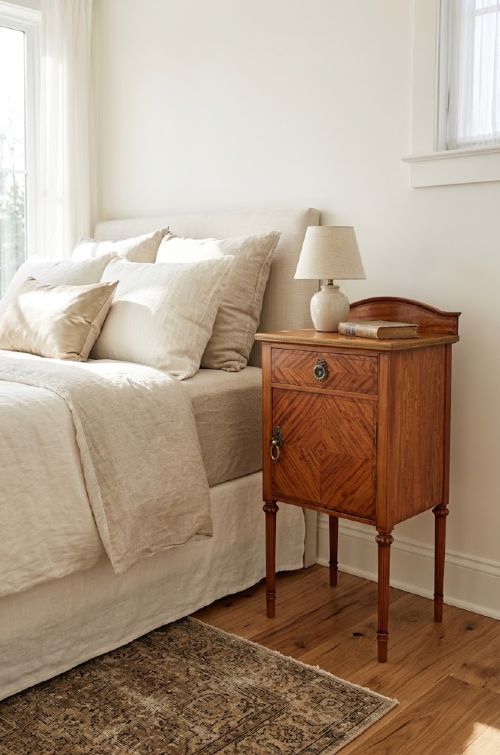


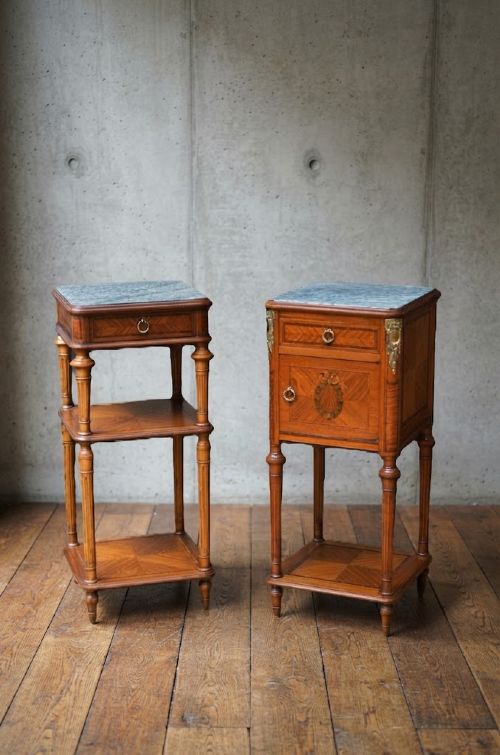
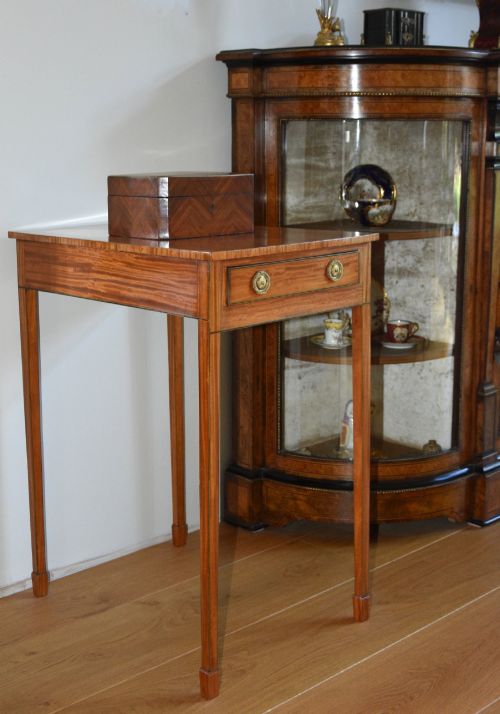
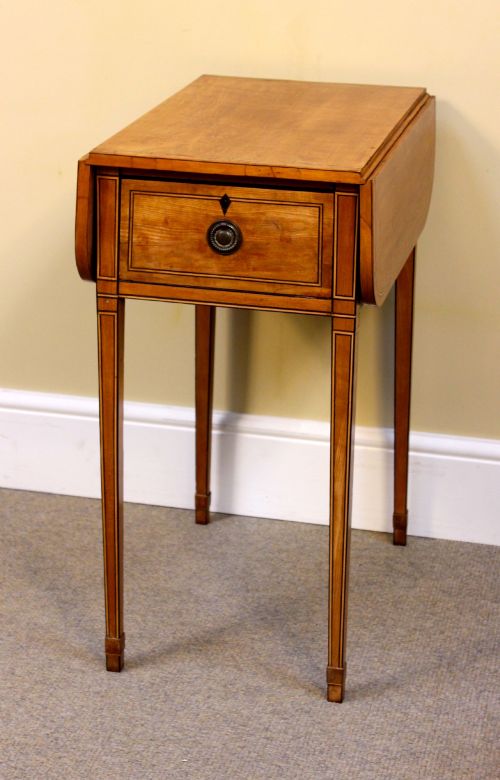



Golden Satinwood Side Table
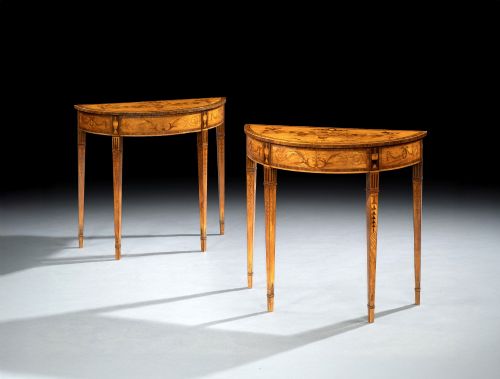
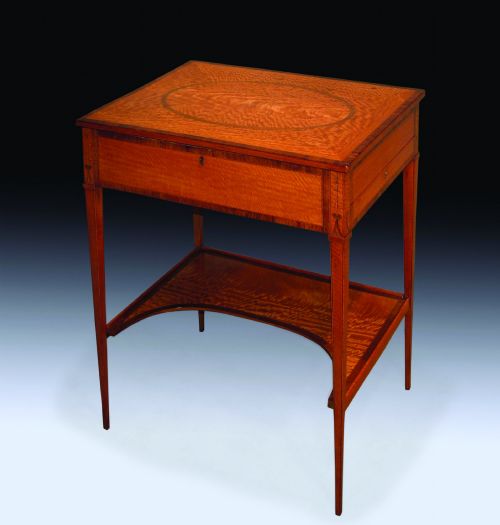
Golden satinwood side table examples bring warm tone and figured grain to a room, spanning periods from the eighteenth century to the art deco era.
Golden Satinwood Side Table
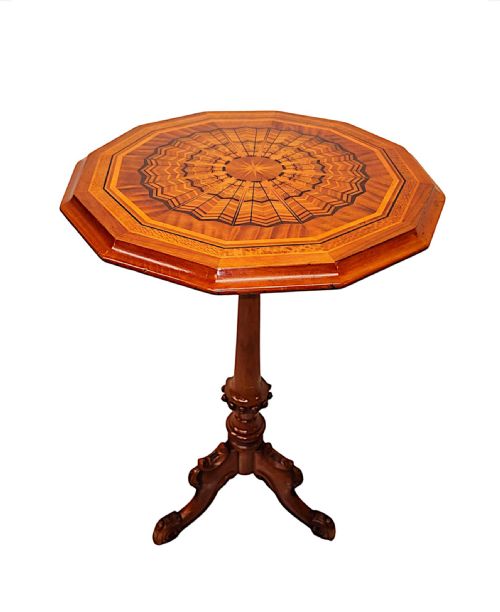
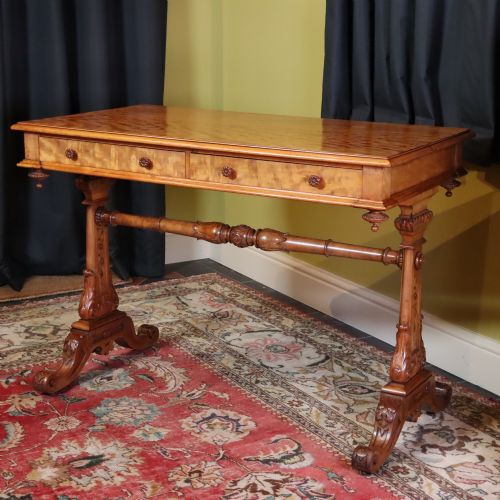
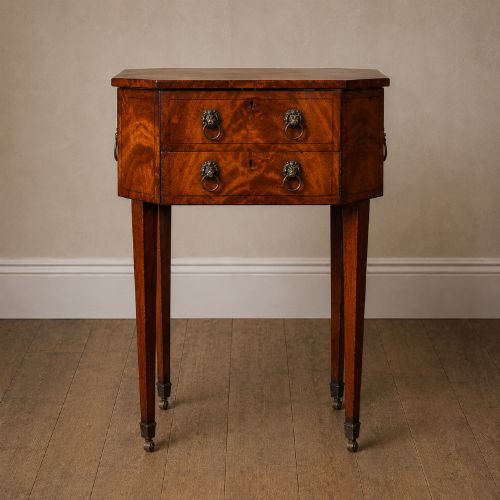
When searching for a golden satinwood side table, buyers encounter forms ranging from compact lamp tables and occasional pieces to larger pembroke and console designs. These pieces emerge primarily from Georgian, Victorian, and Edwardian periods, alongside later twentieth-century iterations.
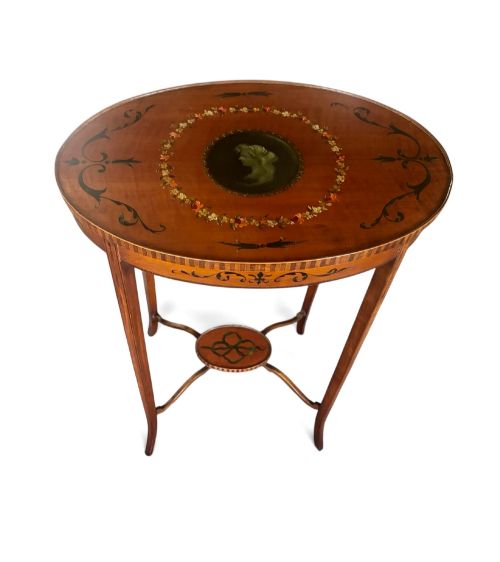
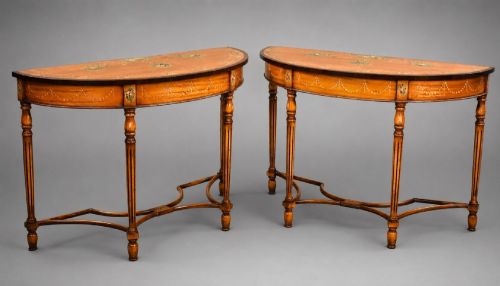
The selection frequently includes smaller bedside cabinets and nests of tables, often shaped as demi-lune consoles or rectangular occasional tables. Many carry stylistic influences from Sheraton and Regency designs, incorporating drop flaps, drawers, or painted surfaces.
Makers and workshops constructed these tables to serve functional roles in sitting rooms, bedrooms, and halls. Surviving examples demonstrate how cabinetmakers adapted the timber's bright natural colour for domestic utility.
What varies in quality
The degree of refinement in the marquetry inlay and painted decoration distinguishes different grades of execution. Artisans who invested time in precise contrasting stringing and balanced floral motifs produced work of superior visual depth.
Selection of the satinwood veneer itself creates divergence, as highly figured grain patterns and symmetrical matching across tabletops command greater visual presence. The integrity of the underlying joinery and stability of drop leaves or drawers also determine the standard of manufacture.
Golden Satinwood Side Table Retail Price Guide 2026
Typical asking prices for golden satinwood side table among the pieces listed under this phrase on Sellingantiques today, from the lower quarter to the upper quarter. They describe what is for sale here now, not the wider market.
Listings include eighteenth-century Georgian designs, Victorian pieces, and Edwardian painted furniture utilising satinwood, mahogany, and marble.
Gillows·Maple & Co
The Golden Satinwood Side Table Glossary
- Satinwood
- A durable hardwood known for its yellowish colour and reflective, satin-like sheen. It forms the primary surface veneer on these tables.
- Marquetry
- The art of applying pieces of veneer to a structure to form decorative patterns. Craftsmen used contrasting woods to create intricate geometric and floral designs.
- Pembroke table
- A small form of table with hinged flaps on either side that can be raised or lowered. These versatile pieces date predominantly from the Georgian period onward.
- Demi-lune
- A half-moon shape characteristic of console and side tables designed to sit flush against a wall. This profile frequently appeared in Sheraton Revival pieces.
Golden Satinwood Side Table: Frequently Asked Questions
Where should I place a golden satinwood side table?
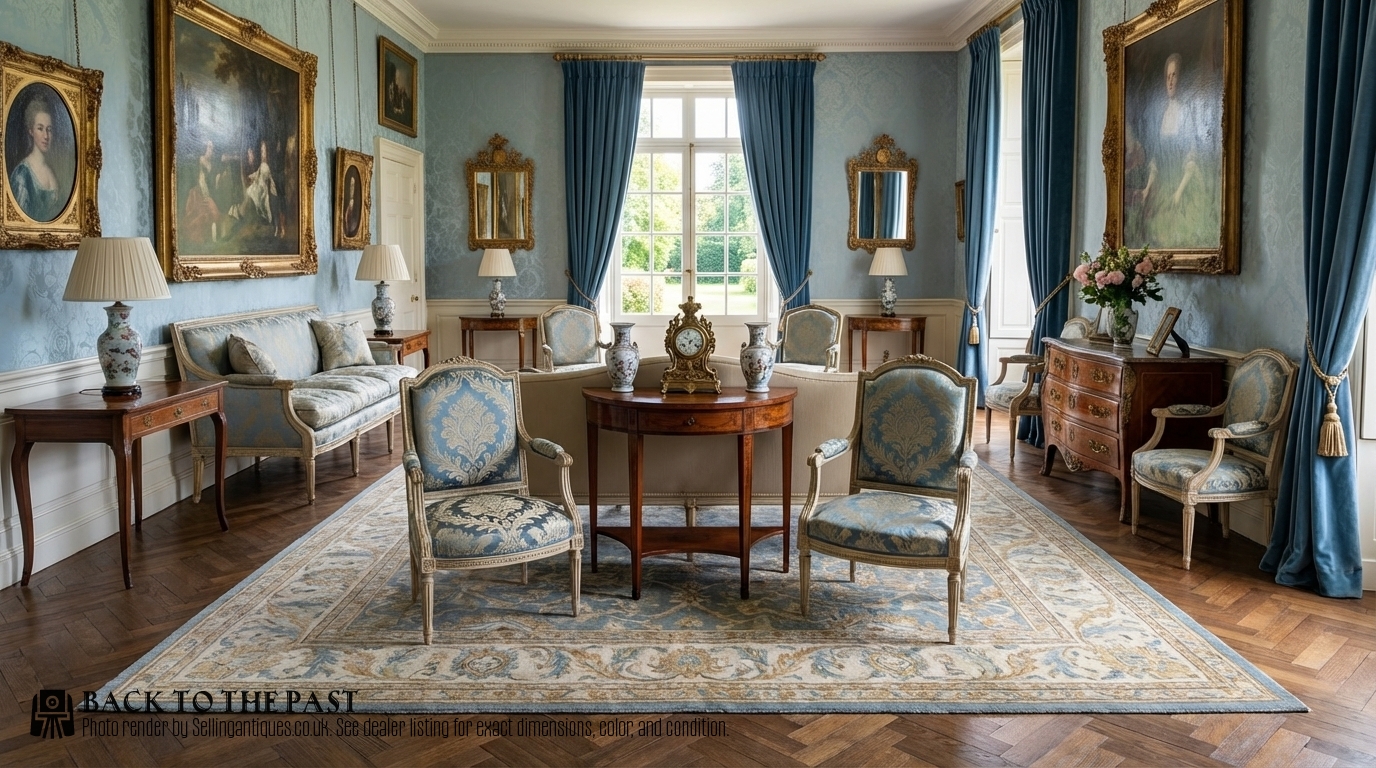
These tables suit hallways, drawing rooms, or bedrooms where their pale, reflective timber brightens dark corners.
Compact forms function well beside armchairs or as bedside surfaces, while console versions fit against flat wall spaces.
How do I care for satinwood furniture?
Keep satinwood away from direct sunlight and excessive heat sources to prevent the veneer from drying or fading.
Dust regularly with a dry cloth and apply occasional wax suitable for antique polished surfaces to maintain the sheen.
What is the difference between Georgian and Edwardian examples?
Georgian tables originate from the late eighteenth or early nineteenth century, displaying classical proportions and restrained inlay.
Edwardian interpretations often reflect the Sheraton Revival style, sometimes featuring lighter painted floral decorations and varied forms like nests of tables.
Are these tables sturdy enough for daily use?
Most occasional and side tables provide stable surfaces for lamps, books, or decorative objects during everyday activities.
Folding mechanisms on pembroke or games tables require gentle handling to preserve the original hinges and drop flaps.