




Gold Tone Mantel Clock
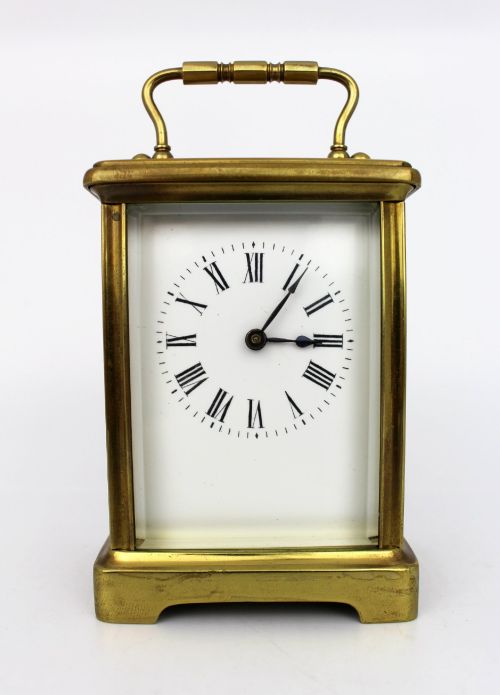
A gold tone mantel clock is a portable timepiece housed in a brass, gilt brass, or bronze case, chosen for its desk or shelf presence.
Gold Tone Mantel Clock
When you search for a gold tone mantel clock, you encounter carriage clocks and desk timepieces spanning the nineteenth century through the mid-twentieth century. The selection on this page centres heavily on French and Swiss examples housed in brass or gilt brass cases.
Most pieces date from the nineteenth and early twentieth centuries, including Edwardian iterations and specific periods such as eighteen ninety. These items typically take the form of carriage clocks with glass panels, travel cases, or engraved decorative frames.
You will also find distinct variations like mid-century Swiss inline skeleton timepieces alongside traditional French repeater mechanisms. The predominant materials across these listings remain brass, gilt brass, and bronze, often accompanied by enamel dials and glass viewing windows.
Materials and construction
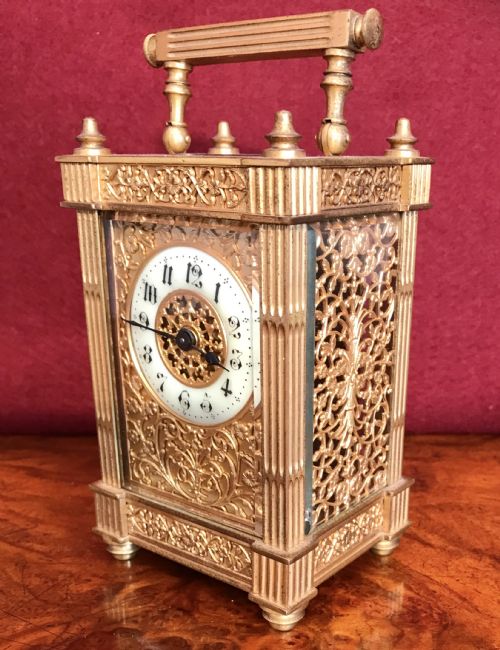
Makers constructed these clock cases primarily from brass, gilt brass, and bronze, frequently pairing them with bevelled glass panels to reveal the internal movement. Many examples feature fully engraved surfaces, filigree masks, and decorative bronze or enamel side panels.
The internal mechanics rely on Swiss or French movements, including eight-day trains and repeater functions housed within heavy gorge cases. Travel cases in leather frequently accompanied portable carriage clocks to protect the metal housing during transit.
One listed carriage clock carries unexpected race horse interest, proving that even Victorian timekeeping sometimes stopped for a flutter on the turf.
Distinguishing quality
Quality in these timepieces rests upon the crispness of the engraving across the brass or gilt bronze case and the complexity of the movement. Fully engraved gorge cases and intricate filigree masks demand a higher degree of artisan skill than plain housings.
The presence of specialised complications, such as repeater mechanisms or skeletonized inline layouts, separates standard timepieces from finer horological examples. Additionally, the survival of original components, such as matching travel cases and undamaged enamel dials, elevates an individual piece.
Henry Jacot·Penlington & Batty
The Gold Tone Mantel Clock Glossary
- Carriage clock
- A small, portable spring-driven timepiece designed for travellers during the nineteenth century. These clocks usually feature a rectangular brass case with a glass top and sides.
- Repeater
- A mechanism that strikes the hours and quarters upon demand when a lever or button is pressed. This complication requires additional gear trains within the brass case.
- Gorge case
- A specific style of carriage clock housing characterised by a stepped, moulded top and base. It represents a classic French configuration seen frequently in late nineteenth-century examples.
- Skeleton timepiece
- A clock designed with open plates and bridges that expose the entire gear train to view. This layout emphasises the mechanics of the movement rather than a solid dial.
- Enamel
- A glassy substance fused to a metal dial substrate through firing. It provides a smooth, white background for painted clock numerals.
Gold Tone Mantel Clock: Frequently Asked Questions
What is a carriage clock?
A carriage clock is a portable mechanical timepiece originally built for travel by horse-drawn carriage or train during the nineteenth century. They typically feature a rectangular brass or gilt brass frame with glazed panels.
These clocks operated using a spring movement rather than a swinging pendulum, allowing them to keep time while moving. Most include a folding handle on top for carrying.
How do repeater clocks work?
A repeater clock contains an extra mechanical train that chimes the last hour and quarter-hour when the owner presses a button or lever on the case. This allowed time-checking in the dark before electric lighting.
French makers incorporated this complication into many nineteenth-century carriage clocks, often utilising a robust eight-day movement.
How do I date a brass carriage clock?
Dating relies on stylistic shifts in the brass case design, the shape of the handle, and the type of escapement visible through the glass panels. Earlier nineteenth-century models often feature heavy, ornate engraving, while Edwardian pieces sometimes display refined filigree masks.
Signatures or maker marks stamped on the backplate of the movement provide more precise chronological markers when present.
Where should I place a desk timepiece?
These clocks suit stable horizontal surfaces such as mantels, desks, or wooden tabletops where their brass and glass construction can catch the light. Because they are mechanical devices, avoid placing them in damp areas or in direct sunlight.
Ensure the surface is level to keep the escapement beating evenly and the movement running reliably.