

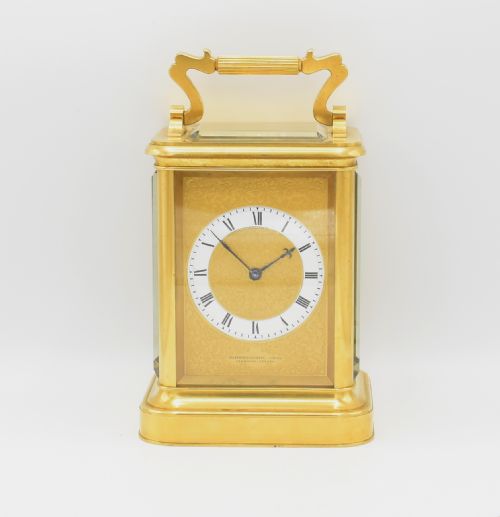
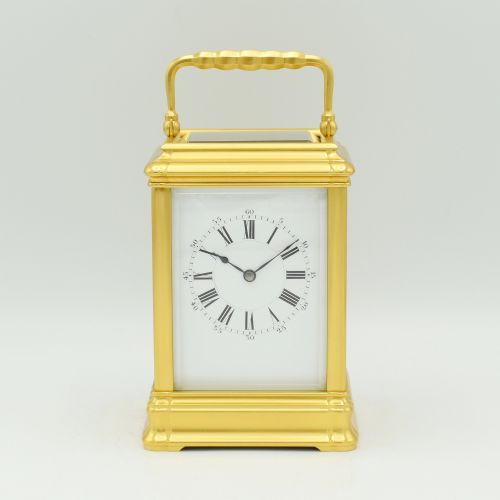
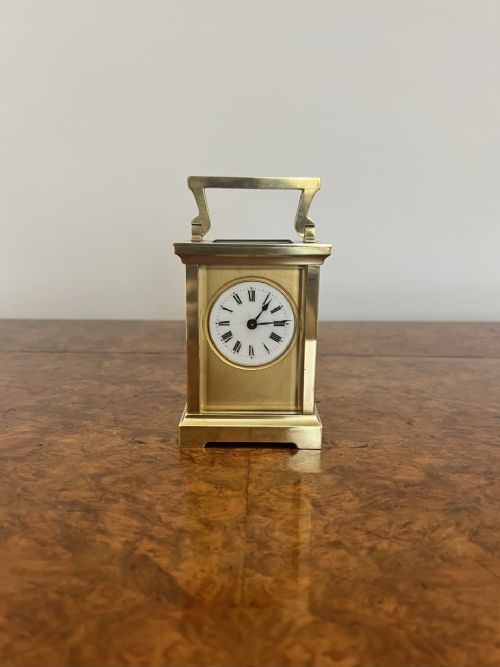
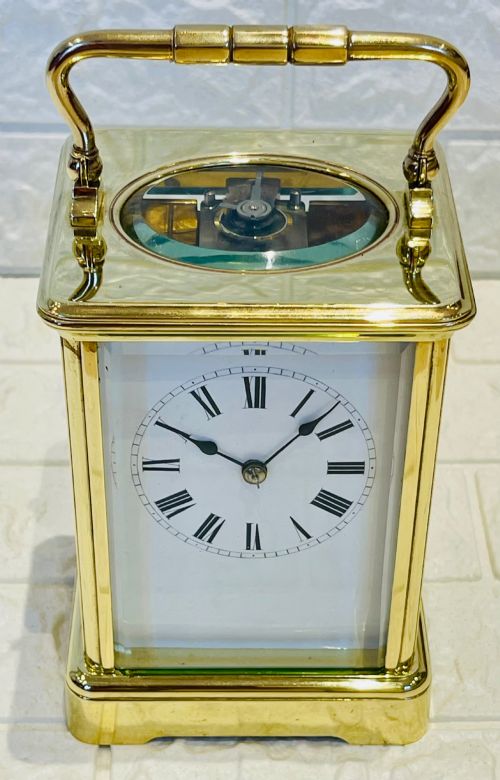
Victorian Brass Travel Clock
A victorian brass travel clock is a heavy metal timepiece built for journeys, offering portability and mechanical precision.
Victorian Brass Travel Clock
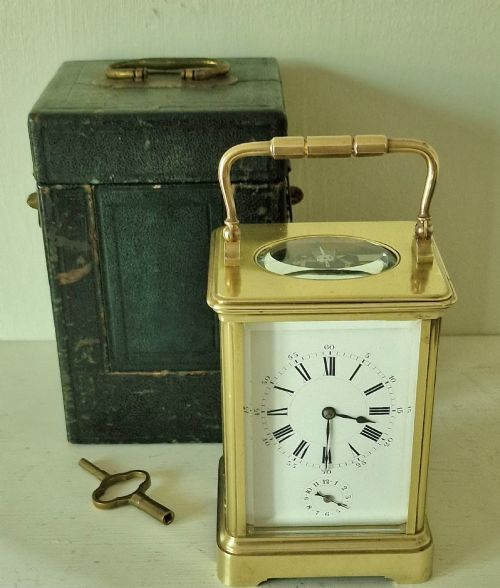
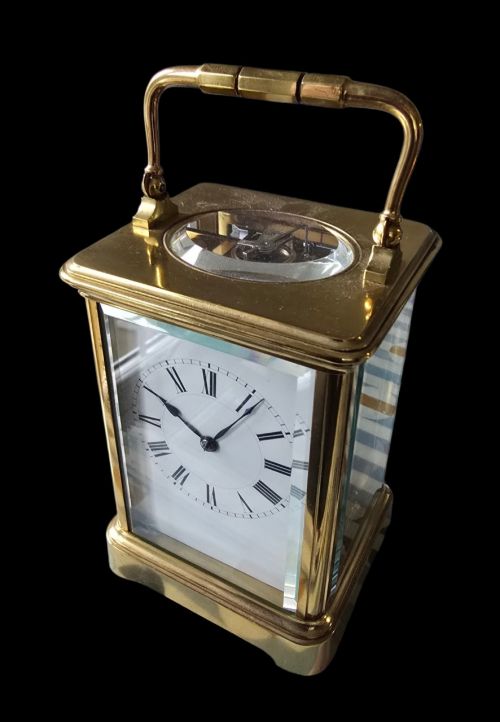
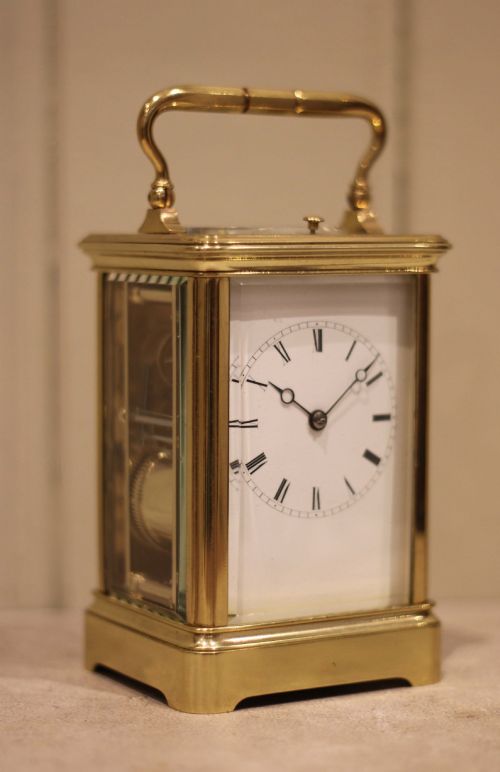
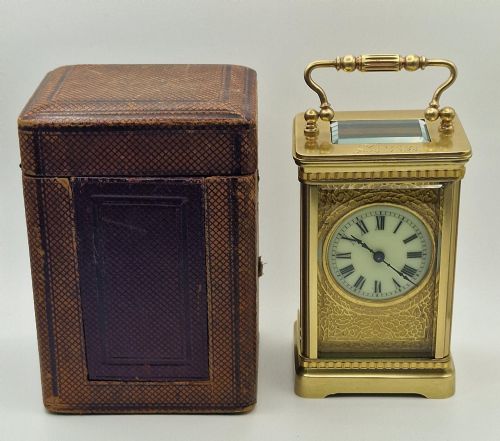
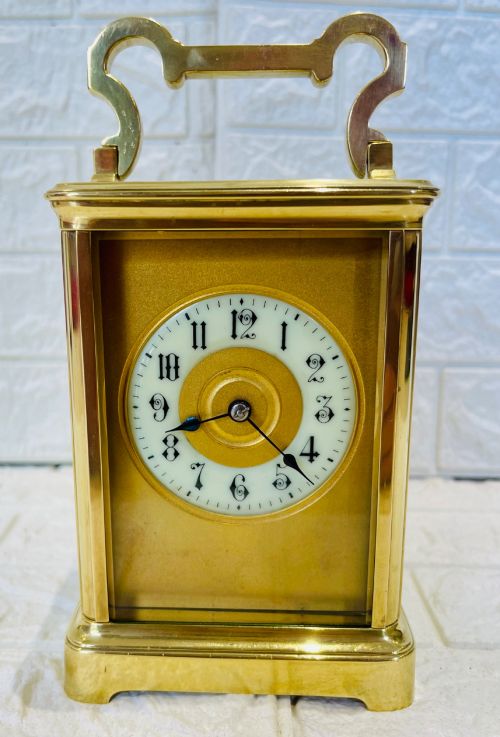
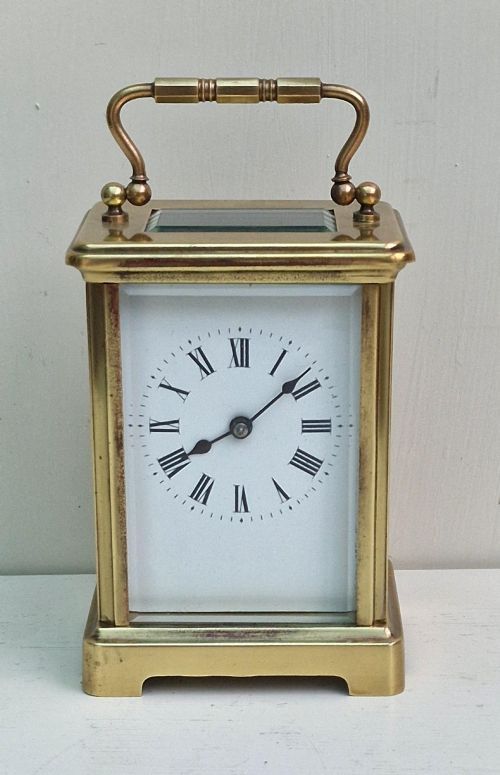
A victorian brass travel clock is a portable timepiece designed to be carried on journeys, housed in a robust metal frame with glass panels. Most examples found here originate from the nineteenth century, reflecting both French and British manufacturing.
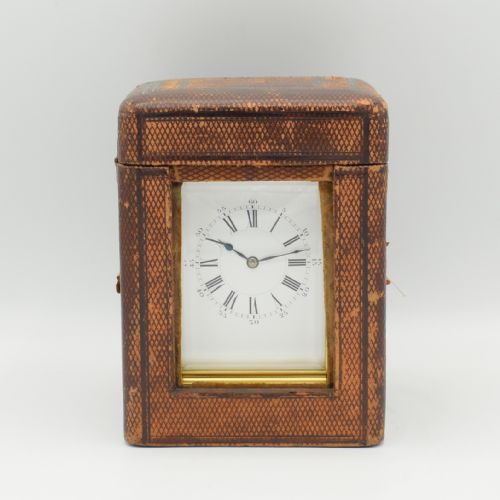
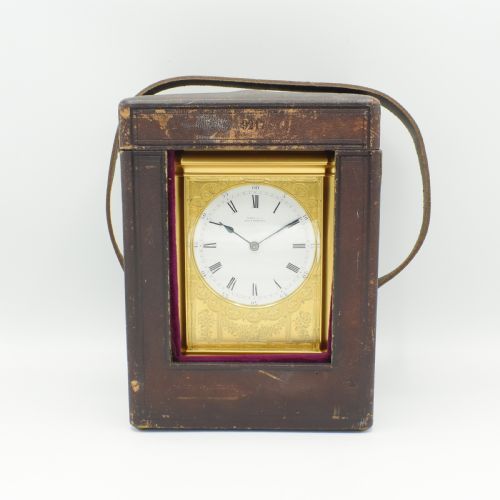
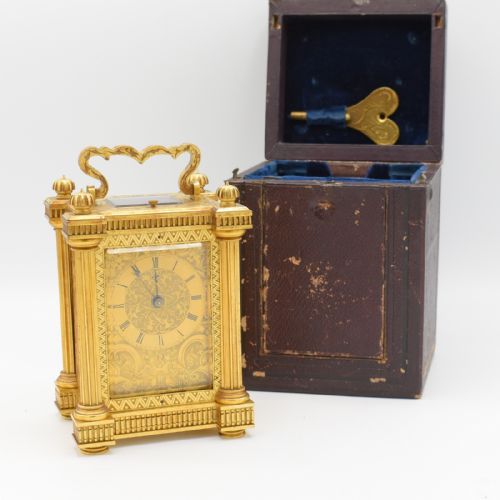
The objects take the form of carriage clocks, desk clocks, and miniature timepieces. Many retain their original leather travel cases, which protected the mechanism during movement.
Makers often integrated repeating functions or striking mechanisms, allowing the owner to check the hour audibly in the dark. These pieces combine utilitarian durability with refined domestic styling.
How they were made
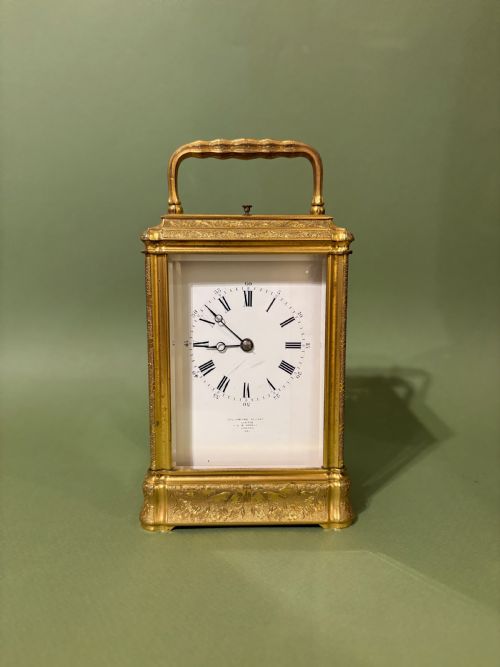
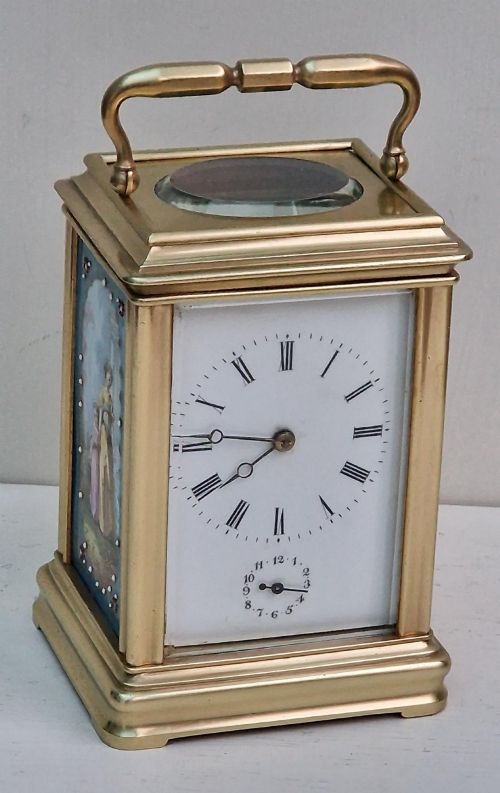
Makers constructed the primary case from brass and gilt brass, housing bevelled glass panels that reveal the interior escapement. Some models incorporate porcelain panels or enamel dials decorated with Roman numerals.
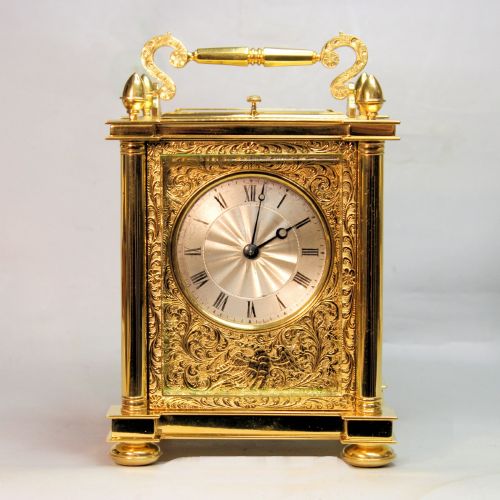
Gilt engraving frequently adorns the brass framework, while steel components regulate the mechanical movement inside. Original leather provides the exterior housing for travelling.
Workshops utilised eight-day movements, fusee mechanisms, and strike-repeat systems to ensure dependable timekeeping while in transit.
Victorian Brass Travel Clock Retail Price Guide 2026
Typical asking prices for victorian brass travel clock among the pieces listed under this phrase on Sellingantiques today, from the lower quarter to the upper quarter. They describe what is for sale here now, not the wider market.
Several travel clocks retain their original leather cases, having safely survived countless nineteenth-century bumpy carriage rides.
What varies in quality
The standard of execution depends heavily on the crispness of the gilt brass case engraving and the complexity of the movement. Examples with repeating mechanisms or porcelain panels demonstrate higher workshop ambition.
Miniature versions and heavily ornamented rococo revival styles require finer micro-mechanical skill from the maker. The presence of an original leather travel case elevates the historical completeness of the piece.
HENRI JACOT·COUSENS & WHITESIDE·Mappin and Web·Drocourt Paris·C. Detouche Paris·Antoine Redier of Paris·Margaine Of France
The Victorian Brass Travel Clock Glossary
- Carriage clock
- A portable spring-driven timepiece designed for travelling during the nineteenth century. These clocks usually feature a brass frame with glass windows.
- Gorge case
- A distinct rectangular brass case style with stepped mouldings at the top and base. This form is frequently encountered on French examples.
- Repeating movement
- A mechanism that chimes the hours and quarters when a button or pendant is pressed. This allowed travellers to ascertain the time in unlit rooms.
- Fusee
- A conical pulley used in English clocks to maintain equal power as the mainspring unwinds. It ensures consistent timekeeping across the duration of the wind.
- Escape movement
- The internal mechanism that controls the release of gear train energy to maintain the swing of the balance wheel. It represents the mechanical heart of the portable clock.
Victorian Brass Travel Clock: Frequently Asked Questions
What is a victorian brass travel clock?
A victorian brass travel clock is a portable mechanical timepiece enclosed in a brass and glass case, engineered to withstand movement.
These clocks were produced in large numbers during the nineteenth century by workshops in Britain and France.
How do you wind them?
Most models require a dedicated winding key inserted into arbors located on either the dial or the back plate.
Care must be taken not to over-wind the mainspring during this routine maintenance.
Why do some have leather cases?
Original leather travel cases were constructed to shield the exterior brass and fragile glass panels from knocks during carriage or rail journeys.
Finding a clock with its original case adds significantly to its historical integrity.
How do repeating clocks work?
A repeating mechanism sounds the last hour and quarter-hour upon pressing a plunger or button on the top of the case.
This added complication allowed travellers to know the time at night without lighting a candle.
Are French and British clocks different?
British examples often utilise fusee movements housed in substantial frames, whereas French workshops typically employed platform escapements and platform cylinders.
Both traditions prioritised portability alongside mechanical reliability.