






Engraved Gilt Brass Clock
An engraved gilt brass clock brings nineteenth-century precision into a room through intricate handwork and heavy golden metal.
Engraved Gilt Brass Clock
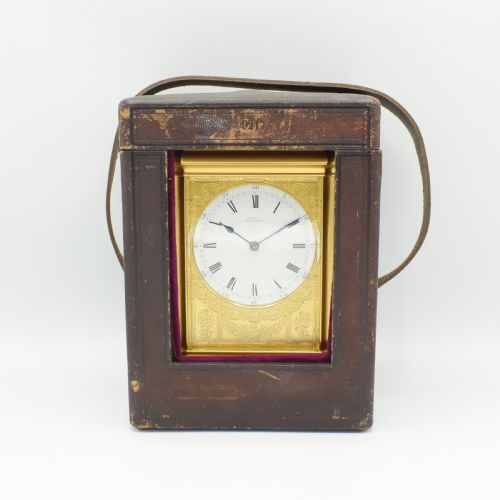
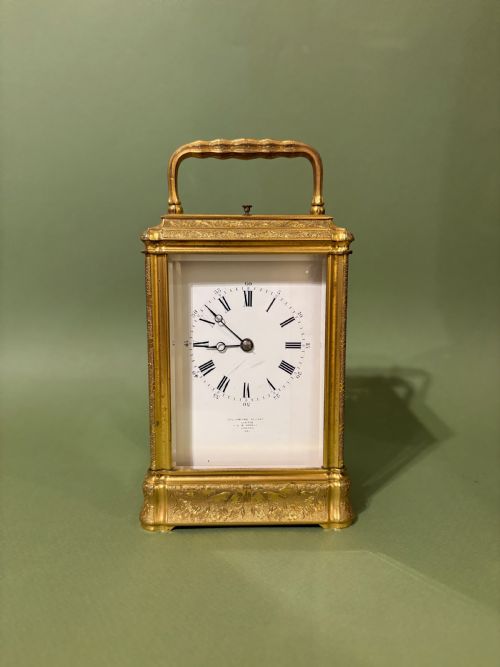
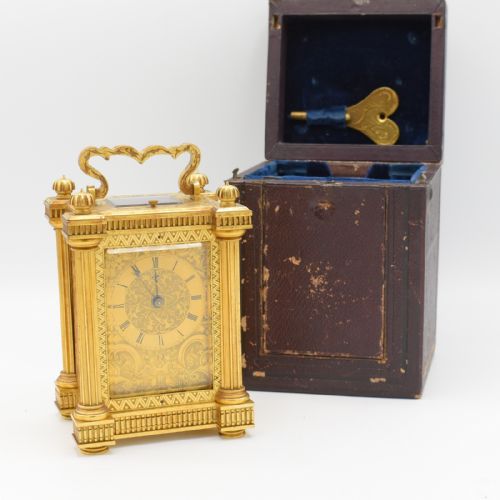
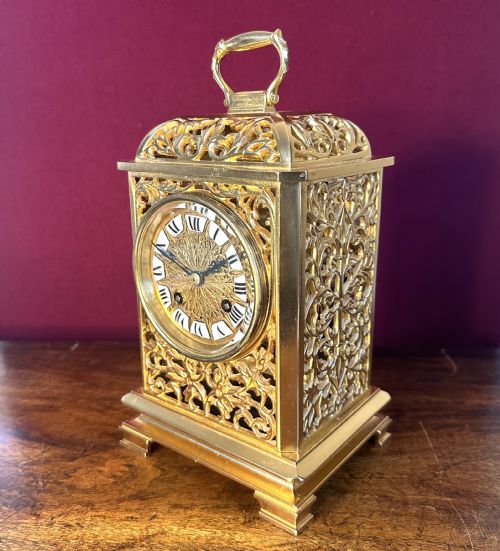
An engraved gilt brass clock is most commonly encountered as a French carriage clock from the Victorian era, spanning dates from the mid-nineteenth century up to the Edwardian period. These timepieces take the form of freestanding brass cases fitted with glass panels and decorated with detailed surface carving across the metal framework. English makers also contributed fusee movements and strut clock designs housed in similar metallic housings.
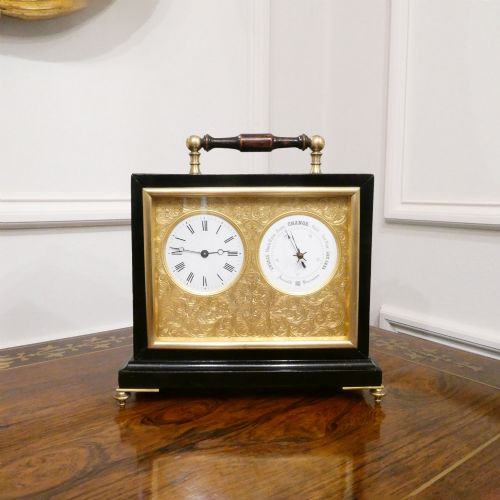
Carriage clocks dominate the selection, appearing in standard sizes as well as miniature and giant formats designed for travel or desktop display. Mantel clocks also emerge within the range, incorporating mahogany, ebonised wood or barometer combinations alongside the core brass structure. Dials range from simple white enamel faces to fully engraved brass masks with visible escapements.
Materials and construction
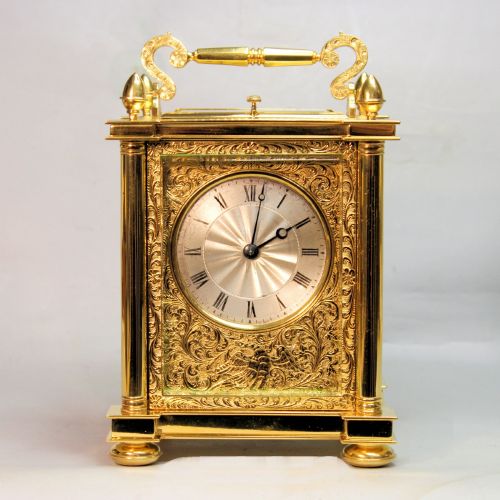
These clocks rely on a foundation of brass that receives a gilt surface treatment to impart a rich golden tone. Artisans used hand-engraving tools to cut floral, geometric or scroll patterns directly into the metal plates, bezels and handle mounts of the case.
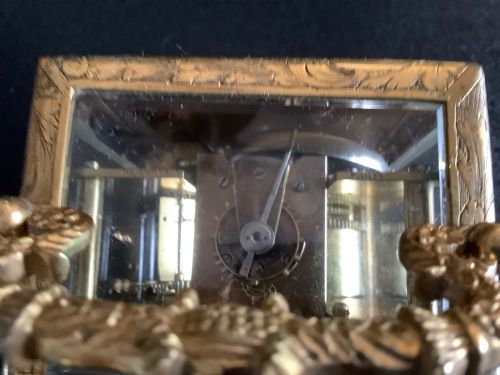
Interiors house mechanical brass gear trains, often featuring platform escapements, repeat mechanisms or striking functions operating on bells or gongs. Glass panels encase the movement, while white enamel dials and silvered metal components provide contrasting legibility for the hands.
Some travel clocks for the Chinese market featured hidden compartments or extra complications to appeal to overseas tastes.
Distinguishing quality in production
Quality separates simple production items from exceptional horological examples through the depth and crispness of the hand-engraving across the entire case. Finer pieces exhibit continuous decoration on every side, including the dial mask and platform escapement, executed by skilled hands rather than mechanical stamping.
The sophistication of the internal movement further dictates the tier of the piece, with grand sonnerie striking capabilities, repeating complications and signed maker plates marking the upper echelon of craftsmanship. Heavier cast bronze or brass frames and multi-piece case construction also denote superior original manufacture.
Henri Jacot·Cousens And Whiteside·Howell And James·Delépine Barrois·Gontard And Bolviller·Mappin And Webb·Arnold And Frodsham·Thomas Cole·James Cole·Hunt And Roskell·Charles Frodsham And Holingue Frères·Drocourt·Paul Garnier·Bourdin·Tiffany·Moser
The Engraved Gilt Brass Clock Glossary
- Carriage clock
- A portable spring-driven timepiece designed for travel during the nineteenth century. These clocks typically feature a rectangular brass case with glass panels and a folding handle on top.
- Platform escapement
- The tiny horizontal assembly containing the balance wheel and hairspring located on top of the movement. This self-contained unit allows portable clocks to keep accurate time in any position.
- Fusee
- A conical pulley used in mechanical clocks to maintain even power as the mainspring unwinds. This mechanism ensures consistent force is delivered to the gear train throughout the run time.
- Grand sonnerie
- A complex striking train that chimes the hours and the quarters automatically on every quarter hour. Such movements represent a high degree of watchmaking skill.
- Gorge case
- A specific nineteenth-century carriage clock case design featuring stepped mouldings on the top and bottom frame. This profile is frequently associated with makers such as Drocourt.
Engraved Gilt Brass Clock: Frequently Asked Questions
How do I wind a carriage clock?
Most pieces require a specialised key inserted into the winding squares located on the backplate or underneath the base. Turn the key gently until resistance indicates the mainspring is fully tensioned.
Take care not to overwind the movement, as this can strain the internal spring steel. Ensure the clock is standing level on a firm surface before setting the hands.
What is a repeater mechanism?
A repeater function allows the clock to chime the last hour and quarters on demand when a button or lever on top of the case is pressed. This feature was originally designed to check the time in the dark during stagecoach journeys.
In contemporary settings, this complication offers a pleasant auditory display of mechanical complexity. The chime sounds on small internal gongs or bells secured within the brass housing.
How are nineteenth-century periods dated?
Dating relies on stylistic clues, case proportions, dial signatures and maker records stamped onto the movement backplates. Victorian pieces often display registration marks or specific design patents from the era.
French makers frequently engraved production numbers or exhibition medals directly onto the brass frames. Comparing these elements with known working dates of the firm narrows the timeframe to a specific decade.
Where should I place a gilt brass clock?
Position the clock on a stable mantelpiece, desk or side table away from direct sunlight, dampness and extreme temperature fluctuations. A secure surface ensures the pendulum or balance wheel maintains a steady beat without external vibrations interfering.
Keep the piece visible where the reflected light can catch the gilt brass surfaces and engraved details. Regular indoor environments suit these sealed glass and metal cases well.