


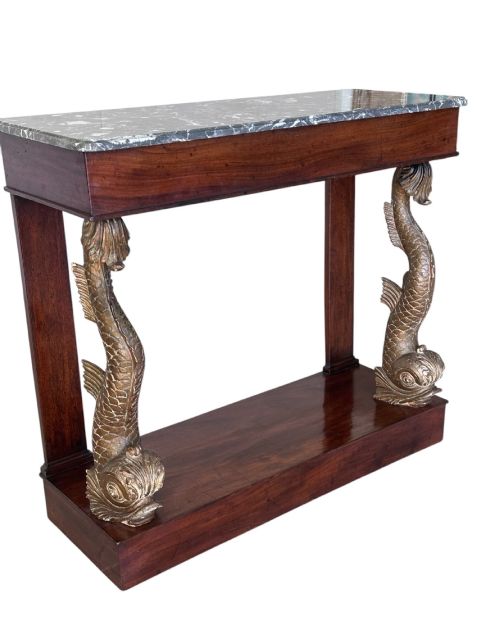
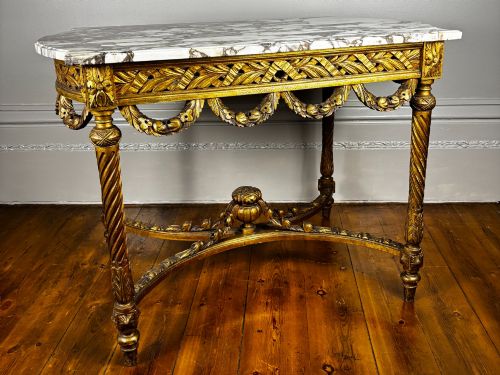
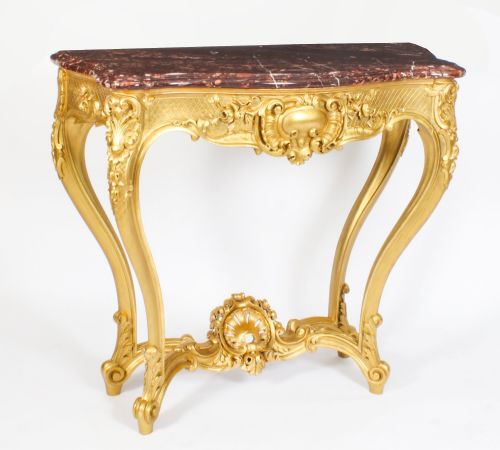
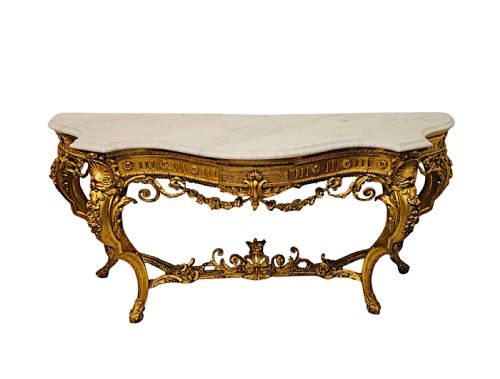
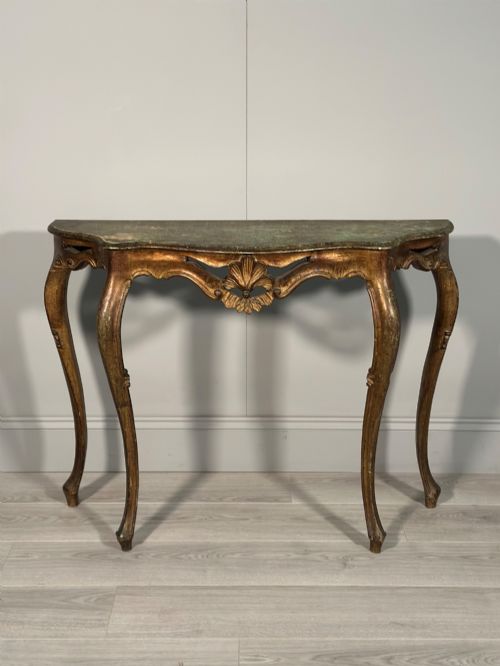
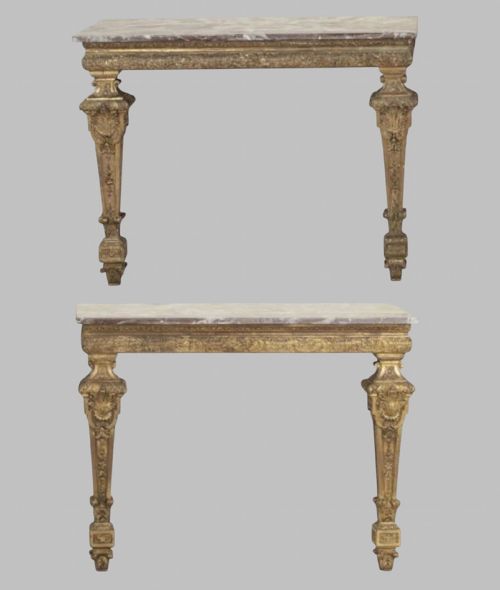
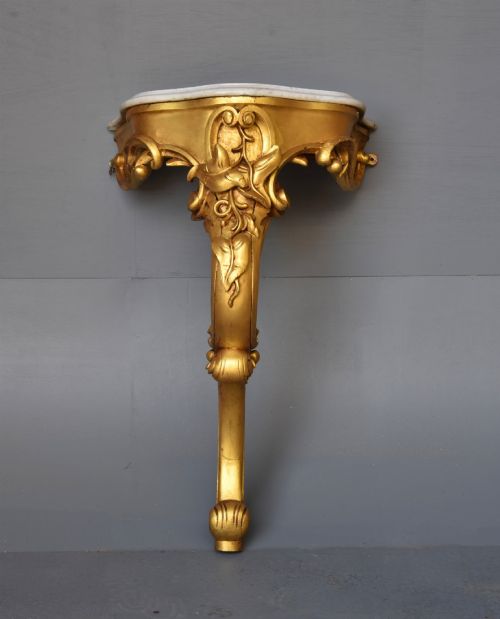
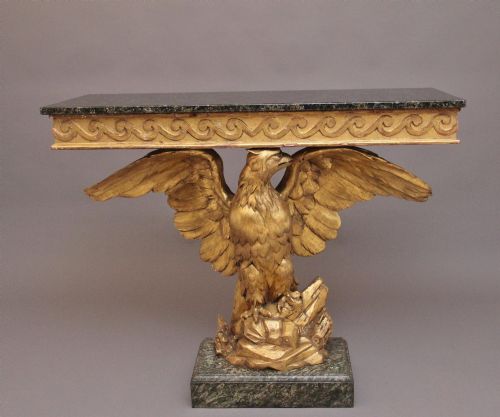
Gold Pier Table
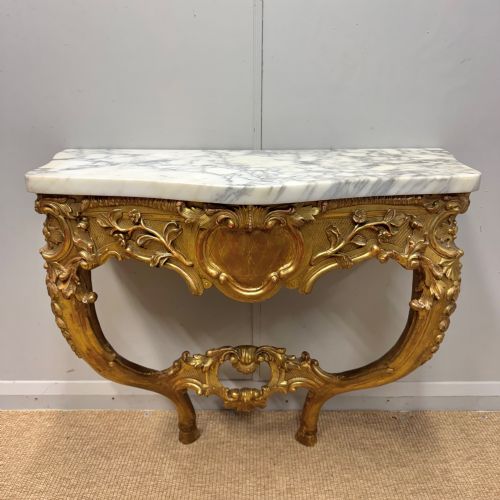
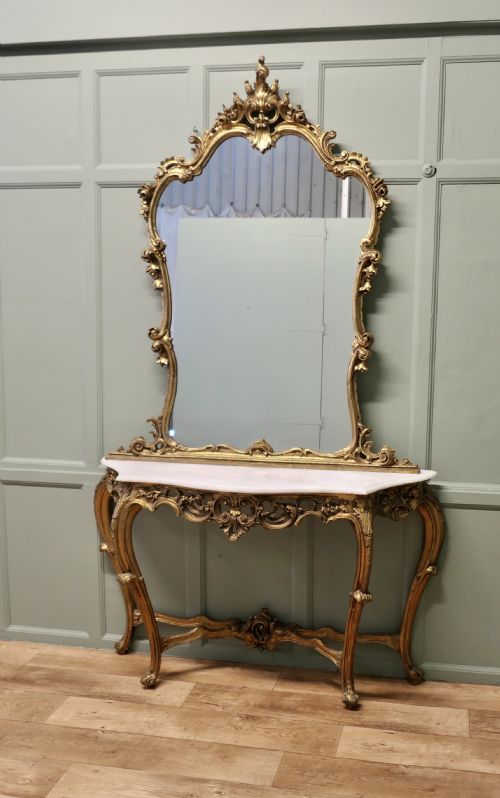
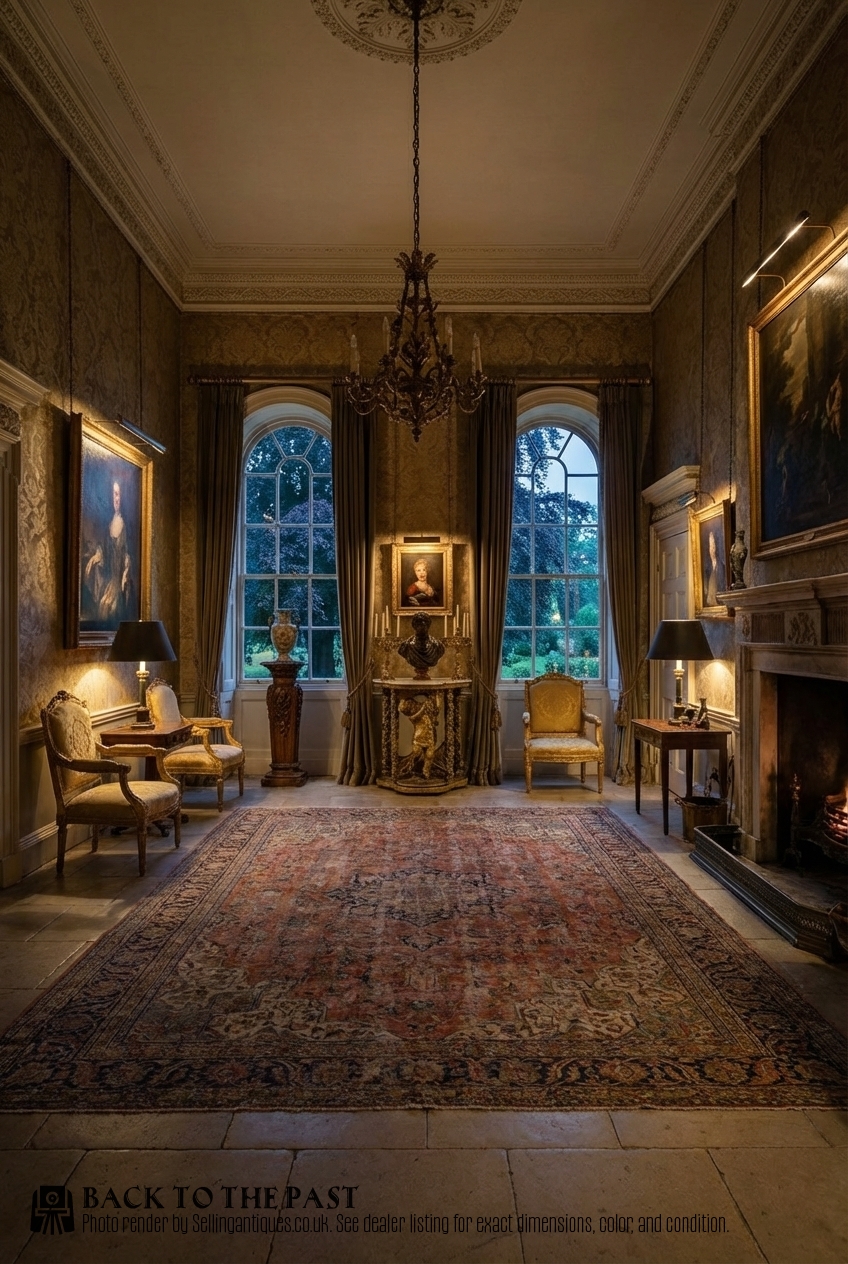
A gold pier table stands against a wall between windows, offering a decorative surface beneath a mirror.
Gold Pier Table
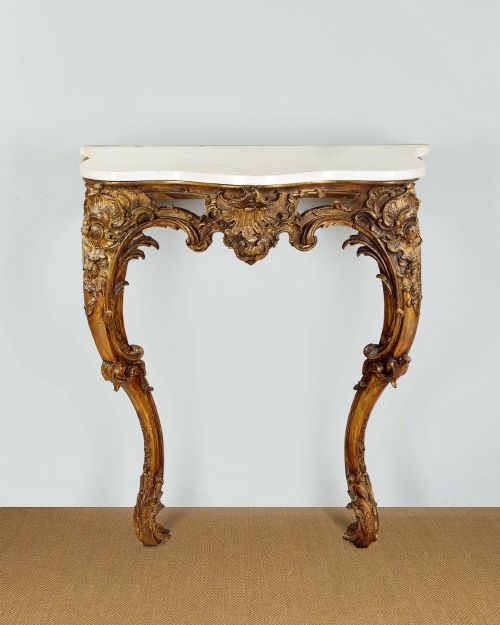
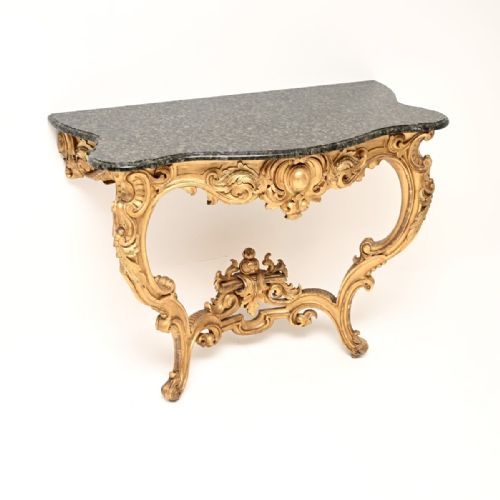
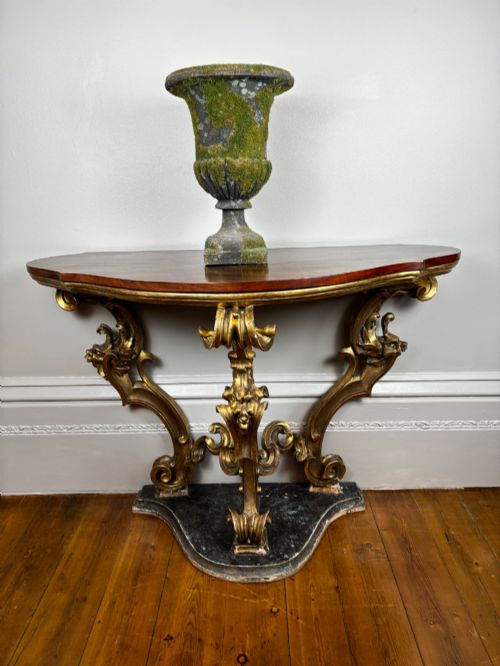
A gold pier table is a console or side table designed to fit against a pier wall, frequently paired with a matching pier mirror above it. The versions met on this page span the eighteenth and nineteenth centuries, alongside early twentieth-century examples.
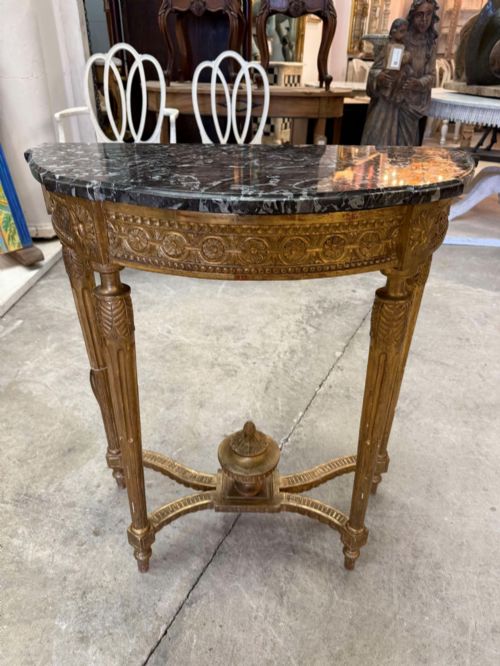
Makers and workshops produced these tables in various regional styles, including French Rococo, Italian Rococo, Neoclassical, and Regency designs. Forms include console tables, console tables with mirrors, demi-lune tables, and occasional side tables.
How they were made
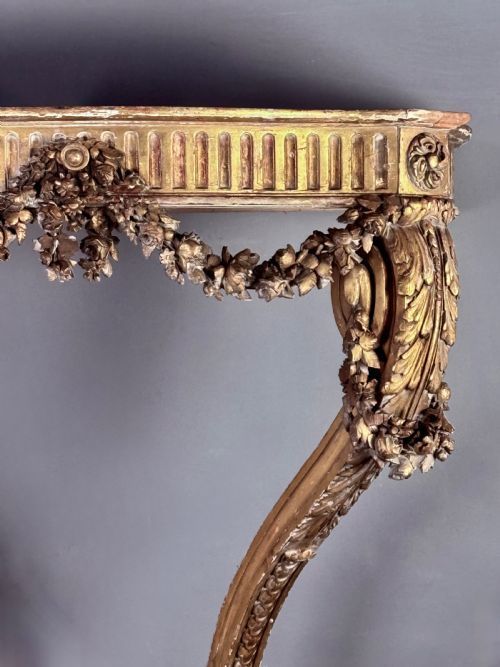
Craftsmen shaped frames from wood, gesso, and timber, applying gold leaf and paint to achieve a gilded finish. Many tables incorporate carved wood details, ranging from restrained linear moulding to elaborate floral and scroll motifs.
Slabs of marble form the upper surface on numerous examples, utilising stones such as Carrara and breccia marble. These heavy stone tops rest directly upon the carved and gilded wooden bases.
Gold Pier Table Retail Price Guide 2026
Typical asking prices for gold pier table among the pieces listed under this phrase on Sellingantiques today, from the lower quarter to the upper quarter. They describe what is for sale here now, not the wider market.
Listings feature eighteenth-century and nineteenth-century pieces alongside early twentieth-century revivals, utilising giltwood, gesso, and marble.
What varies in quality
The depth and crispness of the carved woodwork distinguish different tiers of execution, with hand-carved gesso and timber showing greater relief than simpler moulded versions. Italian and French workshops from the eighteenth century often display intricate asymmetrical scrollwork.
The selection and fitting of the marble top also indicate the standard of the piece, particularly when figured stones or specific regional marbles are integrated into the frame. Integration between the console base and its matching pier mirror represents a higher grade of manufacture.
Felix-Alfred Ternisien
The Gold Pier Table Glossary
- Pier table
- A table designed to stand against the wall space between two windows. These pieces often support decorative objects or match a hanging wall mirror.
- Giltwood
- Timber coated with gold leaf over a prepared gesso ground. This finish gives the wooden structure a bright metallic appearance.
- Console table
- A table supported by wall brackets or console legs rather than four independent vertical posts. They sit flush against a wall.
- Breccia marble
- A multicolored marble composed of broken angular fragments cemented together in a fine-grained matrix. It appears frequently on Italian and French tables.
- Demi-lune
- A half-moon shape used for table tops and furniture framing. This outline allows the furniture to sit compactly against flat walls.
Gold Pier Table: Frequently Asked Questions
Where do you place a gold pier table?
These tables belong against a flat wall, traditionally between two windows where architectural space permits. Placing them below a matching mirror creates a unified decorative arrangement in a hallway or reception room.
Because they anchor against the wall, they function effectively as console surfaces without obstructing main pathways in a room.
How do you identify an 18th-century piece?
Eighteenth-century examples often exhibit hand-carved Italian or French Rococo and Neoclassical motifs executed in timber and gesso. The detailing in the giltwood carving tends to show deep relief and organic fluidity specific to the period.
Examination of the construction methods beneath the gilding and the specific type of marble top further help determine the age of the table.
What is a pier mirror?
A pier mirror is a tall looking glass designed to hang directly above a pier table on the wall between windows. Sets combining both the table and mirror appear frequently in nineteenth-century rooms.
This pairing maximises reflected light in the interior space while presenting a coordinated decorative scheme.
Are marble tops original?
Many tables feature fitted marble tops, including Carrara and breccia varieties, which correspond to the period of the wooden base. The weight of the stone holds the top securely in position on the frame.
Inspecting the edge profile and the fit against the gilded timber helps confirm whether the marble matches the manufacture date of the base.