
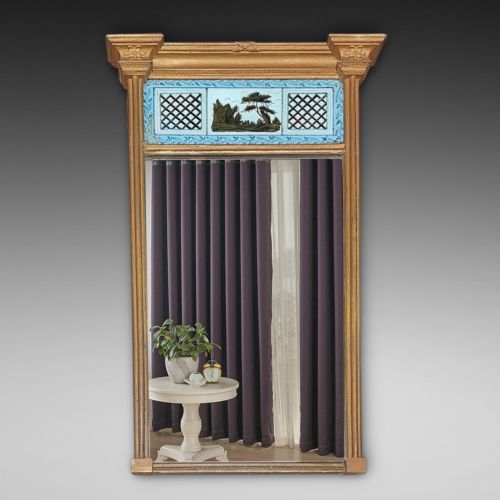


Gold Painted Pier Glass
A gold painted pier glass brings vertical presence and reflected light to a room, drawing on centuries of French, English and Italian design.
Gold Painted Pier Glass
A gold painted pier glass is a tall vertical mirror designed to hang on the narrow wall space between windows, known as the pier. The examples seen here span from the eighteenth century through the Victorian era, taking forms such as wall mirrors, overmantel mirrors and trumeau mirrors.
The Regency and nineteenth century dominate the current selection, alongside pieces from the eighteenth century and the early twentieth century. Makers and workshops across France, Italy and England produced these mirrors in varied styles including French Empire, Italian Rococo, Neoclassical and George I.
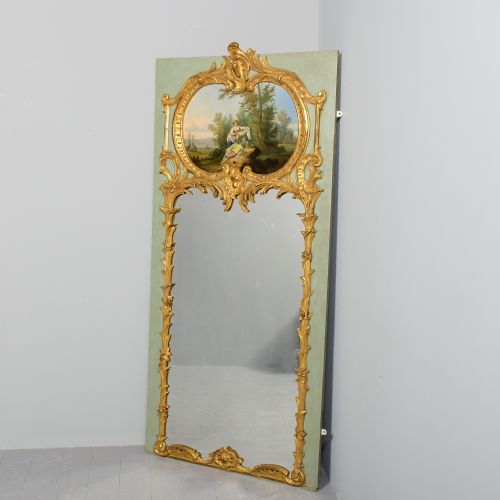
Buyers will encounter grand architectural pier mirrors with lion masks or console tables, alongside painted trumeau panels featuring verre eglomise sections. Most pieces combine painted wood or gesso surfaces with giltwood details, housing original mirror glass or mercury glass.
Materials and construction
Carved wood and gesso form the structural base for the gilded and painted ornament seen across these pieces. Craftsmen applied gold leaf and paint over prepared wooden frames, often combining parcel-gilt highlights with painted ground colours.
Glass plates, including mercury glass and verre eglomise panels, complete the optical surface of the pier mirrors. These reflective elements are set directly into the carved and painted frames, frequently accompanied by decorative upper panels.
Materials recorded across the selection feature giltwood, painted wood, gesso, verre eglomise, mercury glass and gold leaf.
Distinguishing quality in construction
The refinement of the carved detail and the application of the gesso separate standard production from finer work. Superior examples show crisp carving in the wood, particularly on decorative elements such as lion masks or classical motifs.
The integration of the painted and gilt surfaces also defines the piece, alongside the preservation of original glass plates. Depth in the gilding and subtlety in the painted finish indicate a higher standard of workshop execution.
The Gold Painted Pier Glass Glossary
- Pier glass
- A tall mirror specifically proportioned to hang on the wall space between two windows. These pieces often incorporate console tables or decorative upper panels.
- Trumeau mirror
- A decorative wall mirror featuring an upper painted or carved panel integrated above the glass plate. Such pieces frequently originate from French workshops.
- Verre eglomise
- A technique involving cold painting and gilding on the reverse side of glass. This method creates decorative panels often seen in the upper sections of Regency mirrors.
- Gesso
- A plaster-like mixture applied to wood frames to provide a smooth surface for gilding and painting. Finer application allows for sharper carved detail.
- Mercury glass
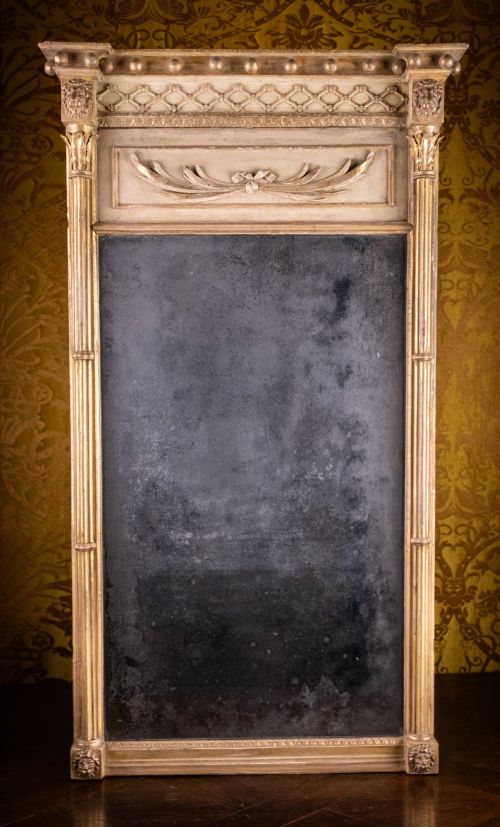
- An early type of mirror glass created by pouring a mercury amalgam behind the glass plate. It produces a characteristic mottled reflection seen on older antiques.
Gold Painted Pier Glass: Frequently Asked Questions
Where should I hang a pier glass?
A pier glass is traditionally hung on the narrow wall between two windows to reflect natural light into the room. They also function effectively above mantelpieces or console tables.
Because many of these mirrors are tall and heavy, secure wall anchoring is essential to support their weight safely.
What is a trumeau mirror?
A trumeau mirror includes a painted or carved wooden panel set above the mirror glass itself. This style originated in interior architecture where decorative panels were built directly into wood-panelled walls.
They offer a combination of painting and reflection that suits formal drawing rooms and living spaces.
How do I identify a Regency pier glass?
Regency pier glasses often feature classical architectural details, verre eglomise panels and giltwood frames. Motifs such as lion masks and ebonised details frequently appear on pieces from this period.
The proportions tend to be clean and vertical, reflecting the neoclassical tastes of the early nineteenth century.
Are the mirror plates original?
Many antique pier glasses retain their original glass plates, which often display foxing or minor silvering losses over time. Mercury glass plates show a characteristic cloudy depth distinct from modern glass.
Examining the backboards and the fit of the glass within the rabbet helps determine the age of the components.