





Scroll Carved Wall Mirror
A scroll carved wall mirror brings architectural depth and reflected light to a room through traditional timber frames.
Scroll Carved Wall Mirror
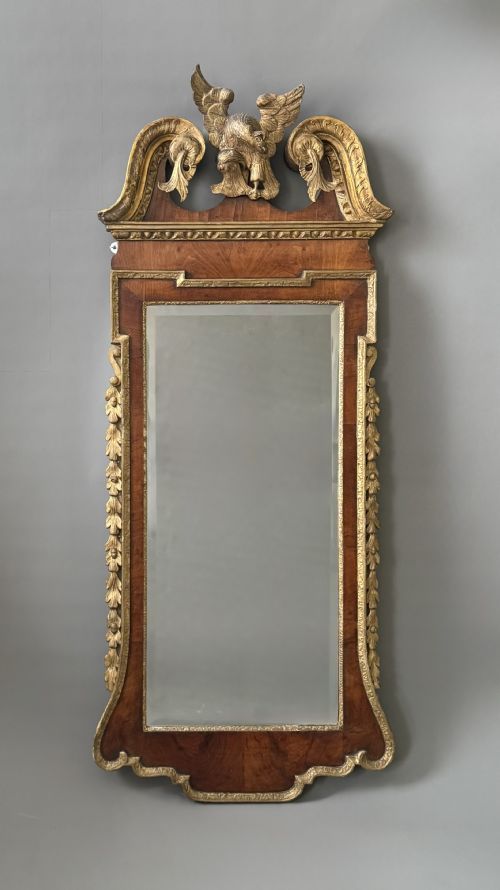
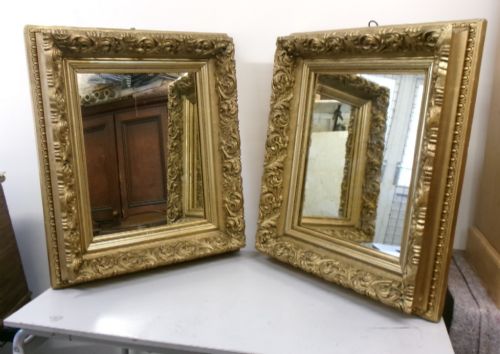
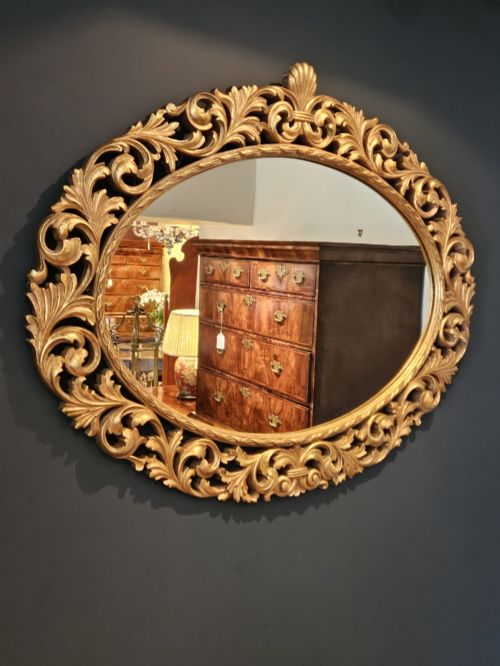
A scroll carved wall mirror is an interior hanging glass panel enclosed by a decorative wooden frame featuring rhythmic, curved ornamentation. When searching for a scroll carved wall mirror, a buyer encounters pieces originating from the eighteenth century onwards, spanning Georgian, Victorian, and later revival periods.
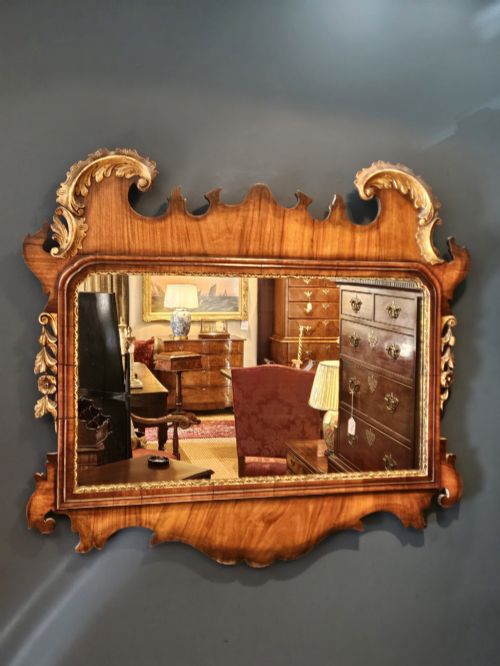
The selection includes vertical pier glasses, horizontal landscape formats, and substantial overmantel mirrors designed for room focal points. Walnut, mahogany, and giltwood form the primary framing structures seen across these listings.
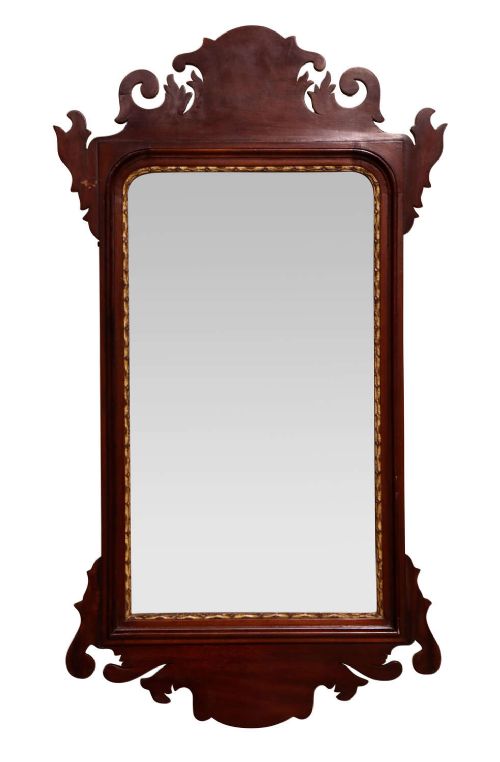
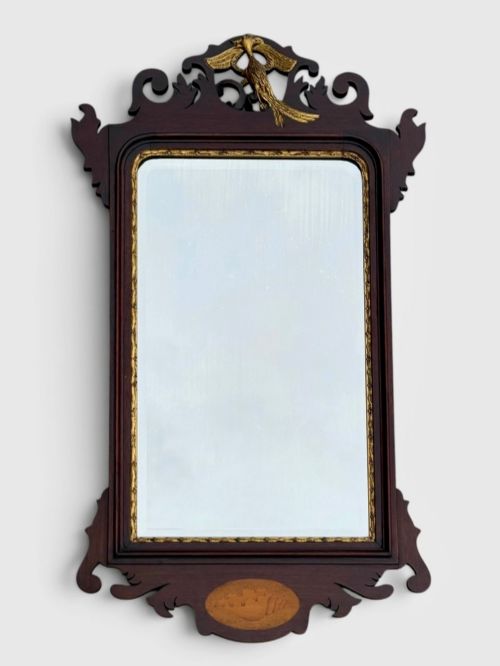
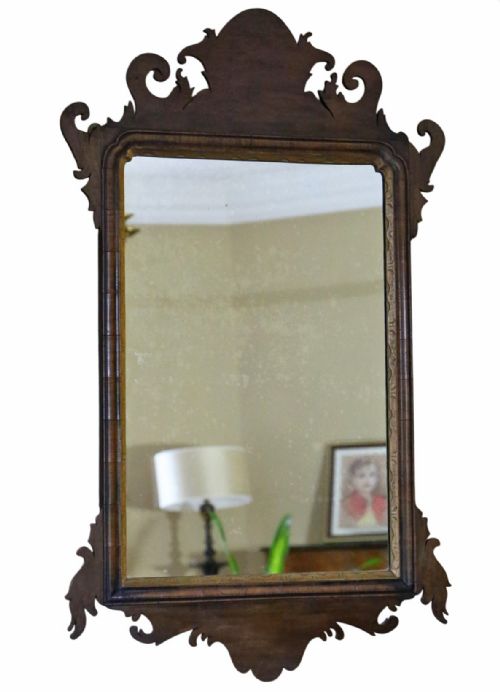
Georgian examples sit alongside later Chippendale revival and Rococo style interpretations. Many items incorporate fretwork details, parcel gilt accents, or traditional bird motifs positioned at the crest.
Materials and construction methods
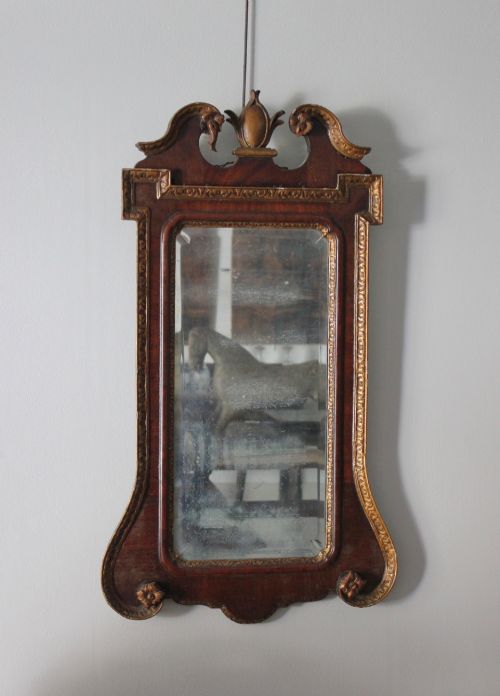
Frames rely on cabinet timbers such as mahogany, walnut, and oak, often shaped through fret-cutting or detailed hand carving. Giltwood and gesso pieces employ applied gold leaf over prepared wooden bases to achieve a reflective surface.
Makers utilised veneers, carved mouldings, and hand-engraved glass plates to complete the construction. Traditional joinery techniques secure the wooden elements, while original mirror plates often display bevelled edges or engraved decoration.
Some wooden birds watch over rooms indefinitely without ever migrating.
Judging quality and craftsmanship
Quality rests upon the crispness of the timber carving and the architectural proportion of the scrollwork. Superior examples display depth and precision in the fret-cut patterns rather than flat or machine-cut contours.
The integrity of the original gilt surface or timber patina dictates desirability. Pieces retaining untouched surfaces and early mirror plates command higher regard than those with heavily restored frames or replaced glass.
The Scroll Carved Wall Mirror Glossary
- Giltwood
- Wood that has been coated with a thin layer of gold leaf. This technique provides a brilliant reflective finish commonly used on eighteenth-century frames.
- Pier glass
- A tall mirror specifically designed to hang on the wall space between windows. These pieces often feature narrow proportions to fit architectural wall piers.
- Fretwork
- Openwork ornamentation carved or pierced through thin wood. It creates intricate geometric or scroll patterns across the frame.
- Overmantel mirror
- A wide mirror intended to be positioned directly above a fireplace mantelpiece. They frequently incorporate landscape orientations.
- Parcel gilt
- Partially gilded woodwork where gold leaf highlights specific carved details against a contrasting painted or polished timber ground.
Scroll Carved Wall Mirror: Frequently Asked Questions
Where should I hang a wall mirror?
These mirrors suit entrance halls, reception rooms, and above fireplaces where they bounce natural light around the space. Positioning them opposite a window maximises illumination in darker rooms.
Ensure the wall structure securely supports the weight of the timber frame, particularly for larger overmantel and pier glass formats.
How do I identify a Georgian mirror?
Georgian mirrors typically feature mahogany or walnut timbers, hand-cut fretwork, and period construction methods such as pegged joints. Look for dense, aged wood and traditional gilt preparation layers.
Revival pieces from later centuries often imitate these eighteenth-century traits but can be distinguished by machine tooling or newer secondary woods.
What is a Ho Ho bird?
The Ho Ho bird is a stylised Chinese phoenix motif frequently carved onto the crests of eighteenth-century Chippendale style mirrors. It adds an ornamental focal point to the top scrollwork.
This decorative detail appears on both original Georgian pieces and subsequent Victorian revival interpretations.
Are the mirror plates original?
Original mirror plates often show subtle foxing, minor silvering loss, or tiny imperfections acquired over centuries of use. These signs confirm age and historical continuity.
Replacement glass appears brighter and lacks the characteristic distortion found in older hand-finished plates.