


Vintage Painted Pier Mirror
A vintage painted pier mirror brings height and reflected light to a room, drawing the eye with classic proportions and decorative painted woodwork.
Vintage Painted Pier Mirror
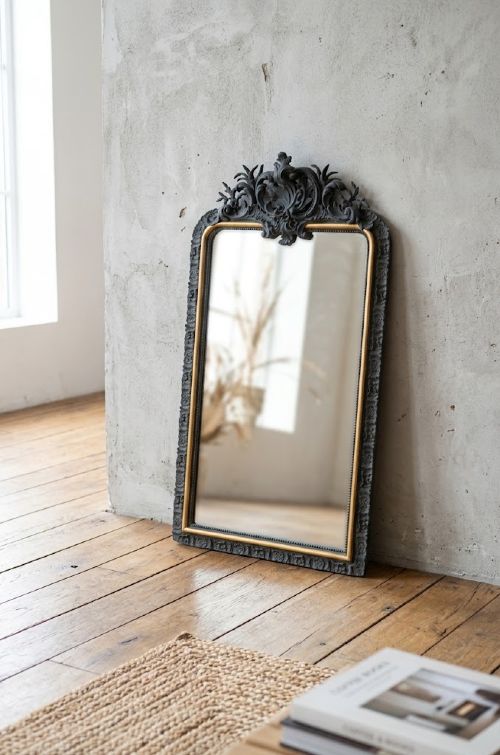
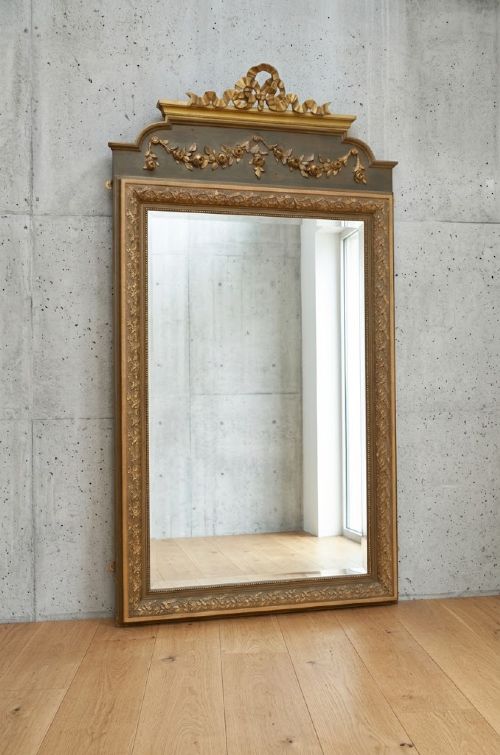
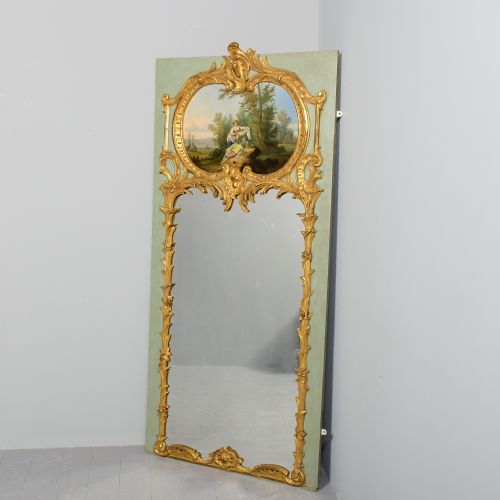
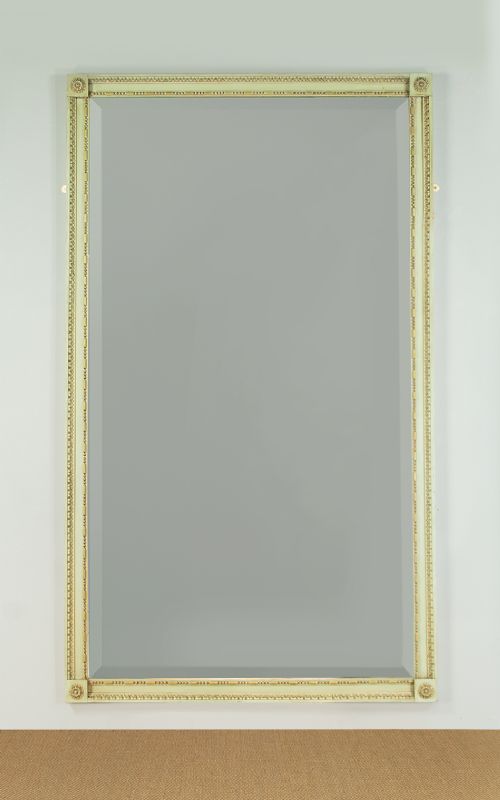
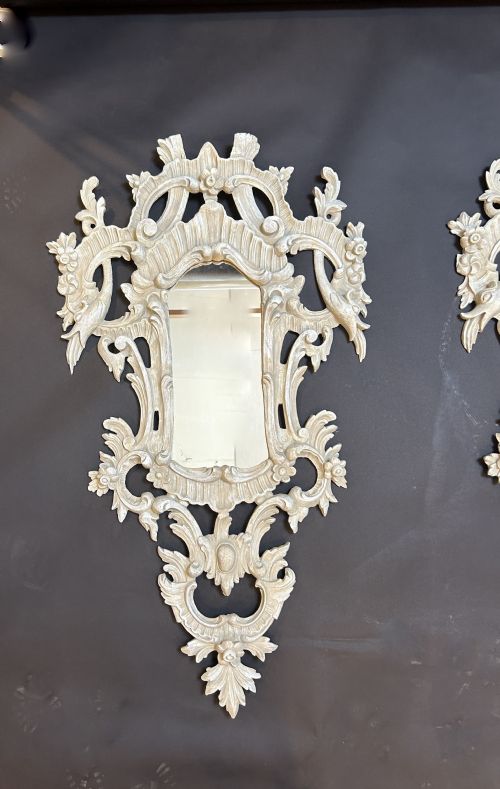
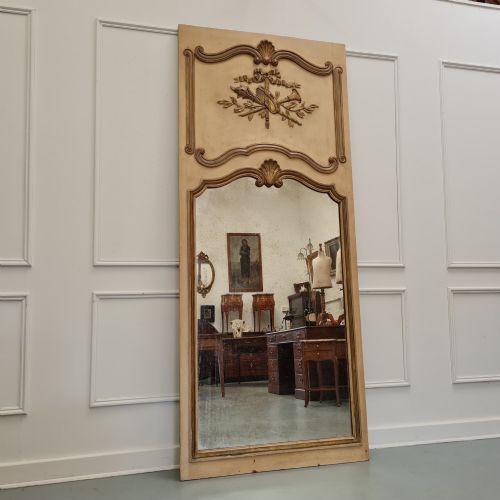
A vintage painted pier mirror is typically designed to hang in the narrow wall space between windows, often incorporating tall proportions to maximise light in a room. These pieces frequently appear in French styles, ranging from rustic trumeau panels to ornate Louis XV Rococo and Empire forms.
The selection includes examples dating from the eighteenth century through to the early twentieth century, spanning periods such as the Victorian era and the Queen Anne Revival. Alongside traditional wall-hanging pier mirrors, buyers will encounter related formats like overpainted hall mirrors, console tables, and architectural trumeau frames with integrated oil paintings or reverse glass prints.
Materials and construction methods
Makers built these frames using carved wood and gesso applied over a timber base, which provided a smooth surface for detailed decoration and paint. Giltwood accents frequently complement the painted finish, adding contrast through parcel gilt highlights or complete foundational gilding beneath the final layers of colour.
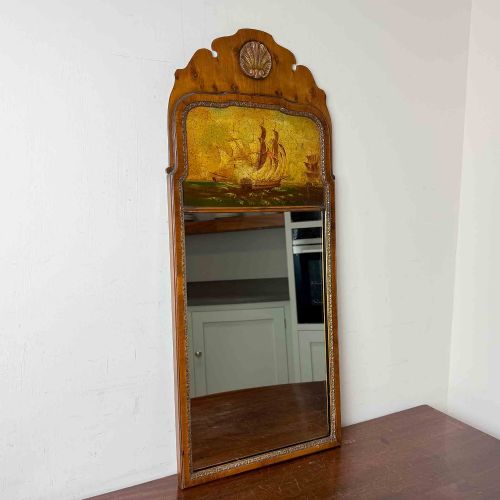
The glass panels are often housed in divided sections, sometimes incorporating decorative upper panels with hand-painted scenes, maritime engagements, or oil paintings set above the main mirror glass. Structural timbers range from native walnut and mahogany to maple and yew wood, depending on the regional origin and period of the piece.
Factors distinguishing standard pieces from finer examples
Quality in these mirrors rests upon the crispness of the carved wood and gesso detail, where deeper relief work and sharply defined motifs indicate superior craftsmanship. The preservation of the original paint finish and any associated gilding also dictates the integrity of the piece.
The character of the mirror glass itself influences the overall standard, with older original plates showing authentic ageing, foxing, and distortion that reflect period manufacturing techniques rather than modern industrial flat glass production.
The Vintage Painted Pier Mirror Glossary
- Pier mirror
- A tall mirror specifically designed to hang on the narrow pier of walling between two windows. These pieces often incorporate console tables or extend vertically to draw light deep into a room.
- Trumeau
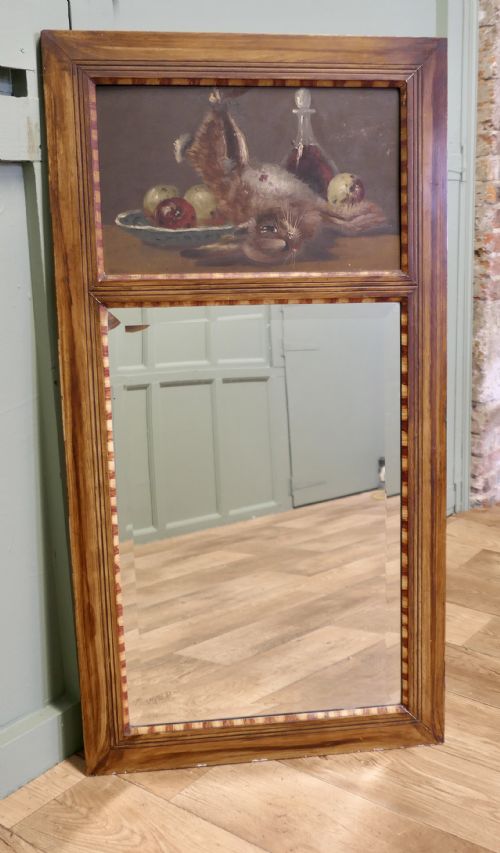
- A decorative wall panel that combines a mirror with a painted panel or oil painting within a single framed architectural structure. This French wall treatment was widely adopted across the eighteenth and nineteenth centuries.
- Gesso
- A plaster-like mixture applied to wooden frames as a base for painting and gilding. Skilled artisans carved intricate scrollwork and floral motifs directly into this layered surface.
- Parcel gilt
- A decorative technique where specific raised portions of a painted wooden frame are gilded with gold leaf, leaving the underlying painted colour visible in the recessed areas.
- Reverse glass print
- An image painted or transferred directly onto the back side of a glass panel so that it is viewed correctly through the front. These panels frequently appear in the upper sections of dividing antique mirrors.
Vintage Painted Pier Mirror: Frequently Asked Questions
Where should I hang a pier mirror?
These tall vertical mirrors work best in narrow wall spaces, particularly between two windows or above a low console table. Their original purpose was to bounce natural light back into the centre of a dark room.
Ensure the wall fixings match the substantial weight of carved wood and gesso frames. Positioning them opposite a light source will maximise the illusion of space.
How do I date an antique painted mirror?
Dating relies on examining the construction of the timber backing, the composition of the gesso, and the characteristics of the mirror plate. Eighteenth-century examples often feature heavy architectural mouldings, while nineteenth-century pieces frequently display French Rococo or Empire revival motifs.
Hand-bevelled edges and older glass foxing offer further clues to age, though original mirror plates were sometimes replaced during the lifespan of the frame.
Are these mirrors suitable for everyday use?
These decorative frames are sturdy enough for domestic placement in hallways, living rooms, or bedrooms, provided they are securely anchored to wall studs. The painted and gilded surfaces require gentle dusting with a dry cloth rather than wet cleaning products.
Avoid placing them in rooms with high humidity, such as unventilated bathrooms, to protect the historic gesso and wooden structure from moisture damage.
What is the difference between a trumeau and a standard mirror?
A trumeau incorporates an integrated artwork, oil painting, or decorative panel positioned directly above the glass plate within the same frame structure. Standard mirrors focus entirely on the reflective glass surface surrounded by carved or painted woodwork.
Both styles were utilised in period interiors, but trumeau panels function more as architectural wall panelling than simple functional looking-glasses.