


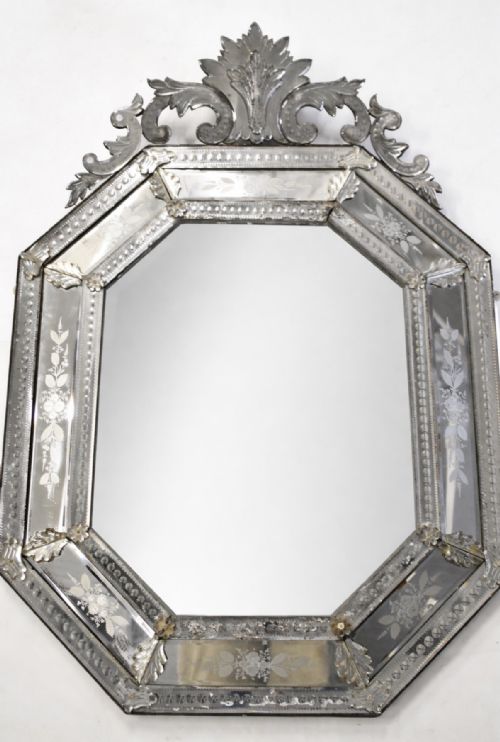


Decorative Venetian Mirror
A decorative venetian mirror brings dramatic light and intricate glasswork to a room, offering the unmistakable romanticism of historic Italy.
Decorative Venetian Mirror
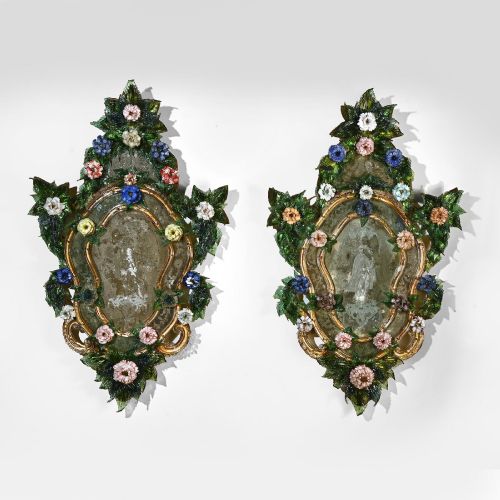
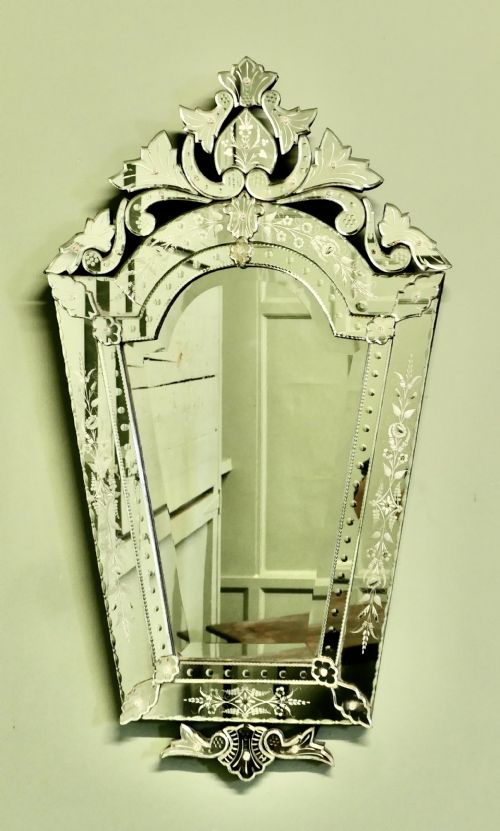
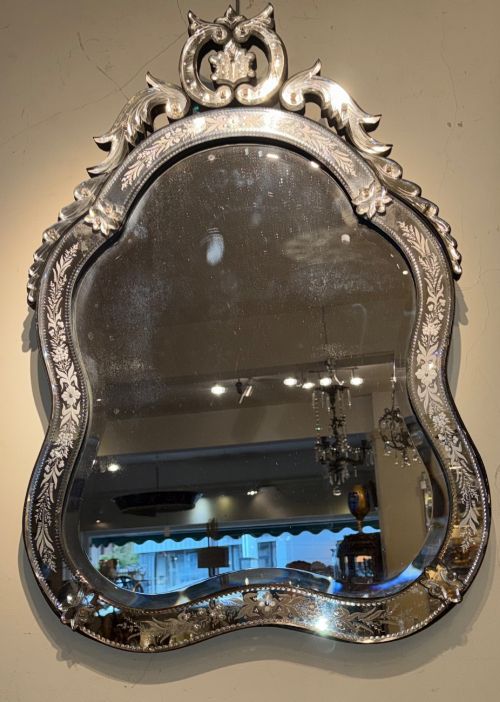
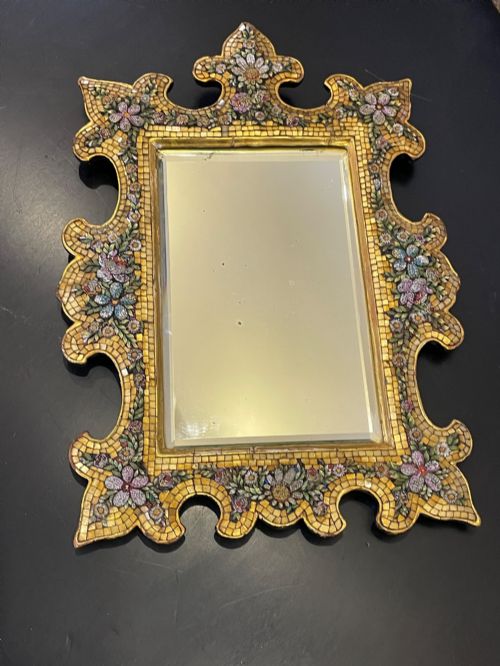
When you search for a decorative venetian mirror, you encounter pieces that range from grand 18th-century examples to later interpretations from the Victorian, Edwardian, and Art Deco eras. Wall mirrors dominate the selection, accompanied by occasional pier glasses and glass trays.
The aesthetic leans heavily on Venetian, Italian Rococo, and Continental Rococo styles, often featuring engraved plates and elaborate glass frames.
Most items you meet on this page date from the 19th and early 20th centuries, carrying the distinctive craftsmanship of Italian workshops.
Materials and construction techniques
Makers utilised glass, mirrored glass, and silvered glass, frequently mounting them on wooden foundations or giltwood frames enhanced with gold leaf.
Many plates feature detailed hand engraving, etching, and cut glass elements, sometimes incorporating ruby red or cobalt blue glass borders.
Carved gilt-wood and polychrome details appear alongside verre eglomise techniques, adding gilded highlights and painted decorations to the edges.
Some mirrors sport unexpected cobalt blue and ruby red borders, proving the Victorians loved a splash of colour.
Distinctions in quality and execution
The standard of a decorative venetian mirror rests on the crispness of the glass engraving and the depth of the etching on the plate.
The preservation of original silvering and the complexity of margin-edged glass panels separate standard production pieces from finer works.
The Decorative Venetian Mirror Glossary
- Verre eglomise
- A process of applying gold or silver leaf to glass and engraving a design through it. This technique creates a mirrored panel with detailed gilded highlights.
- Pier glass
- A tall mirror designed to hang on the wall between windows. These pieces often feature hand-painted frames and elongated proportions.
- Cushion mirror
- A frame style with a convex, bulbous profile wrapped in glass panels. This design reflects light from multiple angles.
- Pediment
- The decorative structure crowning the top of the mirror frame. Cut glass pediments frequently top ebonised or gilt-wood examples.
- Margin plate
- A series of smaller, overlapping glass pieces surrounding the central mirror plate. These borders are often bevelled and secured with decorative rosettes.
Decorative Venetian Mirror: Frequently Asked Questions
How do I clean a decorative venetian mirror?
Use a soft, dry microfibre cloth to gently remove dust from the glass surface and carved frame details.
Avoid spraying liquid cleaner directly onto the glass, as moisture can seep behind the silvering or damage the antique wooden backing.
Are these mirrors original to the 18th century?
Some examples date directly to the 18th century, while many pieces reflect the 18th-century taste recreated during the 19th and early 20th centuries.
Examine the framing techniques, backing boards, and glass oxidation to understand the exact age of each individual item.
Where should I hang a pier glass?
A pier glass works best on narrow wall spaces, particularly between two windows or above a console table.
Its vertical proportions draw the eye upward and amplify natural light within the room.