

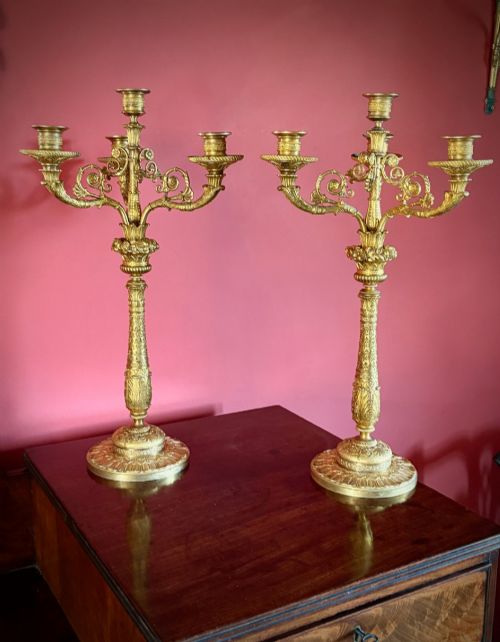
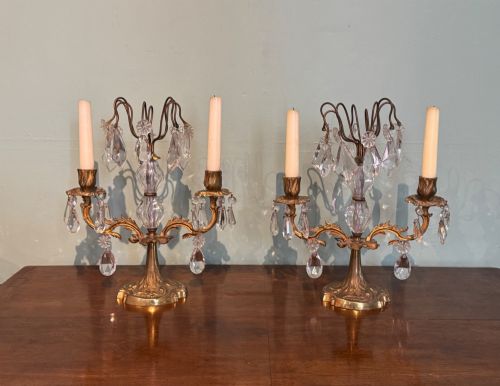
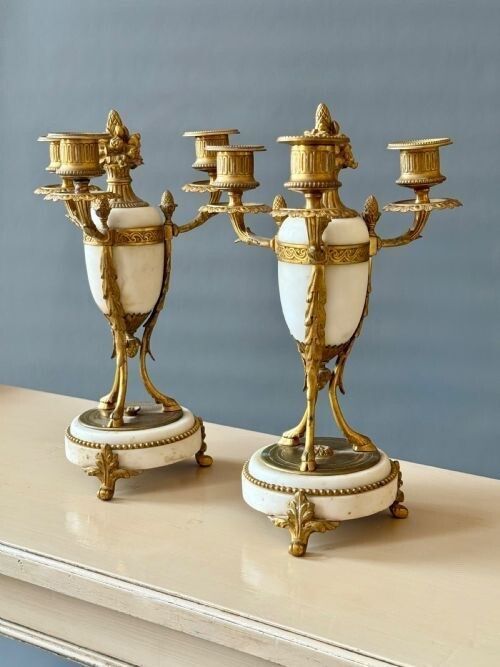
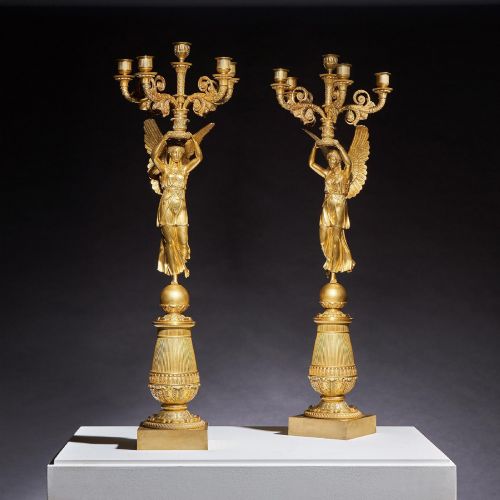
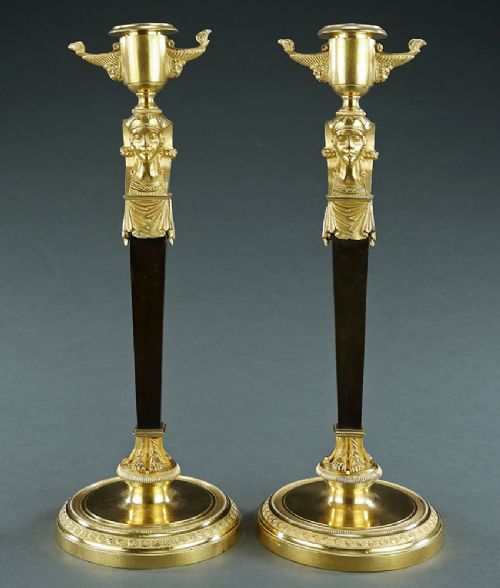
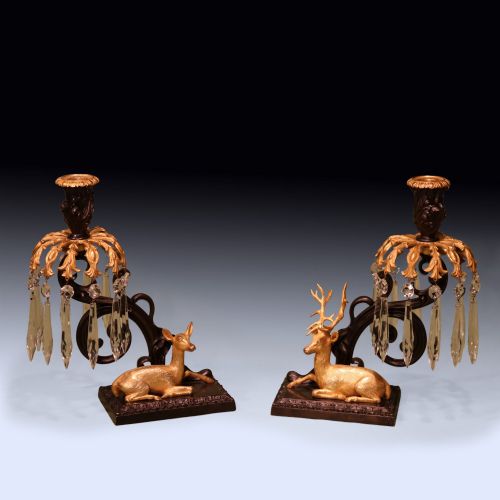
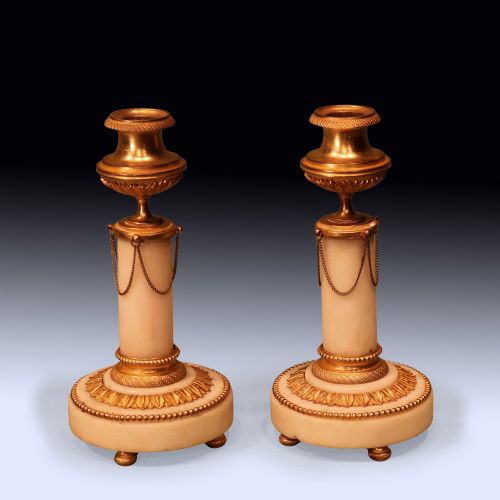
Gold Ormolu Candle Holders
Gold ormolu candle holders are decorative metal stands designed to support candles, bringing sculptural weight and warm metallic gleam to a room.
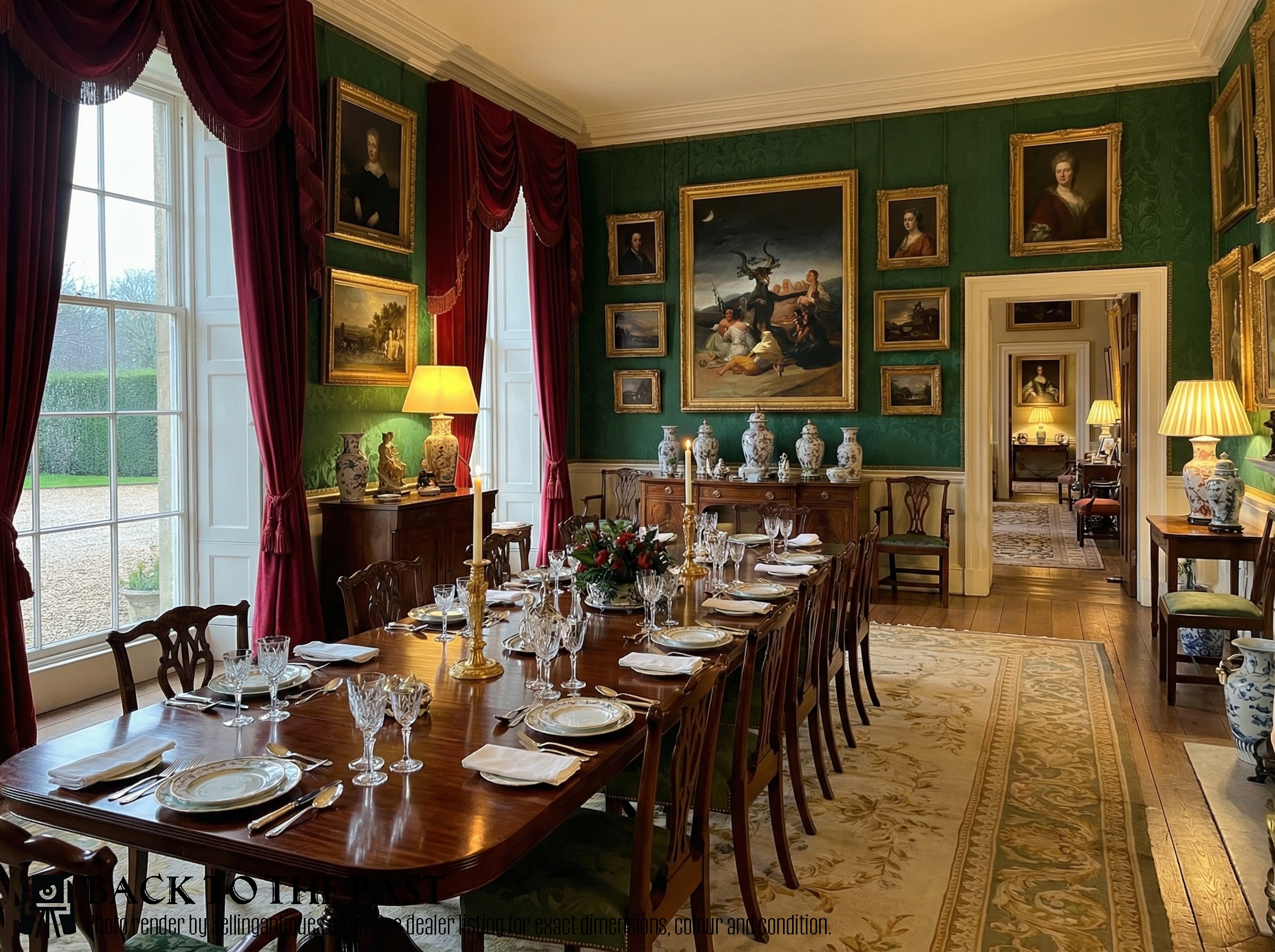
Gold Ormolu Candle Holders
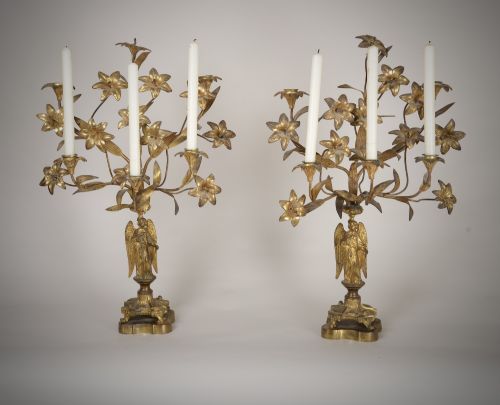
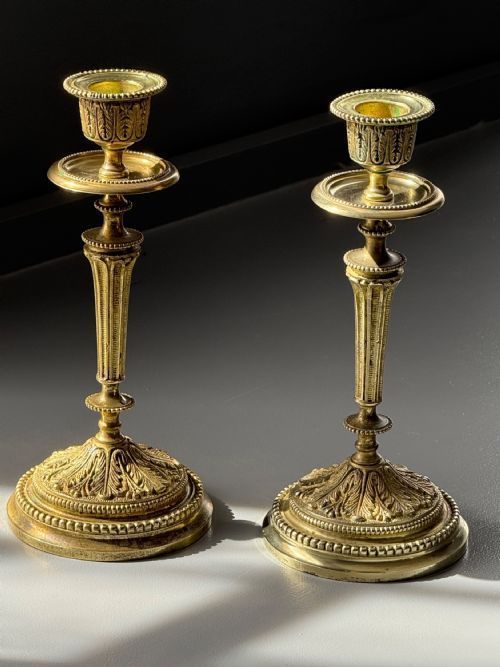
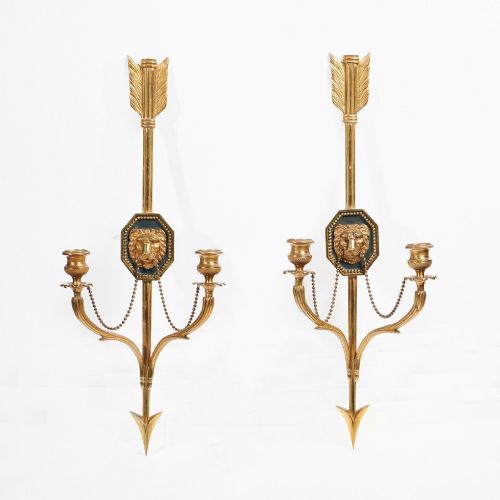
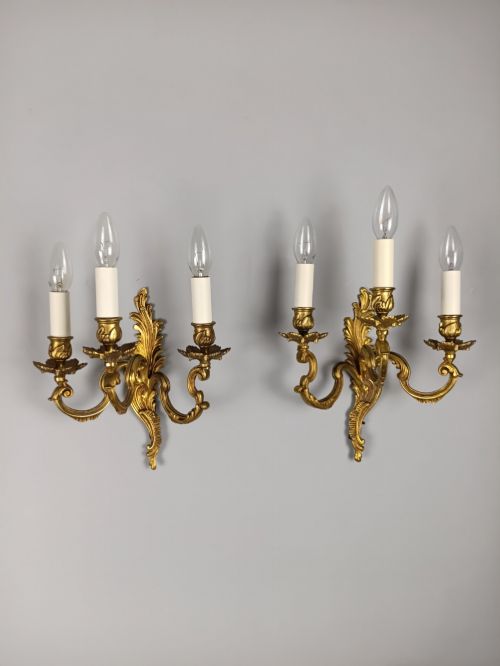
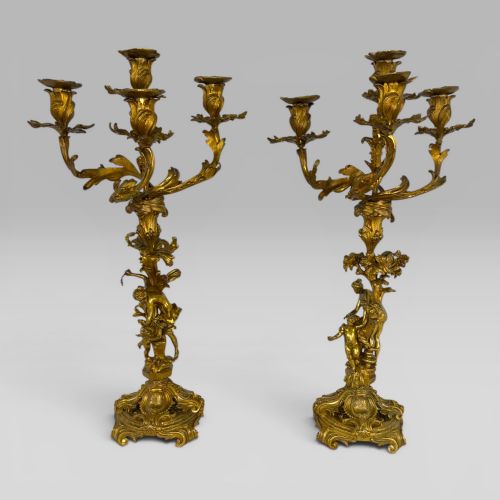
Gold ormolu candle holders encompass candlesticks, multi-armed candelabra, wall sconces and desk accessories made primarily during the eighteenth and nineteenth centuries. The selection on this page relies heavily on French design, spanning Louis XVI, Empire, Rococo and Neoclassical styles alongside Regency pieces.
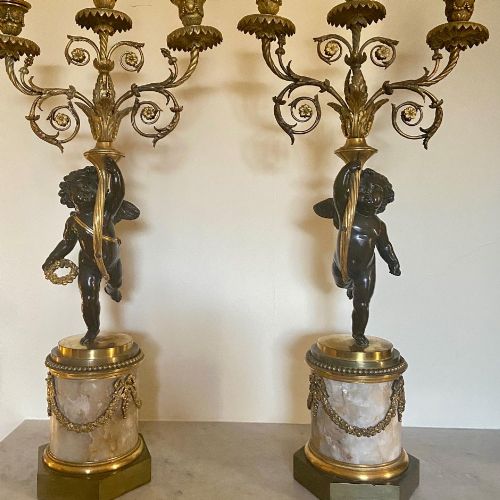
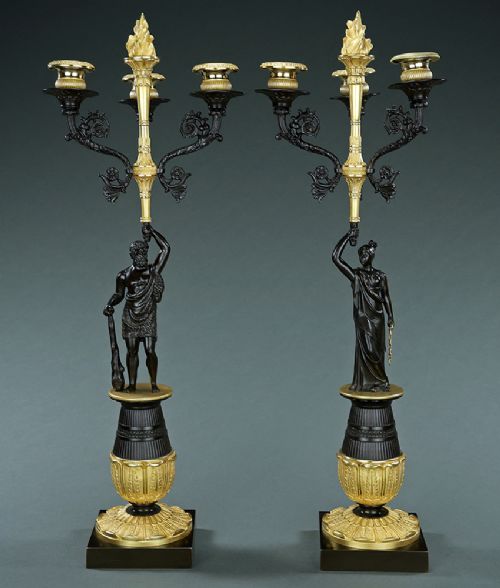
Candlestick pairs and multi-branch candelabra dominate the offerings, often pairing ormolu with contrasting materials such as white marble, patinated bronze or cut glass. Buyers meet works reflecting the grand decorative movements of nineteenth-century Europe alongside earlier eighteenth-century forms.
Materials and construction
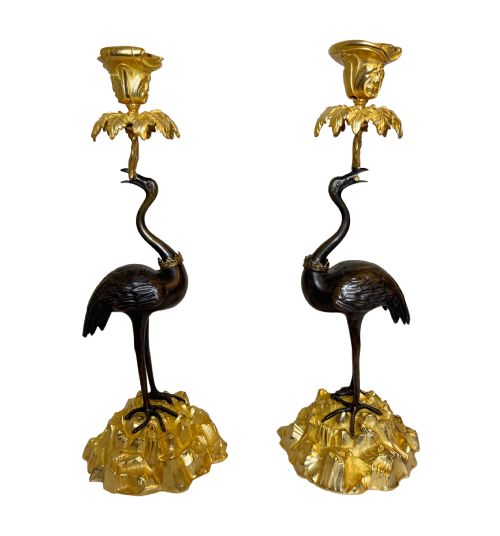
Makers produced these pieces by casting bronze or brass before applying mercury gilding, a process that bonded a gold amalgam to the base metal to create the distinctive ormolu surface. Many designs integrate white marble bases, dark patinated bronze figures and applied details such as champlevé enamel or fluorspar.
Casting and chasing required distinct stages where artisans shaped the raw bronze and sharpened the surface details by hand before gilding. This combination of cast structure and chased surface produced the varied textures seen across the metalwork.
Flamingos, stags and putti occasionally join the candlelight, proving that nineteenth-century desks and mantelpieces enjoyed a touch of wildlife.
Judging execution
Quality rests in the crispness of the chasing and the depth of the gilding, where sharper cast details and heavier gold application distinguish superior examples from simpler production. The integration of mixed materials, such as fitted marble plinths and finely cast figural mounts, marks the upper tier of execution.
The architectural balance of multi-armed candelabra and the precision in assembling separate bronze sections dictate the success of the piece. Superior workshops maintained rigorous standards in both the foundational casting and the final surface finishing.
Francois Redmond·Pierre Philippe Thomire·Rabiat·Thomas Hope·Galle
The Gold Ormolu Candle Holders Glossary
- Ormolu
- A method of applying finely ground gold mercury amalgam to bronze. This technique creates a rich golden finish that resists tarnish.
- Patinated bronze
- Darkened bronze surface treatment. It provides a visual contrast against bright ormolu mountings.
- Candelabra
- A branched candlestick holder designed for multiple tapers. These pieces range from simple two-arm designs to grand multi-branch fixtures.
- Champlevé
- An enamelling technique where troughs are dug into metal and filled with coloured glass paste before firing. The technique adds colourful decorative accents to the bronze framework.
- Applique
- A wall-mounted light fitting or sconce. These objects project illumination outward from panelled or papered walls.
Gold Ormolu Candle Holders: Frequently Asked Questions
What is the difference between ormolu and gilt bronze?
Ormolu and gilt bronze refer essentially to the same decorative surface treatment of applying gold to a base bronze metal. Historically, ormolu specifically denoted the mercury gilding process popular in eighteenth and nineteenth-century France.
While modern terminology often uses the terms interchangeably, older pieces rely on the specific chemical bonding of mercury gilding to achieve their deep lustre.
How do I clean antique ormolu candle holders?
Cleaning requires only gentle dusting with a soft, dry cloth to prevent accumulation of grit within the chased details. Moisture and commercial chemical cleaners can strip the remaining gold layer or damage underlying patinated bronze.
If deeper cleaning is necessary, professional conservation advice should be sought to preserve the delicate mercury-gilded surface.
How do I identify French Empire style pieces?
French Empire style pieces typically feature classical motifs drawn from ancient Rome, Greece and Egypt, such as sphinxes, laurel wreaths and military trophies. The overall silhouette tends to be symmetrical, architectural and monumental in feel.
Contrasting polished ormolu against dark patinated bronze is another hallmark of this nineteenth-century design vocabulary.
Were these holders meant for daily use?
During the eighteenth and nineteenth centuries, these objects served as functional lighting in grand interiors, holding tallow or beeswax candles before the arrival of gas and electric lighting. Their high cost meant they belonged in formal reception rooms and parlours rather than service areas.
Today they function primarily as decorative decorative objects that bring period character to mantelpieces and sideboards.