

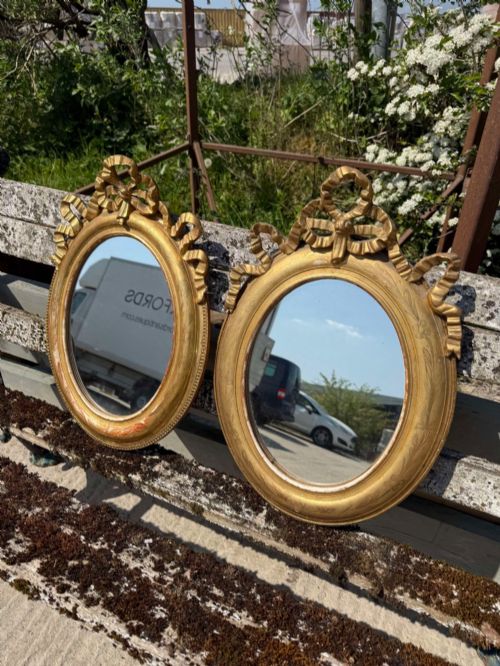
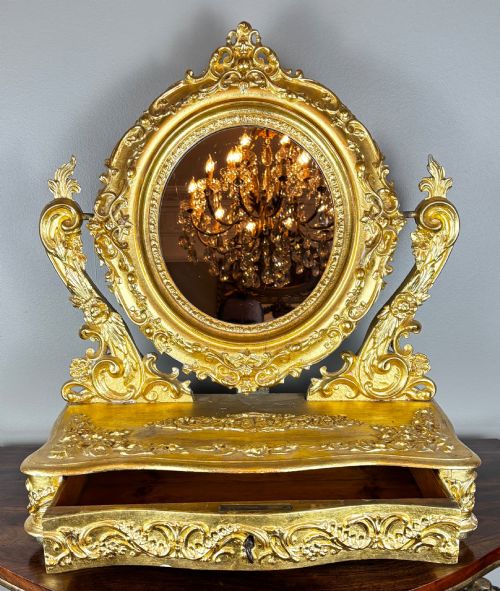

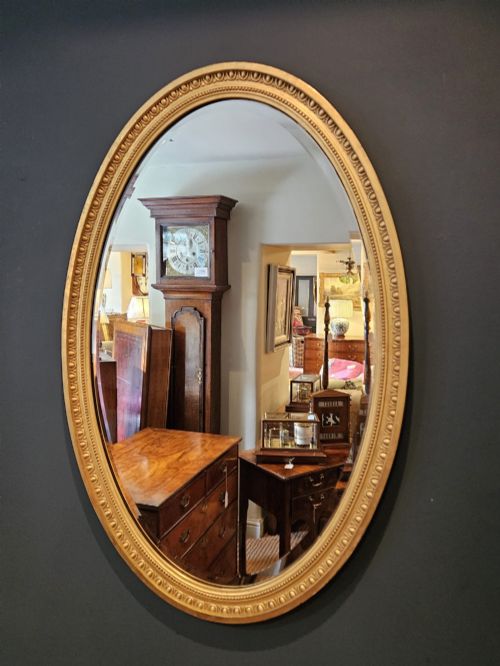


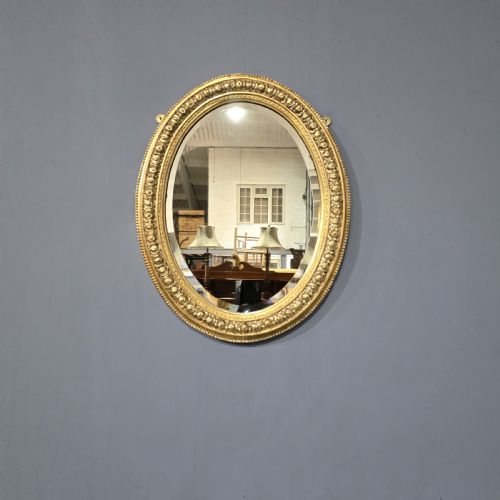


Gold Leaf Vanity Mirror
A gold leaf vanity mirror brings warmth and reflective light to a room, drawing on centuries of European carving and gilding traditions.
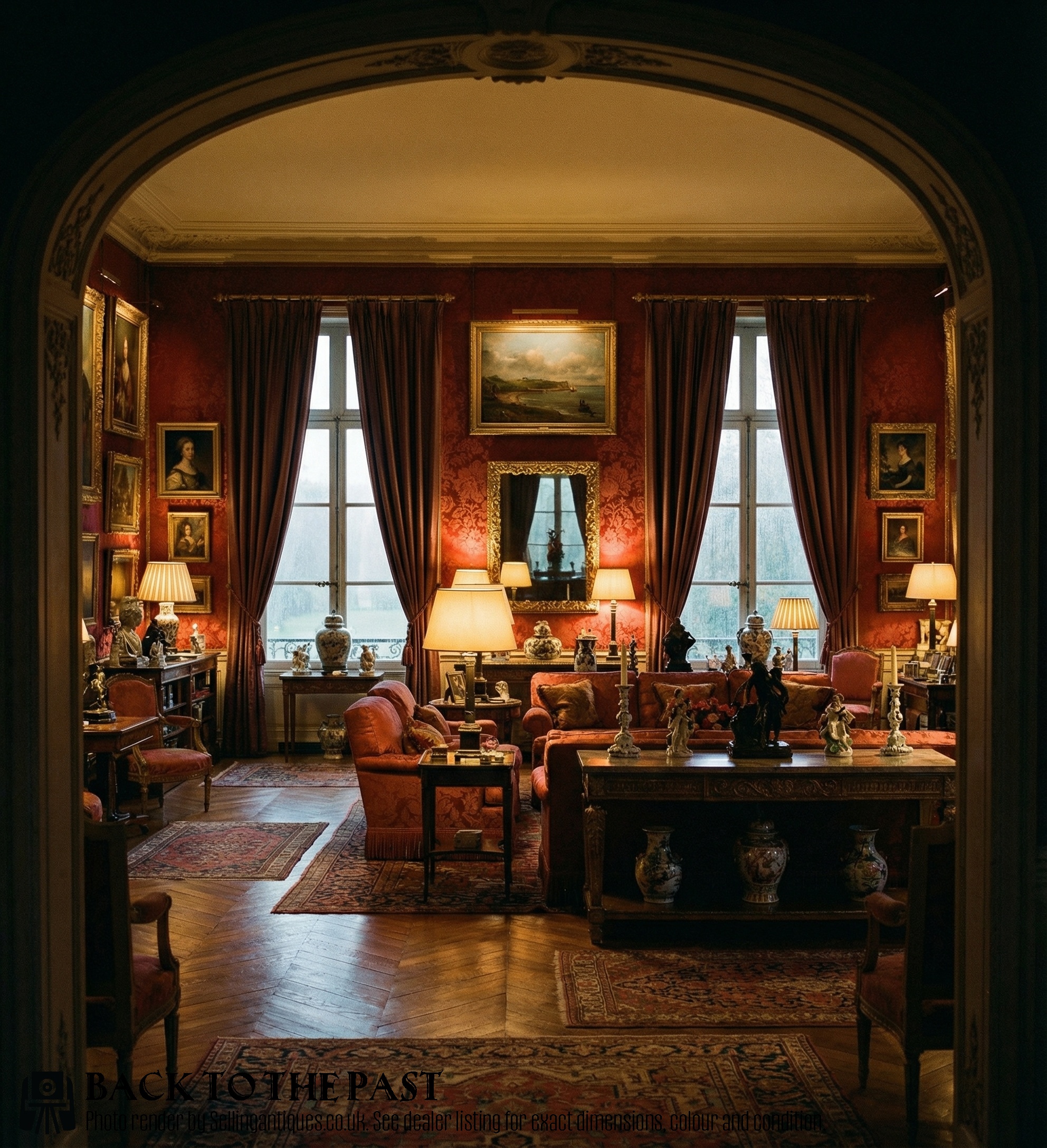
Gold Leaf Vanity Mirror
When you search for a gold leaf vanity mirror, you encounter pieces that range from small tabletop dressing table glasses to larger wall-mounted overmantle and hall mirrors. The selection spans the eighteenth, nineteenth, and early twentieth centuries, capturing periods from the Georgian era through Victorian revivals and Edwardian times.
The version you are most likely to meet on this page is an oval or rectangular wall-hanging glass set within an ornate gilded frame. These pieces often draw upon French Rococo, Italian Baroque, and Louis XVI styles, showing characteristic scrolls, floral motifs, and ribbon crestings.
Table mirrors and easel mirrors also appear, designed specifically for dressing tables and boudoirs where close-up reflection and adjustable angles were required. Their compact frames display the same intricate surface treatments found on their larger wall-hung counterparts.
Materials and construction methods
Carved wood and gesso form the foundational structure for the majority of these frames, providing a stable base for detailed ornamentation. Artisans shaped timber or built up layered plaster and gesso to achieve deep relief scrolls, acanthus leaves, and architectural mouldings.
The characteristic golden finish relies on the application of fine gold leaf or liquid gilding over a prepared ground, sometimes supplemented by polychrome or painted details. Beneath the surface, traditional joining methods and mirror plates secured into wooden backs reveal the hand-assembled nature of these antique furnishings.
Gold Leaf Vanity Mirror Retail Price Guide 2026
Typical asking prices for gold leaf vanity mirror among the pieces listed under this phrase on Sellingantiques today, from the lower quarter to the upper quarter. They describe what is for sale here now, not the wider market.
Listings feature pieces spanning the 18th, 19th, and early 20th centuries, utilising materials such as carved wood, gesso, brass, and glass.
Distinctions in craftsmanship and preservation
The refinement of the hand-carved detail and the crispness of the gesso moulding separate standard production from superior examples. Master carvers achieved depth and fluidity in floral garlands and scrolls that lesser workshops could only approximate with heavier, blunt plaster applications.
The integrity of the original gilded surface and the clarity of the glass plate heavily influence the character of each piece. Surviving surfaces that retain their original gold leaf without aggressive overpainting display a rich, mellowed lustre earned through age.
The Gold Leaf Vanity Mirror Glossary
- Giltwood
- Wood that has been coated with gold leaf or a gold-colored finish. This material defines the warm metallic glow seen across the majority of antique frames on this page.
- Gesso
- A plaster-like mixture applied to wood frames to create a smooth surface for carving or gilding. It allows artisans to shape intricate relief ornamentation before applying gold leaf.
- Rococo
- An ornate design style from the eighteenth century characterised by asymmetrical scrolls, C-curves, and naturalistic shell motifs. Victorian makers frequently revived these exuberant forms.
- Louis XVI Style
- A neoclassical design movement favoring straight lines, symmetry, classical architectural motifs, and ribbons. Mirrors in this style often incorporate crisp beaded borders and bow crestings.
Gold Leaf Vanity Mirror: Frequently Asked Questions
Where should I place a vanity mirror?
These mirrors suit dressing tables, hallways, and living spaces where they can reflect ambient light and visually expand the room. Placing them opposite a window maximises the natural illumination.
Ensure the selected wall or tabletop can accommodate the dimensions and weight of the specific frame style you choose.
How do I clean an antique gilt mirror?
Dust the carved frame gently with a soft, dry brush to prevent damage to fragile gesso and delicate gold leaf layers. Avoid using commercial liquid cleaners or abrasive cloths near the gilded surfaces.
Glass cleaner should be applied sparingly to a cloth rather than sprayed directly onto the mirror, protecting the surrounding antique frame from moisture.
Are these mirrors suitable for daily bathroom use?
Historic giltwood and gesso frames are sensitive to moisture, steam, and humidity fluctuations typical of modern bathrooms. Placing them in drier living areas, bedrooms, or hallways preserves the materials.
Dry indoor environments prevent the wooden substrates from swelling and protect the delicate historical surface finishes from degradation.