




Gilded Tabletop Mirror
These gilded tabletop mirror pieces bring reflective glass and polished frames to dressing tables, offering practical use with period presence.
Gilded Tabletop Mirror
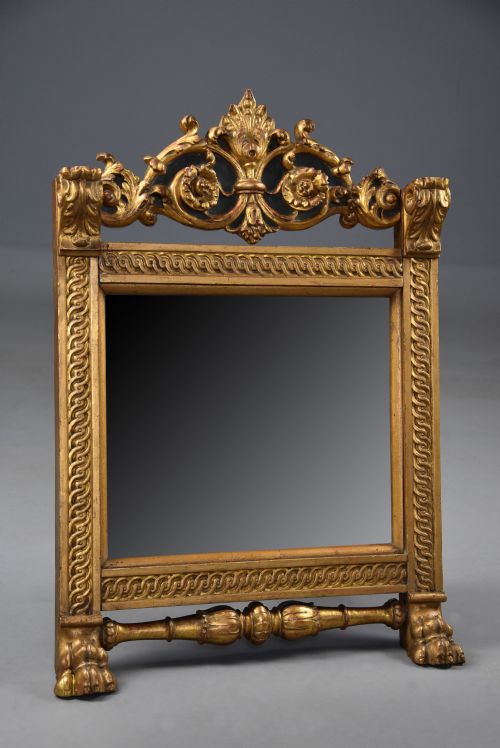
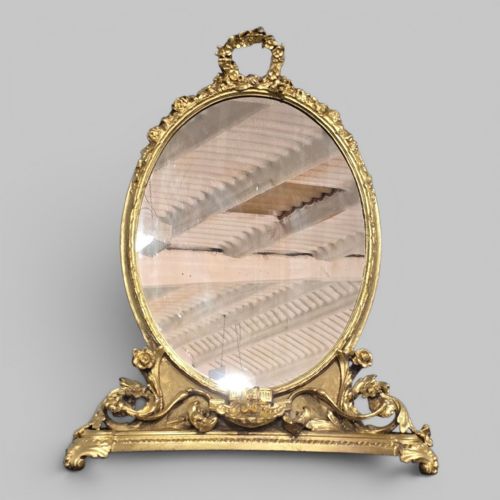
A gilded tabletop mirror sits on a dressing table, vanity, or chest of drawers to provide a portable reflective surface for daily grooming. These pieces take the form of toilet mirrors, dressing table mirrors, and easel mirrors designed to stand independently without wall mounting.
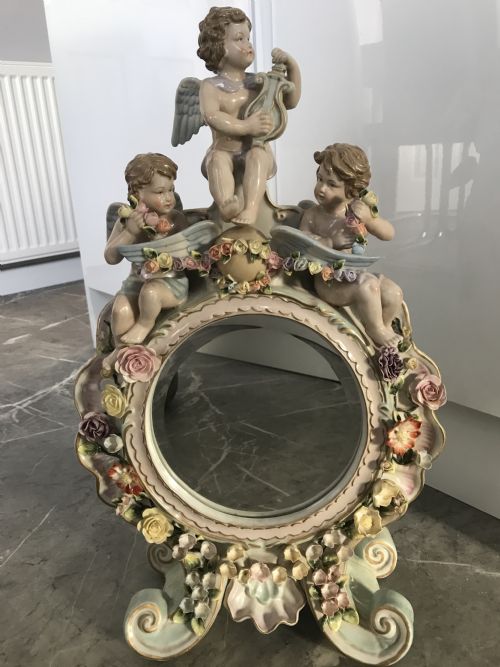
The selections span the eighteenth century through the Victorian era and into the early twentieth century, encompassing varied regional tastes. Buyers encounter forms ranging from simple dressing table mirrors to ornate examples decorated with porcelain flowers or figurative elements.
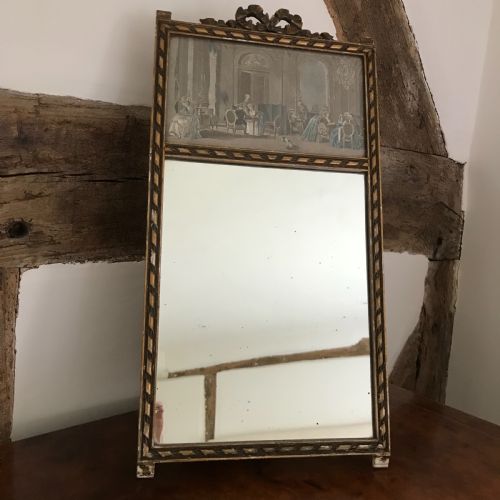
Origin and stylistic influence vary widely across the inventory, with pieces representing Italian Rococo, French country, Renaissance Revival, and Chinoiserie aesthetics. Ebonised wood frames, gilt metal, giltwood, and gesso provide the structural foundation for these portable looking glasses.
How they were made
Frames rely on carved giltwood, moulded gesso, ebonised wood, and cast gilt metal to provide structure and decorative detail. Craftsmen applied gold leaf or gilding over gesso bases, while ceramic works incorporated moulded porcelain and Limoges enamel panels.
Support mechanisms include hinged folding backs and easel struts that allow the glass to tilt at a convenient angle on a tabletop. Makers combined joinery, metal casting, and ceramic firing techniques depending on whether the primary medium was wood, metal, or porcelain.
Gilded Tabletop Mirror Retail Price Guide 2026
Typical asking prices for gilded tabletop mirror among the pieces listed under this phrase on Sellingantiques today, from the lower quarter to the upper quarter. They describe what is for sale here now, not the wider market.
Some Victorian porcelain dressing table mirrors feature cheerful cherubs peering out from clusters of moulded flowers.
What varies in quality
The refinement of the frame carving or modelling dictates much of the visual distinction between examples. Pieces featuring hand-carved giltwood or detailed porcelain cherubs and flowers demonstrate greater artisan input than simpler moulded versions.
The preservation of the original gilding, enamel work, and mirror glass surface influences the overall integrity of the piece. Intricate elements such as easel stands, painted Chinoiserie decoration, and Limoges panels retain more authority when completely intact.
F.Bienvue·Sitzendorf Porcelain
The Gilded Tabletop Mirror Glossary
- Giltwood
- Wood that has been coated with a thin layer of gold leaf or gilt finish. This technique was widely utilised on frames during the eighteenth and nineteenth centuries.
- Gesso
- A plaster-like mixture applied to wood frames to create a smooth surface for gilding and relief carving. It allows crisp decorative details to be moulded before applying gold leaf.
- Easel mirror
- A looking glass supported by a hinged prop or leg on the back, allowing it to stand upright on a flat surface. These pieces dispense with the traditional box base of a toilet mirror.
- Ormolu
- Gilt bronze or brass mounts applied to decorative objects and furniture. French makers frequently employed this technique for nineteenth-century vanity mirrors.
- Toilet mirror
- A small mirror mounted on a tabletop stand or miniature chest of drawers, historically used during personal grooming. The term derives from the French word toilette, meaning dressing.
Gilded Tabletop Mirror: Frequently Asked Questions
Where were table mirrors placed?
These mirrors sat upon dressing tables, chests of drawers, or washstands in bedrooms and boudoirs. Their portable nature allowed owners to position them near windows for optimal natural light.
Unlike large pier glasses fixed to walls, tabletop versions moved easily to wherever grooming or dressing took place.
How do easel mirrors stand?
An easel mirror relies on a hinged wooden or metal strut attached to the reverse of the frame. This leg props the looking glass at an adjustable angle on any flat surface.
Many period examples retain their original folding support mechanisms, which require gentle handling when adjusting the tilt.
How do I identify a Victorian mirror?
Victorian pieces often display revival styles such as Rococo or Renaissance influences, alongside ebonised wood or cast metal frames. The construction methods and secondary woods used on the backs help confirm the nineteenth-century date.
Examining the mirror glass and the assembly of the frame provides further clues to its period of manufacture.