
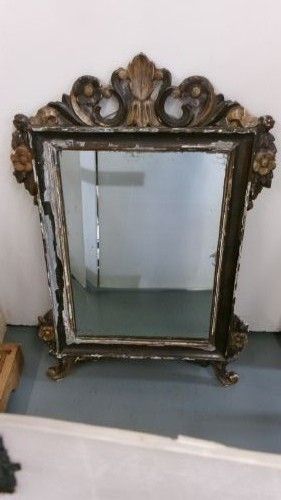


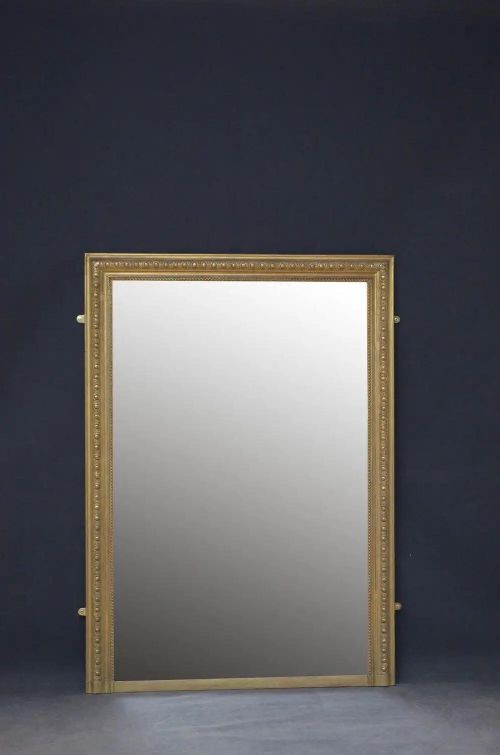


Giltwood Vanity Mirror
A giltwood vanity mirror brings warmth and reflective depth to a dressing space through carved surfaces and gold leaf.
Giltwood Vanity Mirror
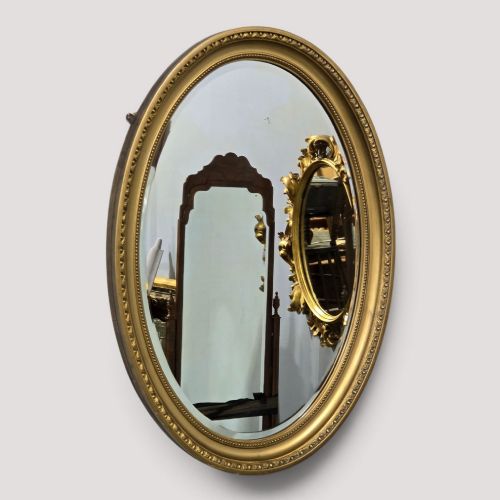
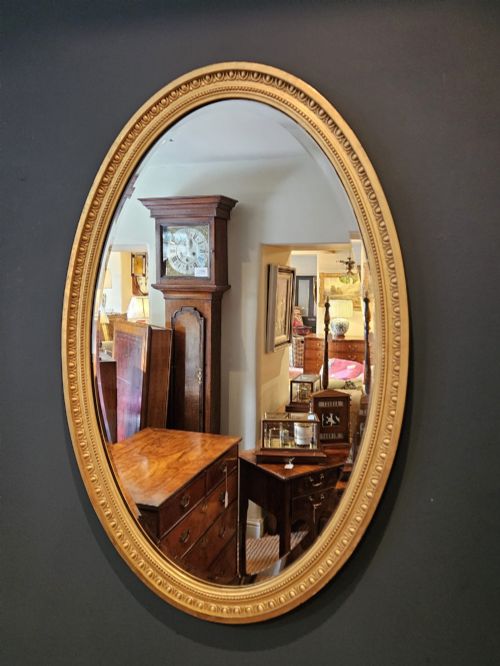
When searching for a giltwood vanity mirror, a buyer looks for decorative looking glasses designed for dressing tables, toilets, or tabletops. These pieces often feature frames shaped in oval, rectangular, or arched profiles suited to domestic interiors.
The most common versions met on this page date from the nineteenth century and the early twentieth century, though examples stretch back into the eighteenth century. They appear in styles ranging from Rococo Revival and Grand Regency to Italian Rococo and George II.
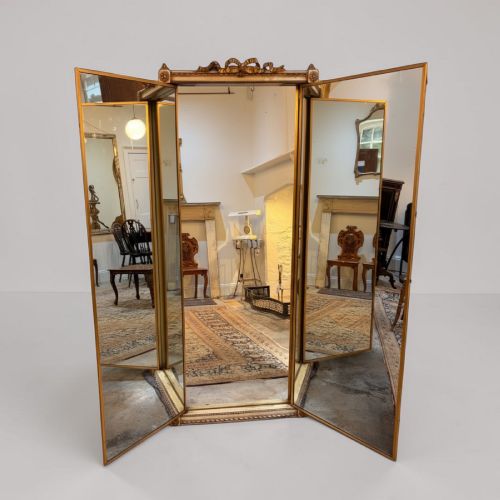
Makers produced these mirrors for intimate daily grooming as well as formal display on walls or dressing furniture. Formats vary from simple folding triple mirrors to heavy carved wood frames and easel-backed table pieces.
How they were made
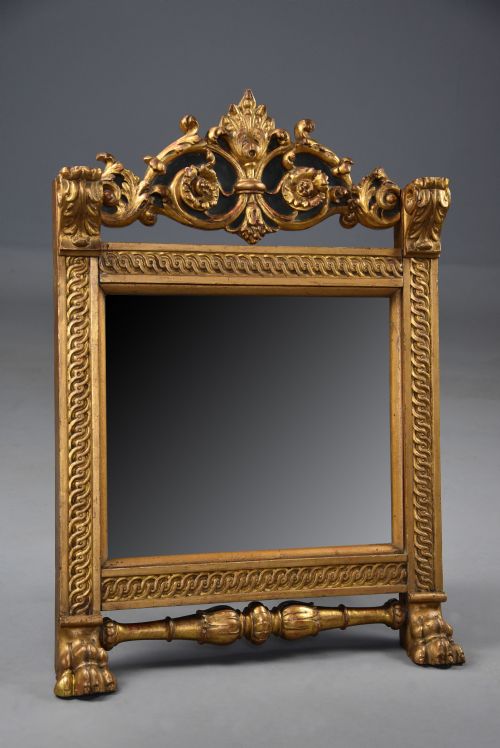
Makers constructed the primary frames using solid timbers such as wood, mahogany, or walnut, sometimes applying a layer of gesso to build up intricate relief ornaments before gilding. This plaster-like mixture allowed artisans to carve deep scrolls, leaves, and ribbons smoothly.
Surfaces received finishes of gold leaf, paint, or parcel-gilt highlights over the wood and gesso foundation. Artisans laid thin sheets of metal leaf onto a prepared bole to achieve the characteristic metallic sheen of a gilt frame.
Mirror glass was set into the timber rebates, occasionally accompanied by painted panels or hand-carved details. Italian and French workshops frequently employed elaborate floral or architectural motifs executed in carved wood and gesso.
A few mirrors hide secret compartments behind their frames, once used for storing love letters and powder.
What varies in quality
The standard of carving sets the upper tier apart from simpler production, particularly where hand-chiseled details remain crisp and deep within the gesso. Superior examples display fluent asymmetry in Rococo forms rather than repetitive, rigid moulding.
The application of gold leaf and the preservation of the original surface determine much of the visual character. Finer pieces retain intact layers of historic gilding with natural ageing, whereas lesser items show heavy later repainting that obscures the underlying relief.
The Giltwood Vanity Mirror Glossary
- Giltwood
- Wood that has been coated with gold leaf or gold paint. This finish gives the frame its bright, reflective metallic appearance.
- Gesso
- A plaster mixture applied to wood frames to create a smooth surface for carving and gilding. It allows artisans to shape intricate relief ornaments.
- Toilet mirror
- A small mirror designed to stand on a dressing table or chest of drawers. These pieces often incorporate small boxes or drawers in their bases.
- Parcel-gilt
- Partially gilded woodwork where only specific carved details are covered in gold leaf while the underlying wood remains visible. This technique highlights particular elements of the design.
- Rococo revival
- A nineteenth-century design movement that imitates the ornate, asymmetric scrolls and natural motifs of the eighteenth-century French style. It appears frequently in mirror frames of this period.
Giltwood Vanity Mirror: Frequently Asked Questions
How do I date a giltwood mirror?
Dating relies on examining the construction methods of the wood frame, the backing boards, and the type of mirror glass used. Older pieces often show hand-cut timber joints and subtle variations in the silvering of the glass.
Stylistic cues also help determine age, as nineteenth-century revivals borrow heavily from earlier Georgian or Louis XVI designs. Comparing the specific gesso ornamentation with documented period pieces provides further clarity.
Where should I place a vanity mirror?
These mirrors suit dressing tables, chest tops, or console tables where they can function as practical looking glasses. Placing them near a light source enhances their reflective quality and brightens the surrounding room.
Table-top and easel versions work well on flat surfaces without requiring wall fixings. Wall-hung variants need secure anchoring due to the combined weight of the wood, gesso, and glass.
How do I care for antique giltwood?
Dust the carved frame gently with a dry, soft brush to prevent the accumulation of dirt within the intricate gesso details. Avoid using commercial cleaning sprays or water, which can damage the delicate gold leaf and underlying layers.
Keep the mirror away from direct sunlight and areas of high humidity to protect the wood and prevent the gilding from flaking. Professional conservation is recommended if the surface begins to crack or detach.
What is the difference between a wall and table mirror?
Wall mirrors feature hanging loops or brackets on the reverse designed for secure mounting on vertical surfaces. They are typically larger and proportioned to anchor a room or hallway interior.
Table mirrors incorporate stands, easel backs, or supporting frames that allow them to rest independently on horizontal furniture. Many historical variants were built to sit atop dressing tables for close-up personal use.