


Carved Giltwood Table Mirror
These carved giltwood table mirror pieces offer ornate historic charm, combining gilded wooden frames with reflective glass for interior display.
Carved Giltwood Table Mirror
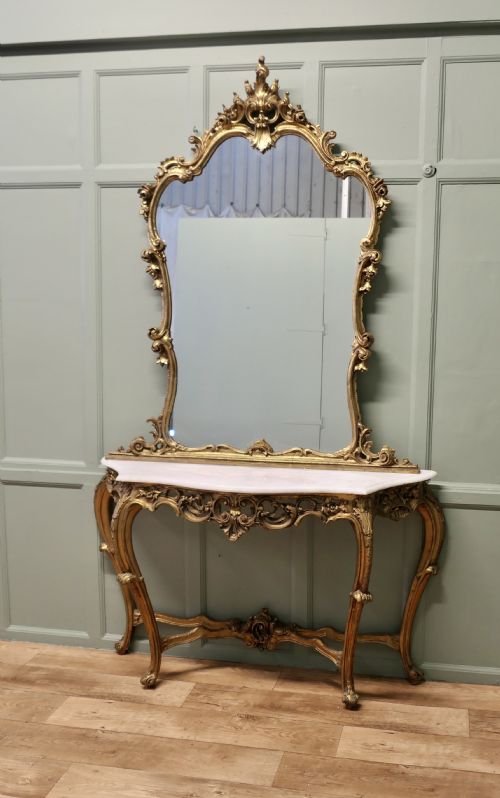
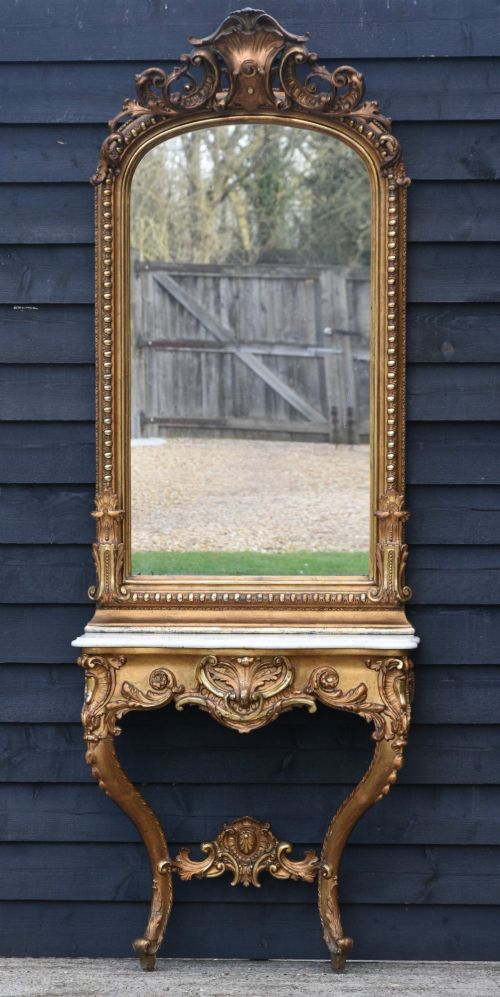
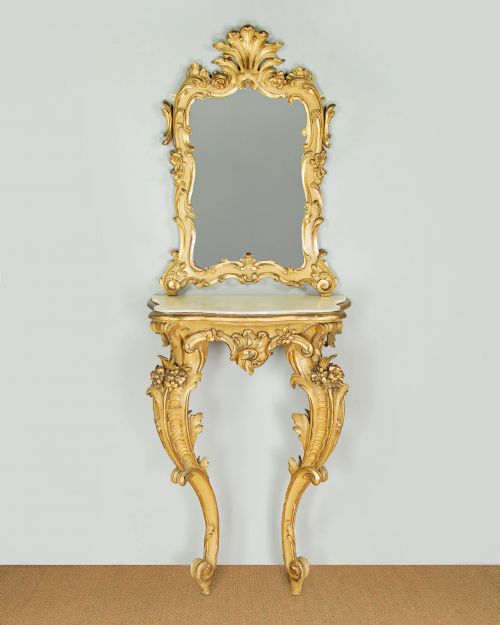
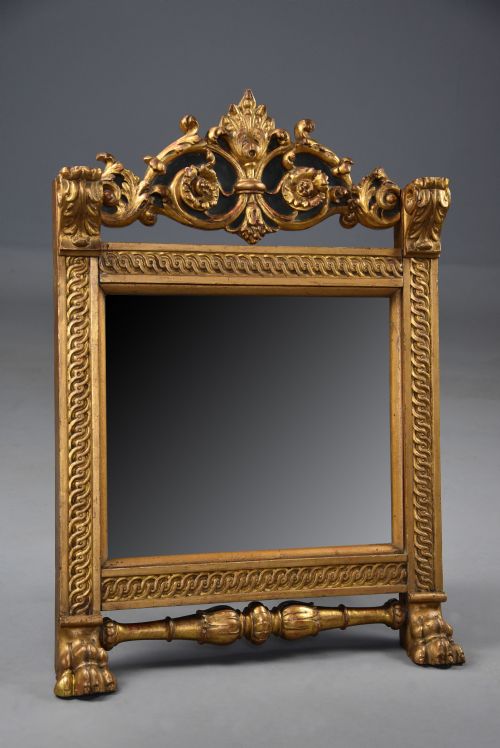
A carved giltwood table mirror brings dramatic historic presence to a room, functioning as both a decorative surface accent and a practical looking glass. When you search for carved giltwood table mirror examples, you encounter items designed for dressing tables, sideboards, or paired directly with matching console tables.
The pieces on this page span several centuries, with the nineteenth century heavily represented alongside examples from the eighteenth and early twentieth centuries. Forms range from small easel-backed toilet mirrors to large trumeau sets and combined console table and mirror suites originating from French and Italian workshops.
Stylistic influences lean heavily into revival movements, notably French Rococo Revival, Italian Baroque, and Renaissance Revival aesthetics. These designs utilise elaborate scrollwork, leaf carving, and sculptural details that reflect the decorative tastes of their respective periods.
How They Were Made
Craftsmen carved these frames from underlying timber substrates, often applying layers of gesso to build up intricate sculptural detail before gilding. Gold leaf or painted gold finishes were then meticulously applied to create the characteristic metallic sheen.
Mirrors incorporated specialised glass plates, sometimes held within heavy carved wood or gesso frames, while larger console table combinations featured fitted marble tops supported by carved wooden bases.
Some nineteenth-century makers snuck secret folding panels into dressing mirrors so you could check your hat from three angles at once.
What Varies in Quality
The crispness and depth of the hand-carved detail dictate the upper tier of these pieces, separating deeply undercut scrollwork from softer, more mechanised moulding. Superior examples exhibit refined proportions where the gilded surface catches light evenly across complex three-dimensional forms.
The integrity of the original gesso and gold leaf surface significantly impacts the character of each piece. Retaining undisturbed historical gilding rather than receiving heavy modern repainting marks the distinction between well-preserved antiques and heavily altered examples.
The Carved Giltwood Table Mirror Glossary
- Giltwood
- Wood that has been coated with gold leaf or a metallic gold finish. This material defines the bright, reflective appearance characteristic of these decorative frames.
- Gesso
- A plaster-like mixture applied to wood surfaces as a smooth base for carving or gilding. It allows craftsmen to create sharp, elaborate relief details before applying gold leaf.
- Rococo Revival
- A nineteenth-century design style emulating the asymmetrical curves, C-scrolls, and naturalistic shell motifs of the eighteenth-century movement. It dominates the ornamentation seen on many Victorian mirrors.
- Console Table
- A table designed to stand against a wall, frequently supported by wall brackets or ornate legs and paired with a matching mirror. They form grand architectural arrangements in hallways and reception rooms.
Carved Giltwood Table Mirror: Frequently Asked Questions
How do I style a carved giltwood table mirror?
Place the mirror on a substantial chest of drawers, a marble-topped console, or a dressing table where its reflective glass can bounce natural light around the room. Ensure the surrounding decor complements the ornate metallic finish without competing for attention.
For larger paired console sets, position them centrally in a hallway or reception space to create an intentional focal point that anchors the surrounding wall and furniture.
What periods do these mirrors come from?
The pieces originate from various eras, spanning the eighteenth, nineteenth, and early twentieth centuries. Many date from the Victorian period or the late nineteenth century.
Stylistic markers such as Rococo Revival curves or Italian Baroque framing help identify the design era, though twentieth-century makers continued producing faithful revivals using traditional materials.
How do I clean a giltwood frame?
Dust the carved wooden surfaces very gently using a soft, dry brush to remove particles without disturbing the delicate gold leaf or gesso layers. Avoid using wet cloths, liquid cleaning products, or harsh chemicals that can strip or discolour the historical finish.
Keep the mirror glass clean with a standard glass cleaner applied sparingly to a cloth rather than sprayed directly onto the glass, preventing moisture from seeping behind the frame edges.