


Gold Dressing Table Mirror
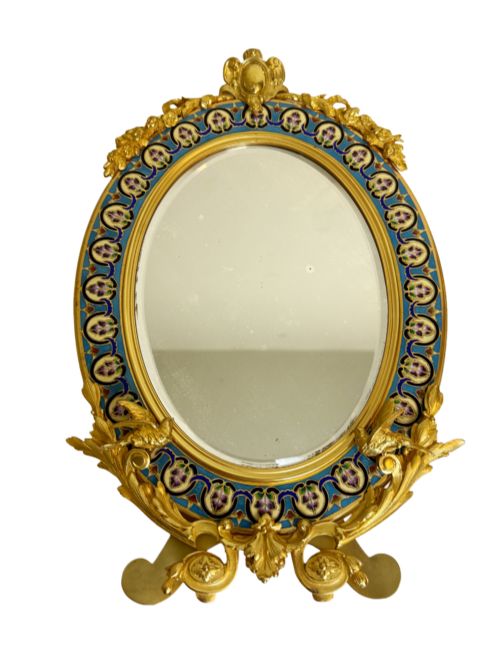
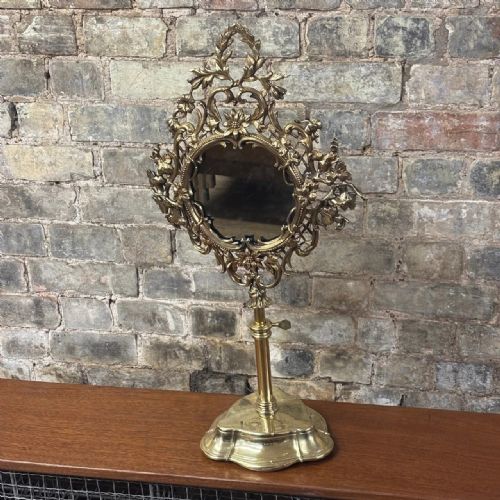
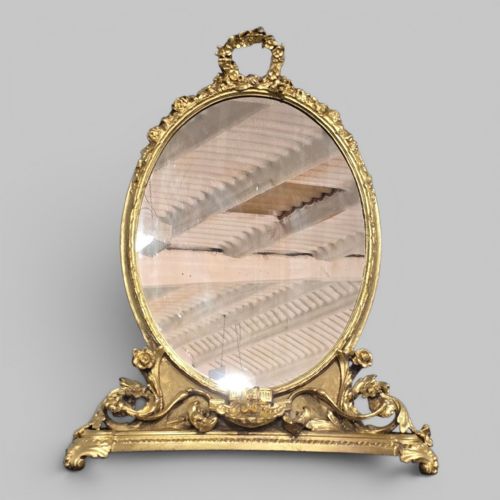
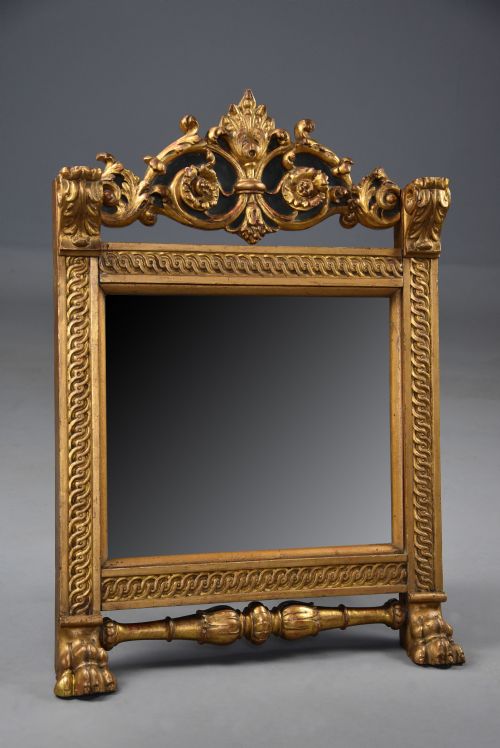
A gold dressing table mirror brings the reflected light of the boudoir onto your chest of drawers, shaped in brass, giltwood, and ormolu.
Gold Dressing Table Mirror
A gold dressing table mirror sits upon a surface, framing a reflection in brass, gilt metal, giltwood, or ormolu. These pieces serve the dressing table or vanity, offering a moveable glass for close grooming.
Most examples you encounter date from the late nineteenth century and the Edwardian era, carrying the revival styles of the period. You will find French Rococo revival, Louis XV curves, and Renaissance motifs running through the selection.
The forms range from simple oval brass frames on small stands to elaborate folding triple mirrors and carved wooden easel backs. Some incorporate champleve enamel or Limoges panels alongside the primary metalwork.
Materials and Construction
Makers built these frames using cast brass, ormolu, carved giltwood, and gesso over a wooden core. Metal frames were often gilded or polished to achieve a bright finish, while wooden pieces relied on water gilding applied over gesso.
Mirror glass was bevelled by hand in many of the late nineteenth and early twentieth-century examples, then secured into the frame with backing boards or metal tabs. Easel backs and hinged folding sections required sturdy brass hinges and screws to support the weight of the glass.
Some dressing mirrors tucked tiny painted Limoges enamel panels into their frames, giving you a miniature portrait to admire while brushing your hair.
Distinctions in Quality
The depth and crispness of the chasing on brass and ormolu distinguish superior work from mass production. Well-modelled Rococo scrolls and sharp foliate carving in giltwood show the hand of a skilled artisan rather than a hurried cast.
The quality of the mirror glass itself and the retention of the original gilding dictate the standing of a piece. Original bevelled glass with clear reflection and undisturbed gilt surfaces hold more integrity than later replacements.
The Gold Dressing Table Mirror Glossary
- Ormolu
- Gilded bronze, where a layer of gold is applied to a bronze base using a mercury amalgamation process or electroplating. This technique gives a rich, deep yellow lustre to metal frames.
- Giltwood
- Timber, usually soft or hardwood, that has been carved and coated with gold leaf. It forms the structure of ornate revival mirrors.
- Champleve
- An enamelling technique where troughs or cells are hollowed out of a metal surface and filled with vitreous enamel before firing. It adds colourful detail to metal frames.
- Easel mirror
- A tabletop mirror supported by a hinged leg at the back, allowing the glass to tilt at a chosen angle. This design is common in dressing table and vanity pieces.
- Bevelled glass
- Mirror glass with edges ground and polished at an obtuse angle to create a decorative framed border effect. It catches the light distinctively around the perimeter.
Gold Dressing Table Mirror: Frequently Asked Questions
How do I date a brass dressing mirror?
Look to the construction of the hinges, the style of the screws, and the backplate. Late nineteenth and early twentieth-century examples often use heavy cast brass with distinct rococo revival casting marks.
Examine the glass itself, as older plates show subtle imperfections and hand-bevelled edges that differ from modern float glass.
Are folding triple mirrors Edwardian?
Folding triple dressing table mirrors appear frequently from the Edwardian period onwards. They allowed users to see angles of view during grooming.
Many surviving pieces from this era utilise brass frames and hinged side panels designed to sit securely on a dressing chest.
How were these mirrors used?
These mirrors sat upon dressing tables, vanities, and chests of drawers in bedrooms and boudoirs. Their primary role was personal grooming and cosmetic application in reflected daylight or candlelight.
Easel backs and pivoting frames allowed the user to adjust the angle of the glass for comfort.
What is the difference between giltwood and ormolu?
Giltwood consists of carved timber coated in gold leaf, whereas ormolu is gilded bronze or brass. Giltwood offers softer, carved organic forms while ormolu provides crisper metallic detail.
Both materials were utilised to create the decorative gold frames found on dressing tables.