

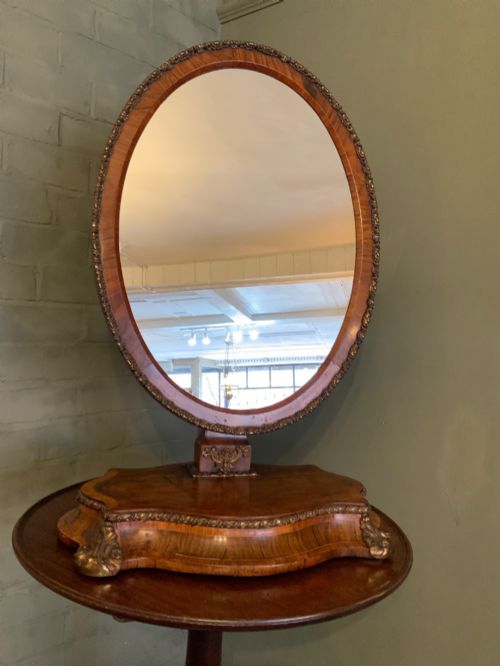

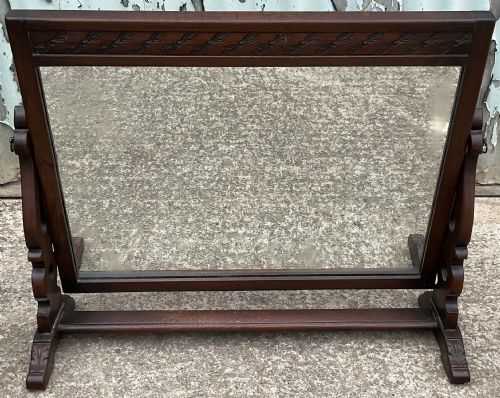
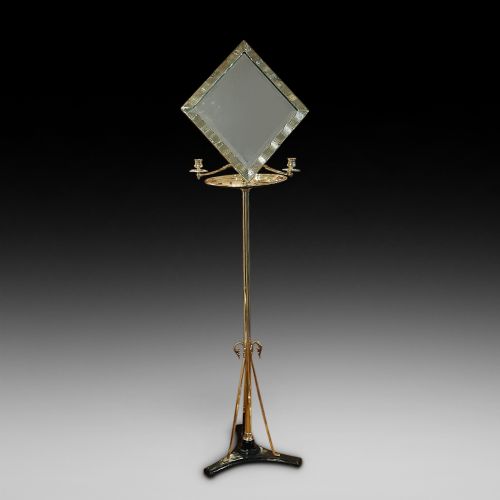


Free Standing Vanity Mirror
A free standing vanity mirror sits upon a dressing table or chest, offering a movable reflection for daily grooming.
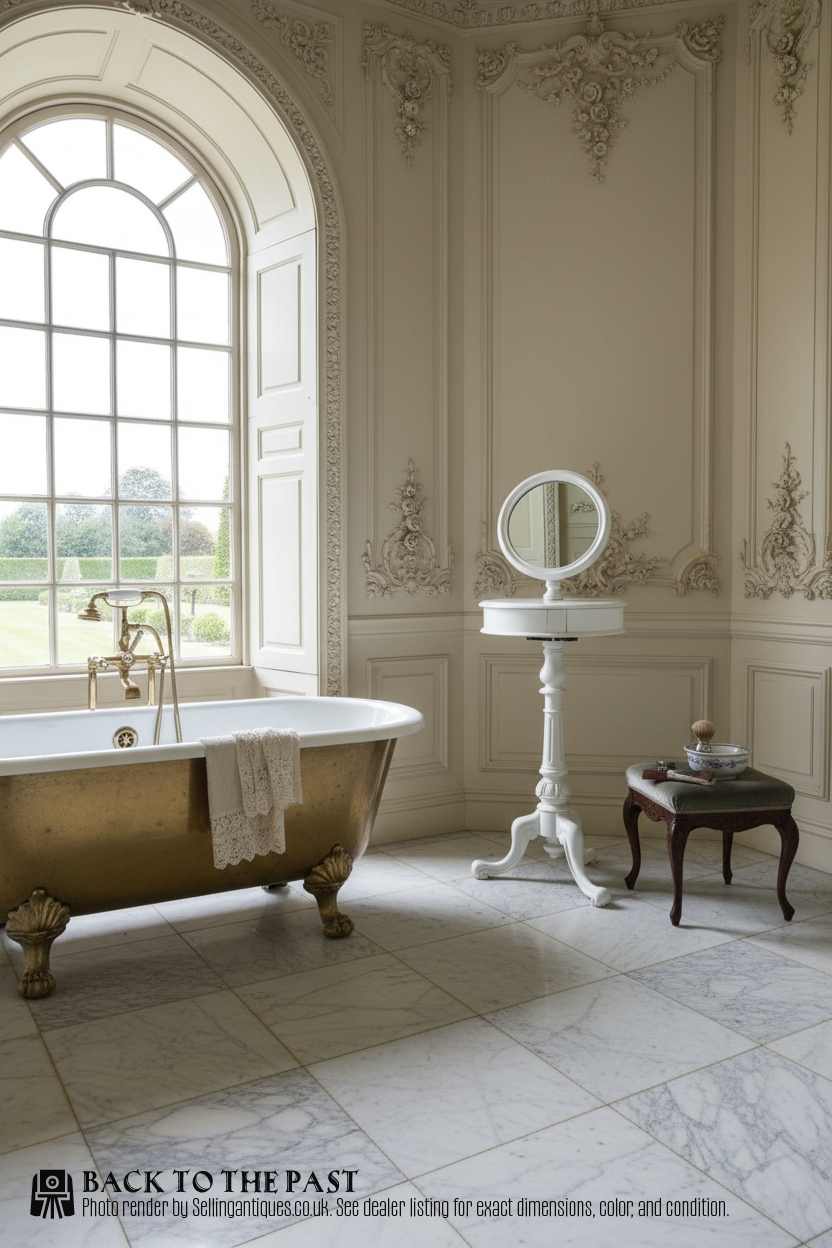
Free Standing Vanity Mirror
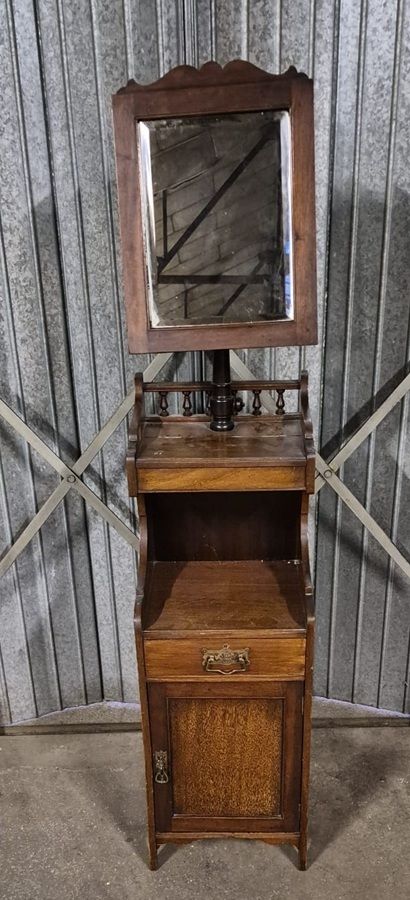
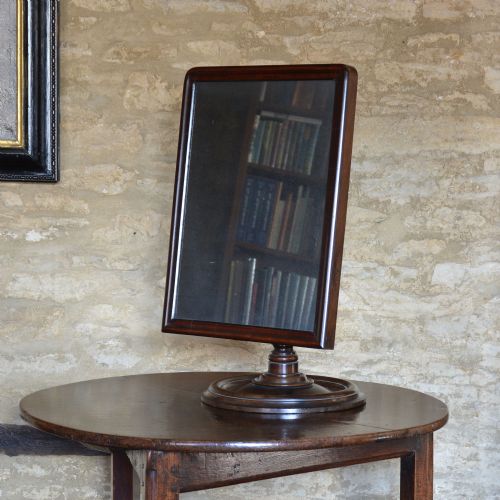
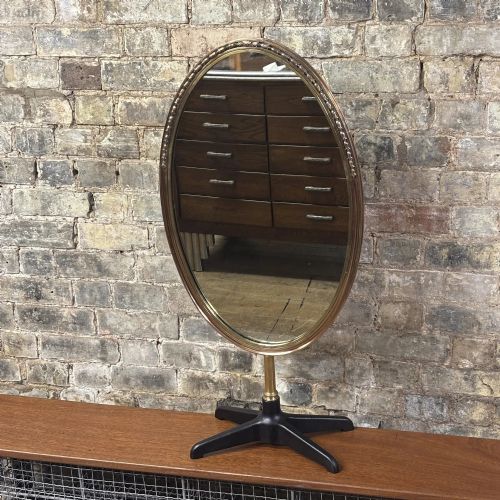
A free standing vanity mirror provides a dedicated surface glass that tilts or adjusts without wall mounting. These pieces appear in forms such as dressing table mirrors, shaving stands, and small toilet mirrors.
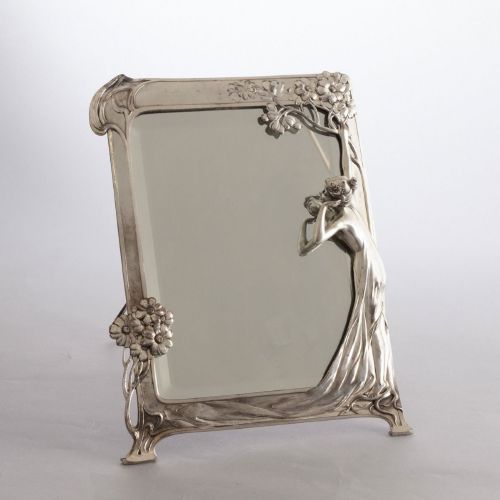
The selection ranges from compact table models to larger cheval mirrors and adjustable shaving stands. Materials span timber frames like mahogany and walnut alongside metal structures in brass, pewter, and cast iron.
Dated examples stretch from the seventeenth century through Victorian and Edwardian periods into the early twentieth century. Makers and manufacturers of the German and English traditions both contribute to the variety.
Materials and construction
Wood frames utilise dense timbers like mahogany, walnut, and oak, frequently paired with boxwood stringing or carved ornamentation. Metal versions employ cast iron, brass, and pewter, sometimes incorporating ormolu mounts or telescopic mechanisms.
Glass plates rest within adjustable frames supported by upright arms and stable bases, whether serpentine fronted, cheval pedestals, or tripod legs. Joinery and metalstamping techniques reflect the specific period of manufacture, from seventeenth century craftsmanship to twentieth century production.
Free Standing Vanity Mirror Retail Price Guide 2026
Typical asking prices for free standing vanity mirror among the pieces listed under this phrase on Sellingantiques today, from the lower quarter to the upper quarter. They describe what is for sale here now, not the wider market.
Some gentleman's shaving stands include clever little telescopic columns designed to save space in the Victorian morning routine.
Assessing the workmanship
Quality shows in the weight of the timber, the precision of the boxwood inlay, and the crispness of carved details like those found on Rococo Revival frames. Substantial brass work and functional telescopic or adjustable joints indicate superior mechanical design.
The clarity and proportion of the glass relative to the frame determine the visual balance of the piece. Finer examples retain original mirror plates and smooth pivot actions that hold their position securely.
WMF·Gillows
The Free Standing Vanity Mirror Glossary
- Cheval mirror
- A full length floor standing mirror hung in a frame that allows it to swing. This form provides a complete view of the person standing.
- Toilet mirror
- A smaller mirror designed to sit upon a dressing table or chest of drawers. These often feature small drawers incorporated into the base.
- Shaving stand
- A specialist mirror stand with an adjustable or telescopic height mechanism designed for grooming. They frequently include small ledges or platforms.
- Ormolu
- Gilded bronze or brass applied as decorative mounts to furniture and mirror frames. It adds metallic lustre and ornamental detail.
- Boxwood
- A dense, pale wood frequently utilised for contrasting stringing lines on dark mahogany or walnut frames. It offers a sharp visual border.
Free Standing Vanity Mirror: Frequently Asked Questions
What is a free standing vanity mirror?
A free standing vanity mirror is a portable looking glass designed to rest on a tabletop, chest, or floor without permanent wall attachment.
Most incorporate a pivoting frame or adjustable stand to alter the angle of reflection during grooming.
How do I date a mirror?
Dating relies on observing the timber species, framing style, fixing methods, and the characteristics of the glass plate.
Victorian and earlier pieces often display hand cut joinery and heavier wood frames, whereas twentieth century items may feature stamped metal components or simpler adjustments.
Where should I place it?
These pieces sit comfortably on dressing tables, chests of drawers, or dedicated shaving stands in bedrooms and bathrooms.
Ensure the surface is stable and level to support the weight of the frame and adjustable arms.
What maintenance do they need?
Routine care involves dusting the timber or metal frame with a dry cloth and cleaning the glass with standard window solutions.
Avoid placing the mirror in direct sunlight or damp environments to protect the wood finish and the silvering on the glass.