






White Painted Vanity Mirror
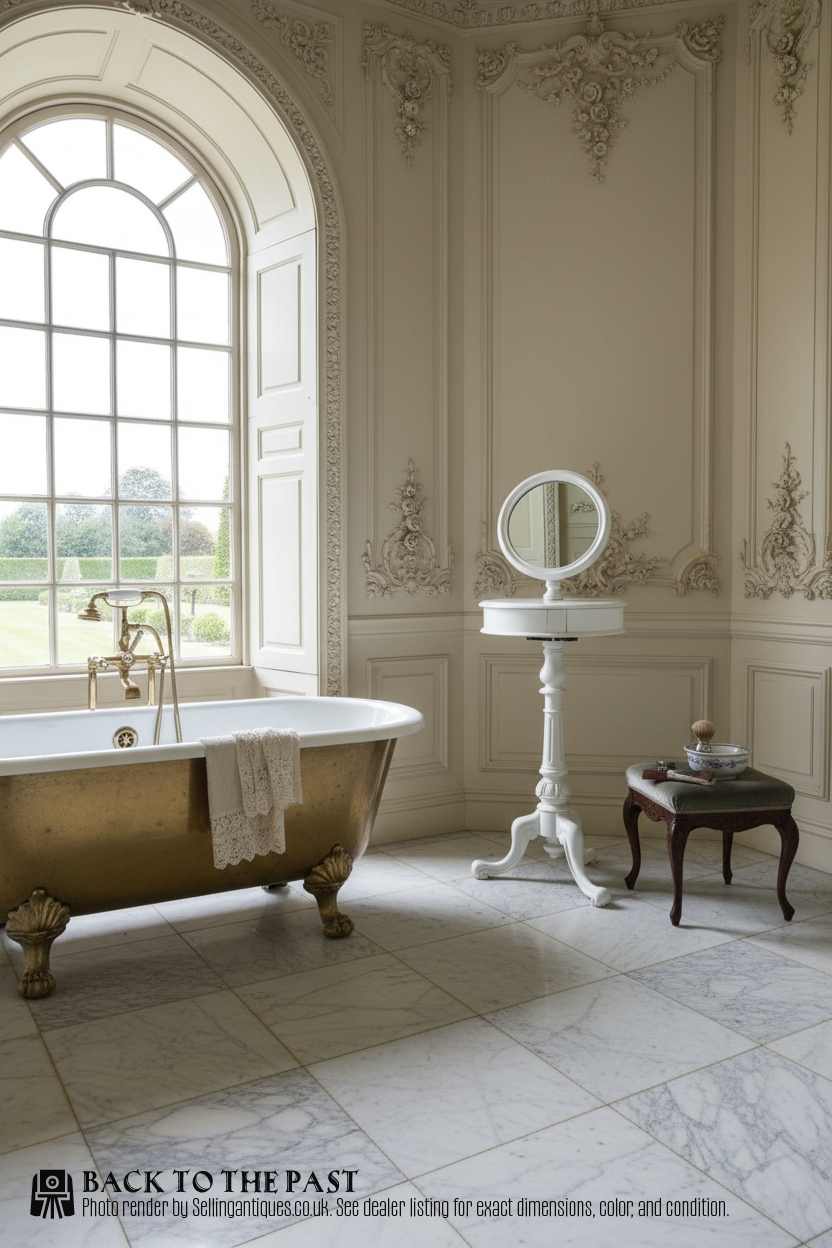
A white painted vanity mirror brings refined period charm to a dressing space, combining reflective glass with classic painted woodwork.
White Painted Vanity Mirror
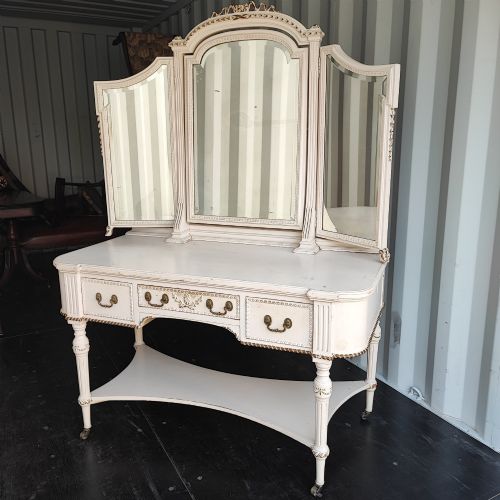
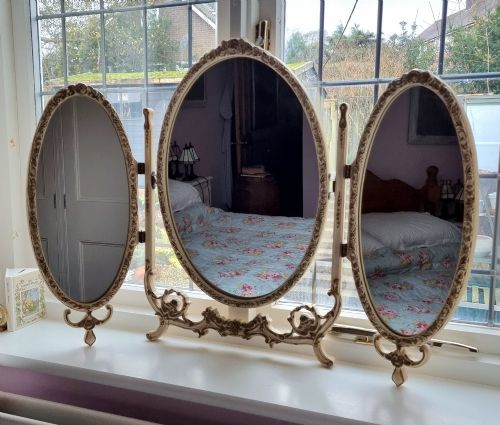
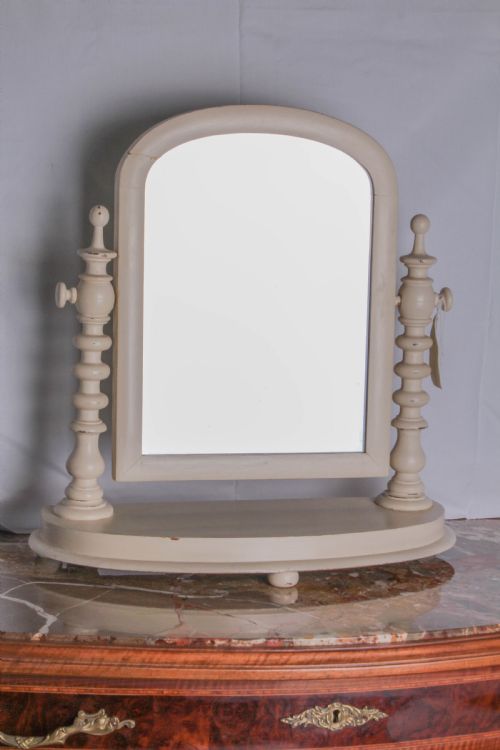
A white painted vanity mirror is a dressing accessory designed for table tops, walls, or dressing tables, spanning the Victorian, Edwardian, and 1930 periods. These pieces serve practical and decorative functions in bedrooms and dressing rooms, offering adjustable glass or static wall-hanging formats.
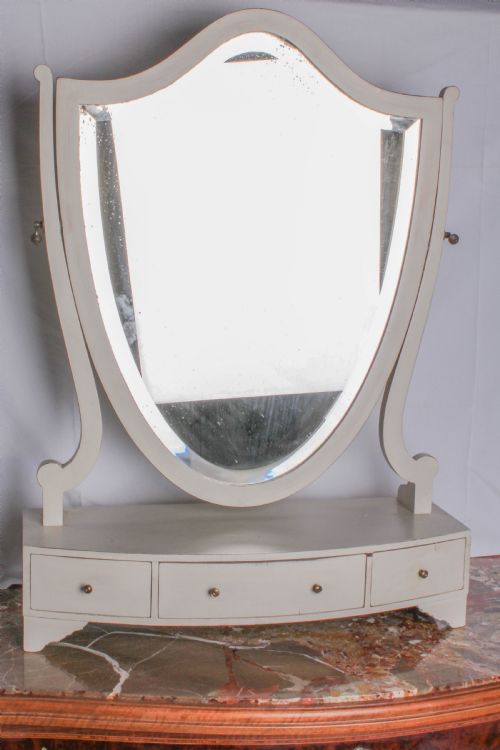
The selections on this page lean heavily towards Victorian and Edwardian examples, alongside French revival styles and occasional 1930 pieces. Forms range from compact oval dressing mirrors and shaving stands to triple mirror dressing tables and cabinet-backed designs.
Makers and manufacturers utilised pine, mahogany, and general wood structures coated in paint and gesso finishes. Many incorporate brass hardware for adjustable frames, while others feature intricate decorative details like majolica panels.
How they were made
Carpenters constructed the wooden frames using pine or mahogany, often applying layers of paint and gesso to achieve a finished white or pale surface. Skilled hands shaped shields, ovals, and rectangular surrounds to house the mirror glass securely.
Makers integrated brass pivots and hinges to allow tilting mechanisms on dressing and shaving mirrors. Advanced pieces incorporated triple mirror configurations and integrated cabinetry, uniting glass, wood, and painted decoration into cohesive furnishings.
White Painted Vanity Mirror Retail Price Guide 2026
Typical asking prices for white painted vanity mirror among the pieces listed under this phrase on Sellingantiques today, from the lower quarter to the upper quarter. They describe what is for sale here now, not the wider market.
Some mirrors come with unexpected majolica panels, proving that nineteenth-century makers liked a splash of pottery with their morning shave.
What varies in quality
Quality rests in the harmony of the proportions and the finesse of the painted surface, distinguishing utilitarian workshop pieces from refined cabinetmaker output. Superior examples display balanced joinery in woods like mahogany and pine, supporting heavy mirror glass with sturdy brass fittings.
The sophistication of the revival style influences the character of each piece, ranging from restrained English Victorian designs to ornate French Rococo and Louis XVI revival motifs. The integration of additional elements, such as majolica panels or triple glass panels, elevates the complexity of the construction.
Maples of London and Paris
The White Painted Vanity Mirror Glossary
- Gesso
- A plaster-like material applied to wood surfaces to create a smooth base for painting or gilding. This mixture allows makers to carve crisp decorative details around mirror frames.
- Shaving Stand
- A specialised piece of furniture featuring an adjustable mirror and supporting surfaces for grooming. These items often date from the Victorian period.
- Majolica
- A type of earthenware decorated with colourful opaque glazes, sometimes set into furniture backs. It adds contrasting texture and colour to painted wooden surrounds.
- Pivot
- A small metal pin or hinge that allows a dressing mirror to tilt back and forth. Brass is commonly used for these functional moving parts.
- Triple Mirror
- A three-panel glass arrangement featuring a central mirror flanked by two adjustable wings. This configuration provides multiple angles for dressing and grooming.
White Painted Vanity Mirror: Frequently Asked Questions
What is a white painted vanity mirror?
A white painted vanity mirror is a functional dressing accessory or freestanding table glass housed in a painted wooden frame. These pieces reflect period craftsmanship from the nineteenth and early twentieth centuries.
They combine practical glass surfaces with decorative painted finishes, suiting traditional and eclectic dressing room schemes.
How do I date a painted mirror?
Dating relies on observing structural characteristics, wood types such as pine or mahogany, and decorative revival styles. Victorian and Edwardian pieces show distinct joinery methods and hardware choices.
Paint layering techniques and the style of the mirror glass bevelling also provide clues to the approximate decade of production.
Where should I place a vanity mirror?
These mirrors suit dressing tables, chest of tops, or dedicated shaving stands where personal grooming takes place. Wall-mounted versions function effectively above console tables in bedrooms or hallways.
Positioning them near natural light sources maximises their reflective utility while highlighting the painted woodwork.
How do adjustable mirrors work?
Adjustable mirrors utilise brass pivots or side arms attached to upright supports, allowing the glass frame to tilt to various angles. This mechanism helps users adjust the reflection for personal use.
Properly maintained brass fittings ensure the mirror holds its position securely without slipping.