

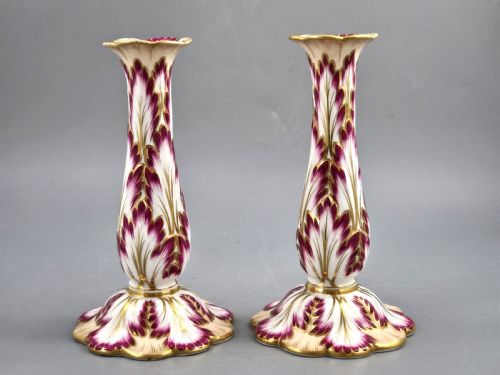
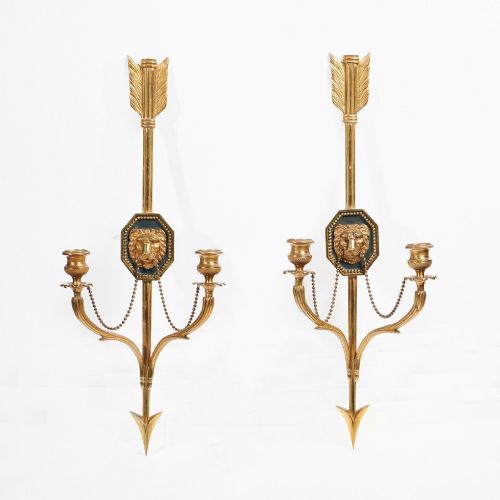
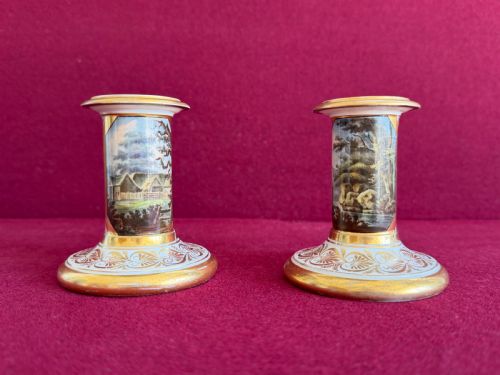
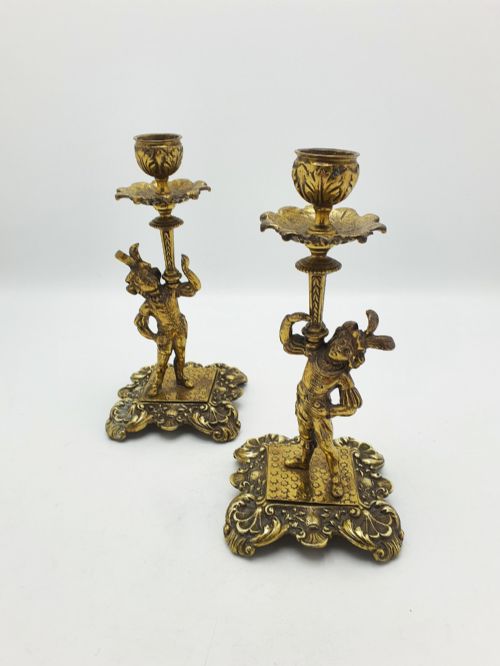
Gold Gilt Candle Holders
Gold gilt candle holders bring warmth and formal presence to a room, offering sculptural design alongside functional illumination.
Gold Gilt Candle Holders
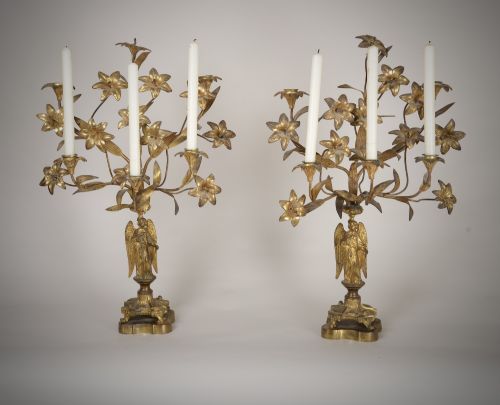
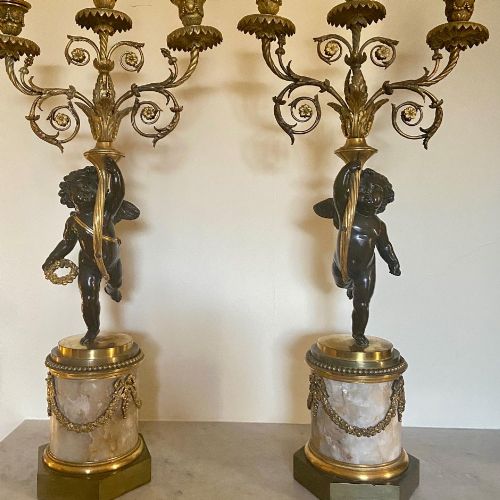
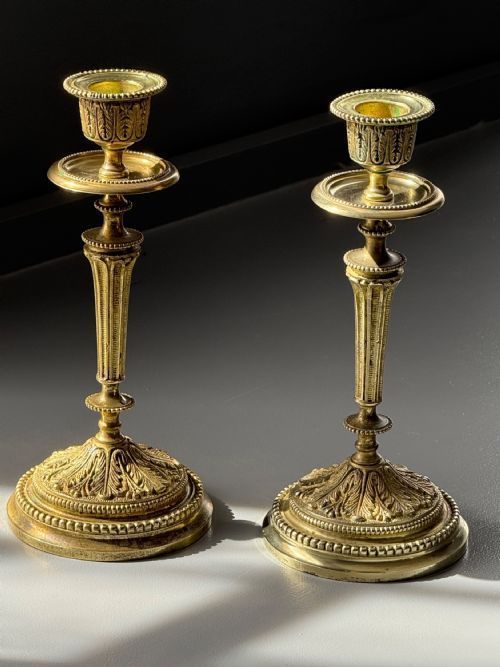
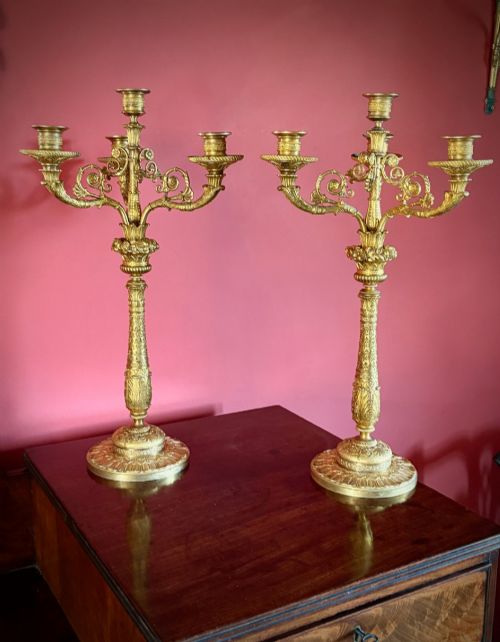
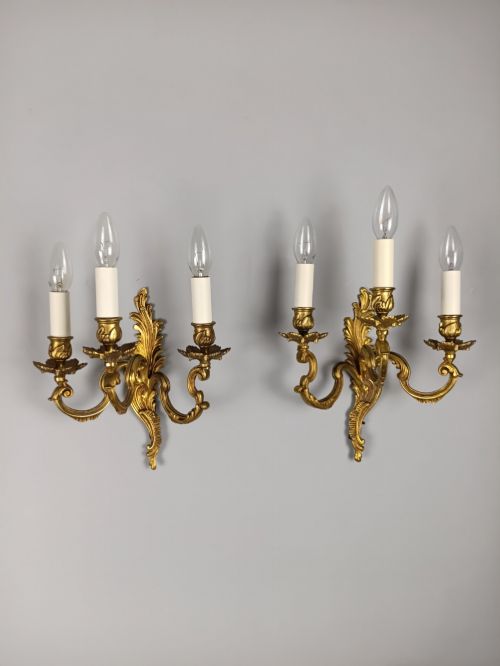
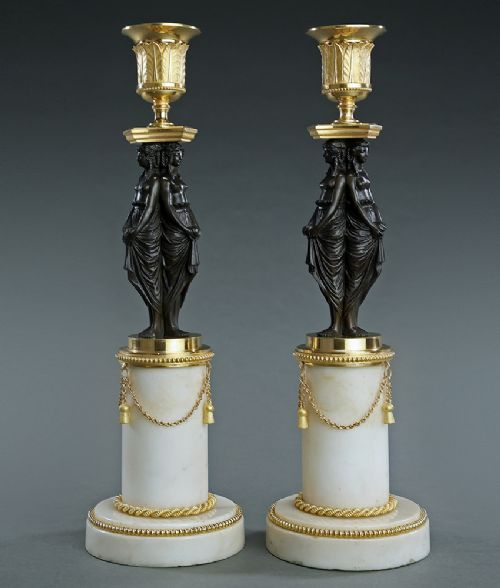
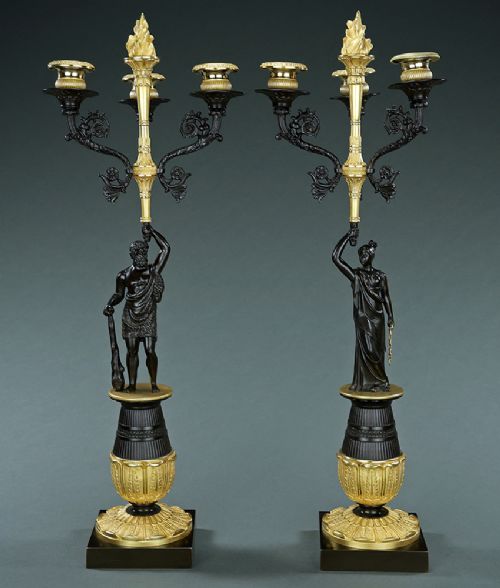
Gold gilt candle holders encompass a variety of lighting forms, with pairs dominating the selection across this inventory. Buyers seeking these pieces encounter items ranging from single candlesticks to multi-arm candelabra and wall-mounted sconces.
The selection spans several centuries, drawing heavily from nineteenth-century production alongside eighteenth-century examples and later revivals. Continental European pieces, particularly French Empire and Rococo styles, appear frequently alongside English and Victorian works.
Materials and construction
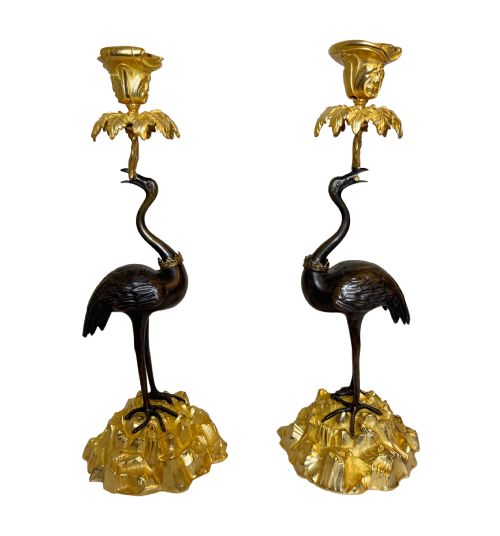
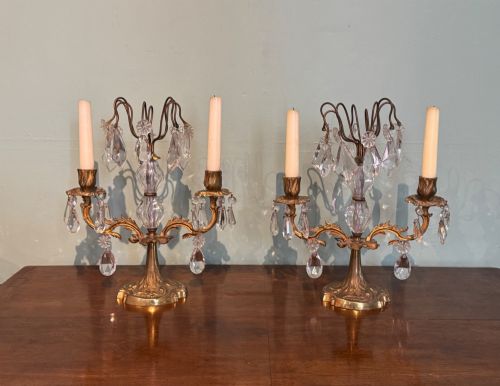
Foundry-cast bronze and brass form the structural core for the majority of these pieces, often finished with fire gilding or ormolu. Artisans combined patinated bronze with gilded elements to create contrast, frequently integrating white marble bases, cut glass, or porcelain components.
Detailing relied on lost-wax casting and subsequent hand-chasing to sharpen foliage, figural motifs, and architectural ornaments. Surface finishes range from high-polish ormolu to subdued matte gilding, sometimes paired with champleve enamel or porcelain inserts.
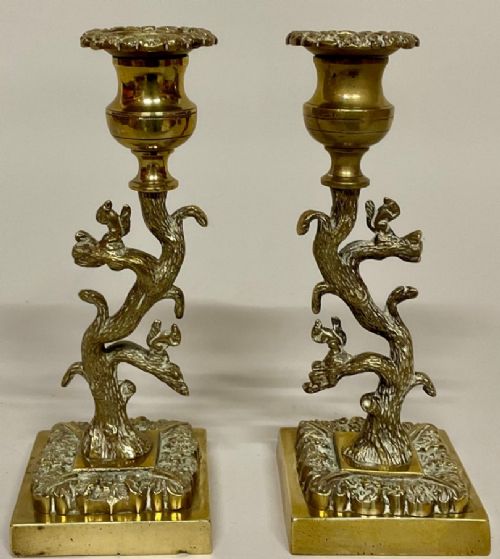
Squirrels clamber up cast bronze branches while flamingos survey the mantelpiece, proving historical lighting took a remarkably wild turn.
Assessing execution and design
The weight of the bronze or brass and the structural integrity of the joints also distinguish finer productions. Items featuring signed foundries, integrated marble plinths, or intricate multi-part assemblies generally represent the higher tier of maker craftsmanship.
Francois Redmond·Pierre Philippe Thomire·Ridgway·Barr Flight And Barr·Thomas Hope·Rabiat·Abel Landry
The Gold Gilt Candle Holders Glossary
- Ormolu
- Finely chopped gold amalgamated with mercury and applied to bronze, then heated to drive off the mercury. This historical fire-gilding technique produces a durable, rich golden surface.
- Candelabra
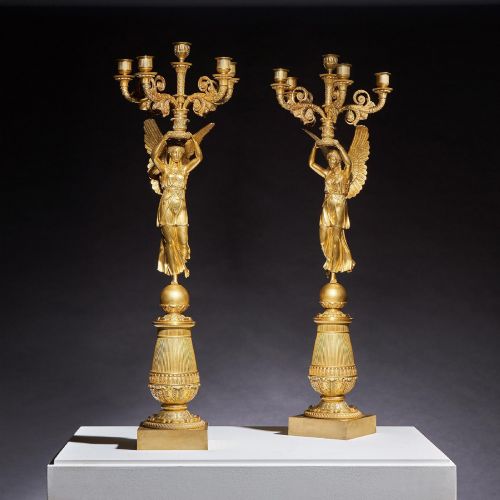
- A branched candlestick holding multiple tapers or candles. These lighting fixtures often incorporate central figural shafts and elaborate arms.
- Sconce
- A wall-mounted lighting fixture designed to hold candles or lights. Examples frequently feature mirrored backplates to reflect and amplify the illumination.
- Campana
- A vase-shaped candle socket resembling an inverted bell. This classical form appears widely across Regency and Empire designs.
Gold Gilt Candle Holders: Frequently Asked Questions
What is the difference between ormolu and gilt brass?
Ormolu denotes mercury-gilded bronze, a technique standard in high-end French and English production before nineteenth-century safety regulations banned the practice. The process bonds gold securely to the bronze substrate.
Gilt brass generally appears on later or more utilitarian items, utilising electroplating or applied gold leaf over a yellow copper alloy. This alternative lacks the deep lustre and heavy weight of traditional ormolu.
How can I tell an 18th century piece from a 19th century revival?
Eighteenth-century examples display hand-finished chasing that reflects individual artisanal tooling and natural wear patterns. Component parts often fit together with hand-cut threaded screws.
Nineteenth-century revival pieces frequently utilise standardised machine threading and heavier, mass-produced casting techniques. Stylistic motifs also offer clues, as revival items often blend elements from multiple historical reigns.
Were these holders used for dining tables?
Many multi-arm candelabra and tall candlesticks served as principal table centerpieces during formal evening meals. Their height allowed guests to converse underneath the candle flames.
Smaller pairs functioned on sideboards, desks, or mantelpieces to provide localized task lighting. Wall sconces remained fixed to panelled rooms for permanent ambient illumination.