




Antique Glass Prism Candlesticks
These antique glass prism candlesticks and mantel lustres catch the light with hanging drops, bringing nineteenth-century sparkle and colour to a table or mantelpiece.
Antique Glass Prism Candlesticks
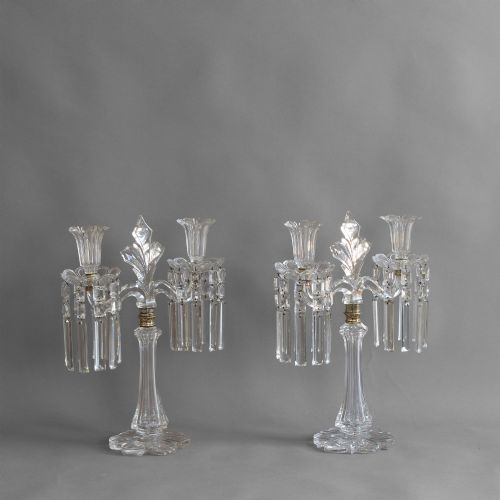
When you search for antique glass prism candlesticks, you encounter a variety of forms including mantel lustres, candelabras, and single or paired table candlesticks. The examples seen here range across the nineteenth century, the Victorian era, the Regency period, and into the Edwardian years and nineteen-thirty.
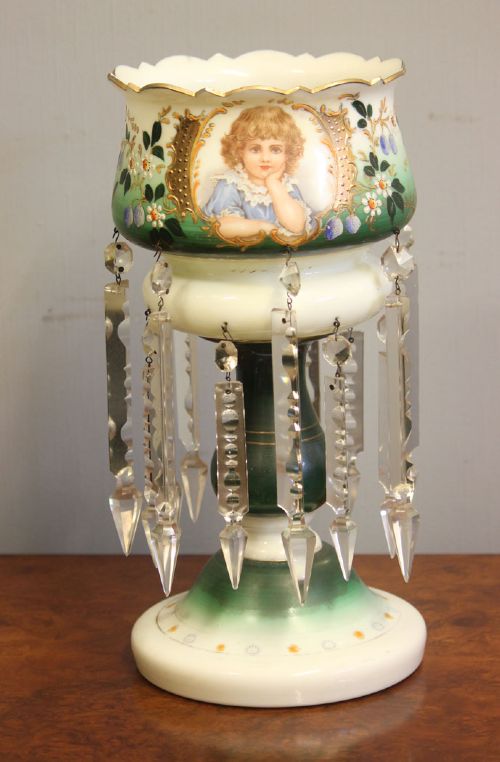
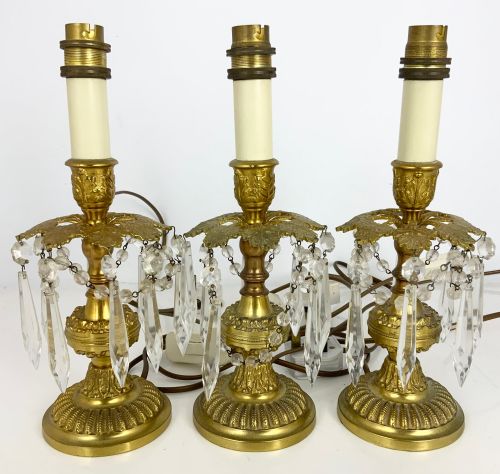
The objects frequently incorporate hanging glass drops or prisms suspended from a sconce or rim above a central column. Many pieces integrate coloured glass such as ruby, cranberry, green, or opaline hues alongside clear cut glass and crystal.
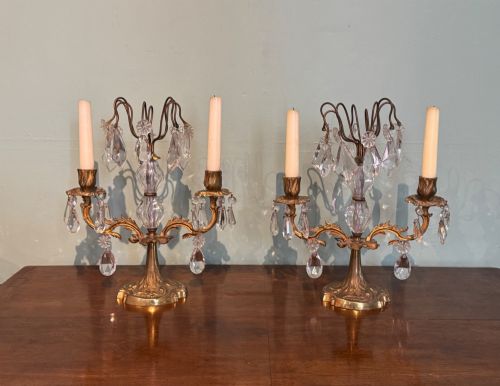
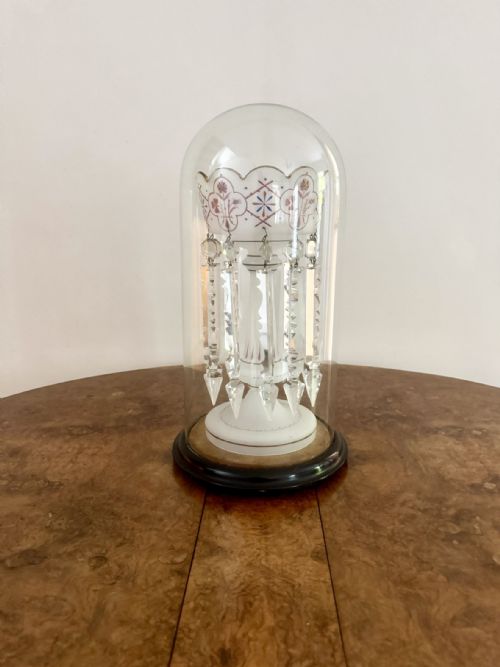
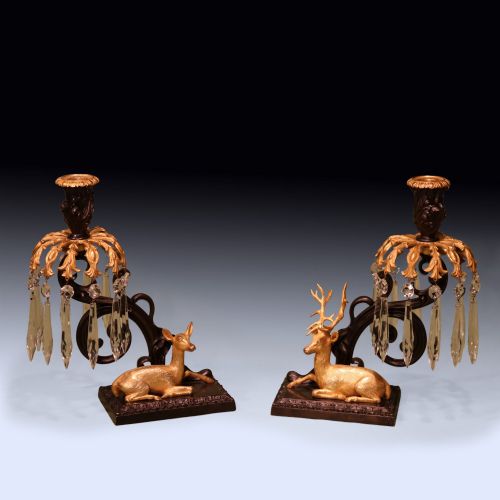
Mounts and structural elements often include brass, ormolu, gilt bronze, and gilt metal, occasionally combining figural bases like stags with the glass shafts. Pairs dominate the selection, though single lustres and combinations with glass domes or storm shades also appear.
How they were made
The construction relies on heavy glass blowing and moulding, followed by extensive hand cutting to create facets that refract light through the prisms. Clear and coloured glass bodies are paired with cast metal components in brass, ormolu, and gilt bronze.
Prisms and drops are hand-cut and drilled, then suspended from the main body using wire links or metal pins secured through the upper rim. Enamel decoration and applied gilt details frequently embellish the glass surfaces.
The object forms on this page range from simple pairs of table candlesticks to elaborate French-style mantel lustres and candelabras.
What varies in quality
Quality shows in the crispness of the glass cutting and the weight and clarity of the crystal or coloured metal oxides used in the body. Finer pieces feature deeply faceted prisms that retain sharp edges and brilliant light dispersion.
The standard of the metal mounts, such as finely chased ormolu or substantial brass and gilt bronze bases, distinguishes superior examples. The matching and completeness of the suspended prism drops also influence the overall character of the piece.
The Antique Glass Prism Candlesticks Glossary
- Mantel lustre
- A decorative glass or porcelain stand fitted with hanging glass prisms, traditionally placed on a fireplace mantelpiece. They reflect the flicker of firelight.
- Prism
- A cut-glass pendant or drop hung from the rim of a candlestick or lustre. These elements refract light around the room.
- Ormolu
- Gilt bronze ornamentation applied to furniture, clocks, and lighting fixtures. It provides a rich golden contrast to the glass components.
- Opaline glass
- An opaque or semi-translucent glass, often pale blue, pink, or green, popular in nineteenth-century decorative objects. It diffuses light softly.
- Candelabra
- A branched candlestick holding multiple candles on a single base. Many examples incorporate hanging glass drops.
Antique Glass Prism Candlesticks: Frequently Asked Questions
What is a mantel lustre?
A mantel lustre is a decorative tabletop or mantelpiece ornament made of glass, crystal, or porcelain, featuring a central column and a bowl hung with cut-glass prisms. They were designed to catch and multiply the light of candles or daylight.
Unlike standard candlesticks, many lustres are primarily decorative centrepieces rather than practical light sources, though some designs incorporate functioning candle sockets or later conversions.
How do I date an antique glass lustre?
Dating relies on stylistic clues, glass colours, and the manufacturing methods of the metal mounts and bases. Regency pieces often display clean classical lines and clear cut crystal, while Victorian examples frequently showcase rich ruby, cranberry, or green glass paired with ornate brass or ormolu.
Examine the weight of the glass, the cut of the prisms, and the assembly techniques of the hanging drops. Earlier nineteenth-century drops tend to be hand-cut with distinct polishing marks on the facets.
Where should I display glass lustres?
These pieces suit placement on mantelpieces, sideboards, or dining tables where natural light or evening illumination can pass through the cut-glass prisms. Positioning them near a light source enhances the refractive sparkle of the crystal.
Ensure they rest on a stable, level surface away from heavy foot traffic to protect the dangling glass drops from accidental knocks.