



Pair of Crystal Lustres
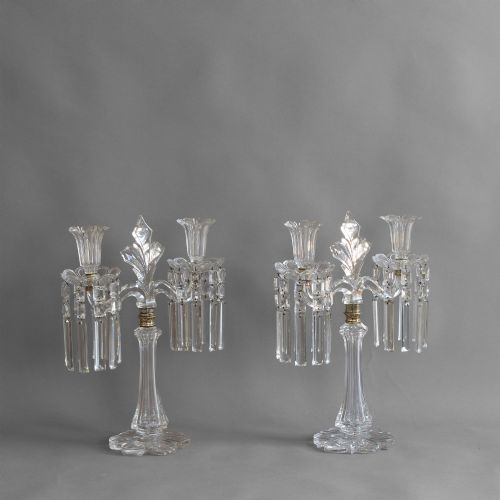
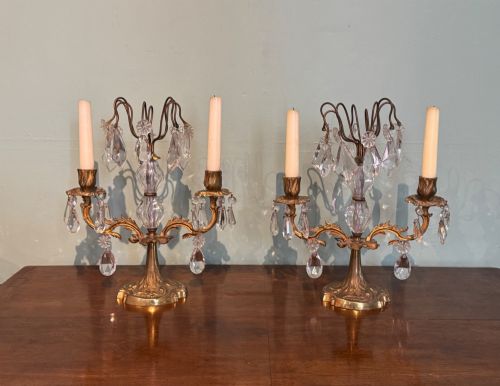
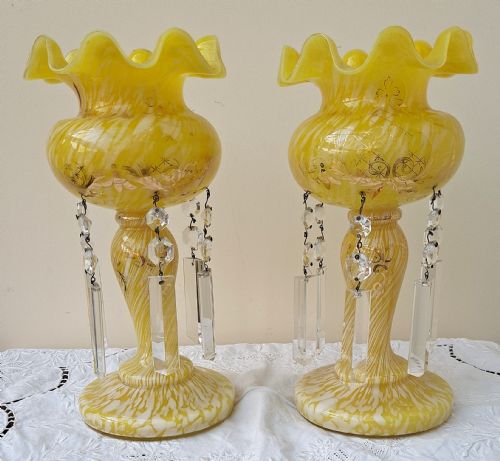
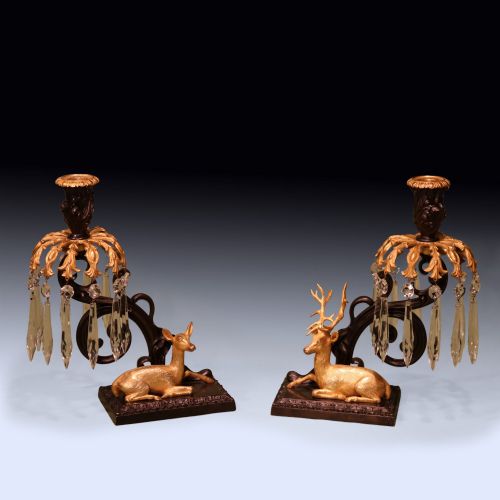
These pair of crystal lustres combine lighting with hanging glass prisms, bringing a brilliant sparkle to any mantelpiece or table.
Pair of Crystal Lustres
A pair of crystal lustres serves as an ornamental candlestick fitted with hanging glass drops, designed to catch and refract candlelight around a room. When you search for a pair of crystal lustres, you encounter forms that range from simple table candlesticks to elaborate mantel ornaments.
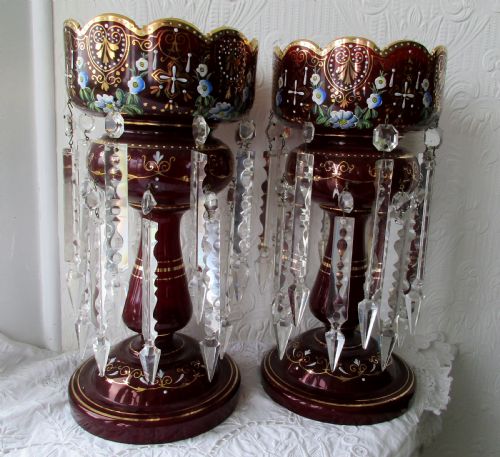
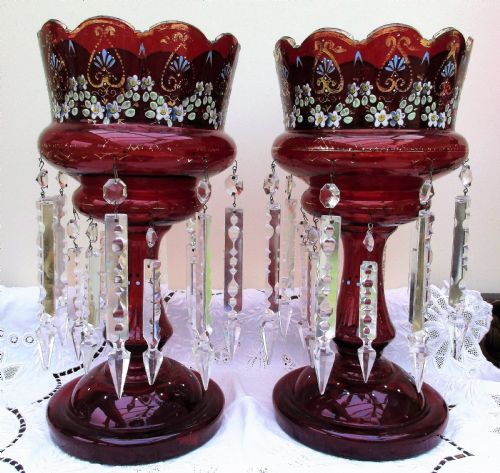
The pieces appearing on this page span several periods, with Victorian examples and nineteenth century items appearing most frequently alongside Regency and twentieth century pieces. Makers utilised materials such as ruby glass, green glass, brass, bronze, and ormolu alongside clear crystal and cut glass.
Forms include mantel lustres, table candlesticks, candelabras, and wall lights, often decorated with enamelling, gilt highlights, and cut glass drops. These decorative objects functioned as both lighting apparatus and ornamental centerpieces in period drawing rooms.
Materials and construction
Craftsmen shaped glass and crystal through blowing and pressing, frequently employing overlay or flash techniques to create layered colours like ruby and green. These glass bodies were then hand-cut with geometric facets to maximise the reflection of light.
Metal components in brass, bronze, and ormolu provided sturdy bases and structural frames, sometimes enhanced with gold leaf or gilt finishes. Glass prisms and crystal drops were suspended from the rims using wire or metal pins, allowing them to swing and tinkle slightly.
The object forms span mantel lustres, table candlesticks, wall lights, and candelabras, highlighting diverse nineteenth century manufacturing styles.
Judgments of quality
Quality rests upon the depth of the glass cutting and the clarity of the crystal or coloured glass bodies. Heavy, well-proportioned casting in the bronze, brass, or ormolu mounts distinguishes superior examples from simpler productions.
The completeness and originality of the hanging crystal drops heavily influence the standard of a pair. Lustres retaining their full complement of matching, undamaged cut-glass prisms represent the higher tier of surviving pieces.
The Pair of Crystal Lustres Glossary
- Lustre
- An ornamental candlestick or candelabra hung with cut-glass drops. These pendants are designed to catch and multiply the light.
- Prism
- A cut-glass pendant suspended from the rim of a lustre. Prisms disperse light into spectral colours.
- Overlay glass
- Glass formed by fusing a layer of coloured glass over a clear or contrasting glass body. Artisans then cut through the top layer to reveal the contrasting colour beneath.
- Ormolu
- Gilded bronze used for mounts and decorative figures. This technique was widely utilised in French and English decorative metalwork.
- Cricklite
- A brand of table lamp and candelabra utilising specialised glass shades. These pieces often incorporated lustre drops.
Pair of Crystal Lustres: Frequently Asked Questions
How do I clean a pair of crystal lustres?
Carefully remove the hanging glass drops from the frame before washing them in warm, soapy water. Wipe the main glass and metal body with a soft, damp cloth without submerging mixed-media bases.
Dry every component thoroughly with a lint-free cloth before reattaching the drops. Avoid using harsh chemical cleaners that might damage gilt surfaces or enamel decoration.
Were these pieces used for lighting?
These items functioned primarily as decorative mantel ornaments rather than main light sources. The candles placed in the sockets provided gentle illumination that was amplified by the hanging crystal prisms.
In later periods, some examples were adapted for electrical use or paired with storm shades. However, their main role remained ornamental.
How do I date a pair of lustres?
Examine the style of the metal mounts, the depth of the glass cutting, and the colour of the glass body. Victorian and nineteenth century examples often feature rich ruby or green glass with heavy gilt detailing.
Regency pieces tend to display crisper cut glass and neoclassical bronze mounts. Twentieth century items often show simpler construction methods or different casting techniques.
Are missing crystal drops common?
Because the hanging prisms are delicate and loosely attached, many surviving pairs have lost some original drops over the decades. Replacements can be sourced, though matching the exact cut and age requires patience.
Checking whether the drops match each other in weight and cutting helps determine if replacements have been added.