
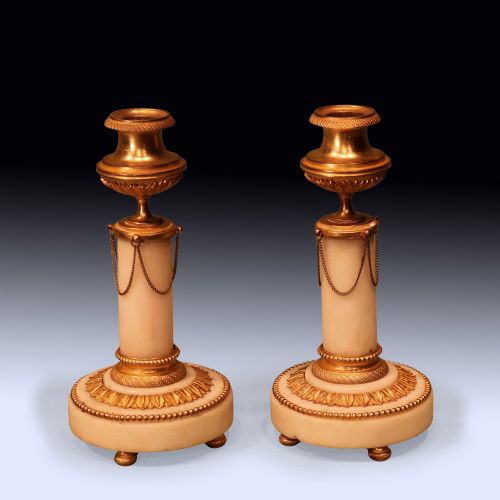
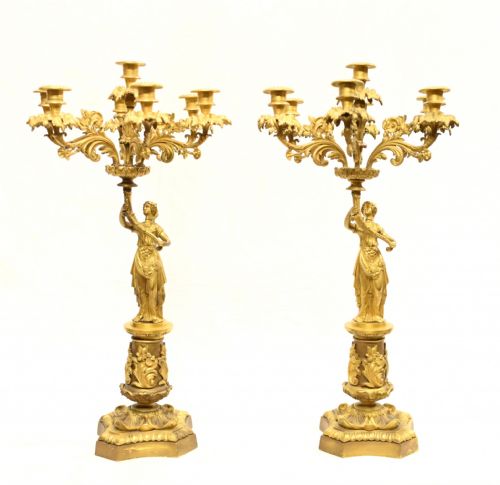


Ormolu Mantelpiece Candlesticks
Ormolu mantelpiece candlesticks are heavy, gilded lighting pieces designed for display, bringing period French and Regency character to a room.
Ormolu Mantelpiece Candlesticks
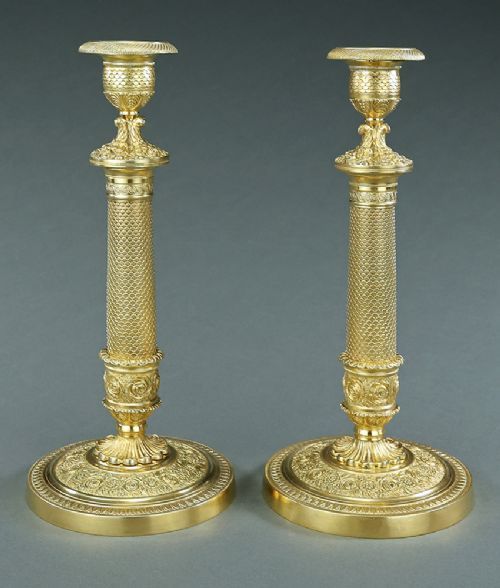
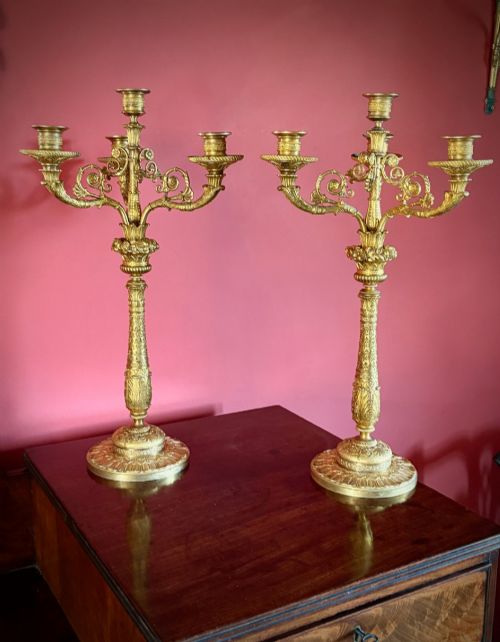
When you search for ormolu mantelpiece candlesticks, you encounter pairs of decorative metal lighting fixtures designed to stand upon a fireplace shelf or side table. The examples available span the nineteenth century, taking forms such as single candlesticks, multi-branch candelabra, and table lustres.
The objects derive largely from French and Regency design vocabularies. You meet pieces executed in styles ranging from French Empire and Louis XVI to Regency, Charles X, and Rococo Revival.
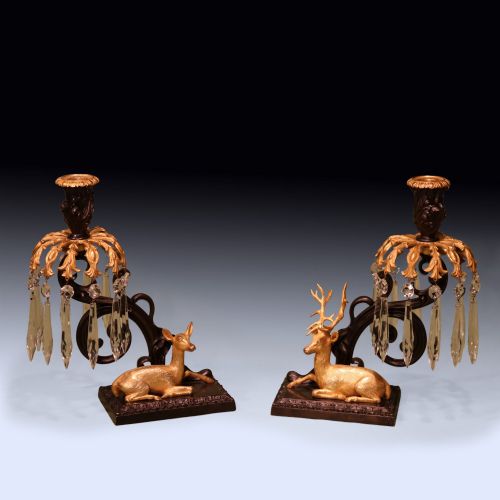
Makers and designers referenced in the broader tradition include figures such as Claude Clodion and Thomas Hope. Alongside standard brass and bronze stands, forms incorporate figurative elements like stags, does, maidens, cherubs, and griffins.
How they were made
The manufacturing process centres on the combination of bronze, patinated bronze, and ormolu, which is a gilded bronze achieved through mercury gilding or modern electroplating techniques. Makers cast the metal components in sections before chasing and finishing the surfaces to create contrast between bright gold highlights and dark patination.
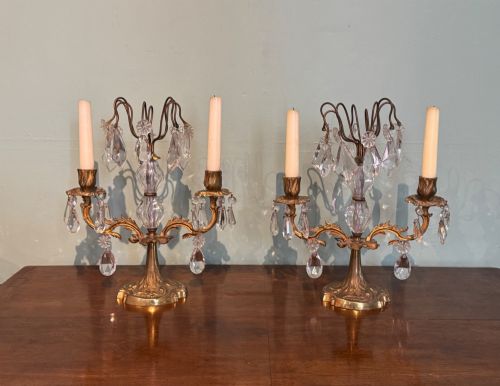
Many designs incorporate structural elements of white marble, brass, and cut glass or crystal lustres that hang from the arms to refract candlelight. Porcelain sections, including Sevres style ceramic bodies, appear integrated into the metalwork on specific candelabra.
Construction methods rely on threaded rods and screws to secure the heavy metal and stone tiers together. Branches on multi-arm candelabra are detachable or screwed firmly into central sockets to support the weight of candles.
Listings feature 19th-century pieces predominantly, spanning styles from French Rococo Revival and Louis XVI to Regency and Charles X.
What varies in quality
The preservation and quality of the gilt ormolu surface dictate visual success. Stronger examples retain an even, warm gold tone across recessed and raised areas, whereas lesser items show patchy gilding wear or overly bright modern plating.
The harmonious integration of mixed materials marks the tier of a piece. Finer items combine dense white marble bases and unblemished cut glass lustres securely with the heavy bronze framework.
Claude Clodion·Thomas Hope
The Ormolu Mantelpiece Candlesticks Glossary
- Ormolu
- Gilded bronze, where a layer of gold is applied to a bronze base object. The technique creates a rich metallic finish characteristic of decorative arts from the eighteenth and nineteenth centuries.
- Candelabra
- A branched candlestick holding multiple candles on separate arms. These lighting fixtures often feature a central light or decorative finial surrounded by two, three, or five scrolling branches.
- Patinated bronze
- Bronze treated with chemicals or heat to produce a dark, uniform surface colour. This dark tone provides visual contrast against bright ormolu highlights.
- Lustre
- A glass pendant or drop hung from the sconce or drip pan of a candlestick. Lustres refract candle flame to increase the brightness of the room.
- Regency
- An English design style spanning the early nineteenth century. It draws heavily on classical Greek, Roman, and Egyptian motifs.
Ormolu Mantelpiece Candlesticks: Frequently Asked Questions
What is the difference between candlesticks and candelabra?
Candlesticks are single-socket stands designed to hold one candle at a time. They offer a simpler silhouette suited for narrow mantelpieces.
Candelabra feature multiple branches diverging from a central stem to hold several candles simultaneously. They provide a heavier visual presence and greater illumination.
Where should I place these on a mantelpiece?
These pieces sit securely on a flat stone or wooden fireplace shelf, often framing a central clock or mirror. Their weight helps them stay stable on narrow surfaces.
Ensure they are positioned away from foot traffic so the hanging glass lustres or delicate arms remain safe from accidental knocks.
How do I clean ormolu and bronze safely?
Dust the surfaces gently with a soft, dry microfibre cloth to remove everyday particles. Avoid abrasive polishes or chemical cleaners that strip the historic gilding.
Water can damage integrated marble bases and cause corrosion on exposed iron pins, so keep moisture away from the joints.
How can I tell a French Empire piece from a Regency one?
French Empire pieces lean heavily into military motifs, classical figures, and crisp, heavy ormolu mounts inspired by Napoleonic taste. They often use deep patinated bronze alongside bright gilding.
Regency items reflect British interpretations of classical antiquities with distinct use of griffins, sphinxes, and dark patination mixed with restrained gilt brass or bronze.