

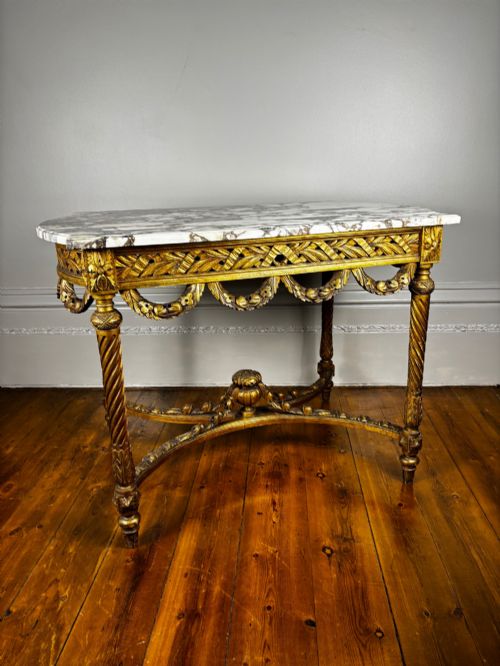
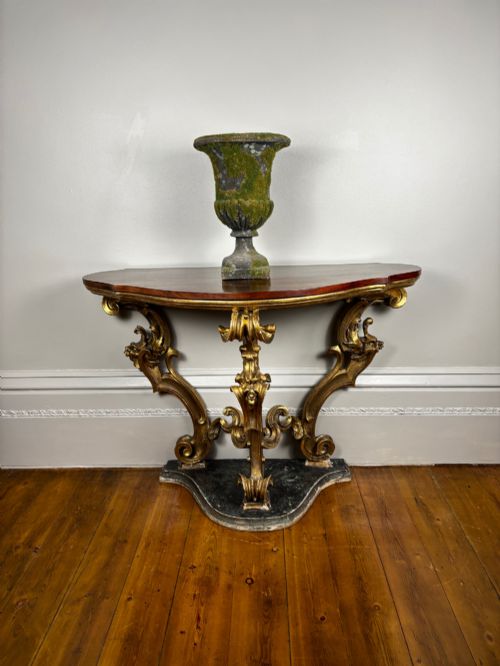
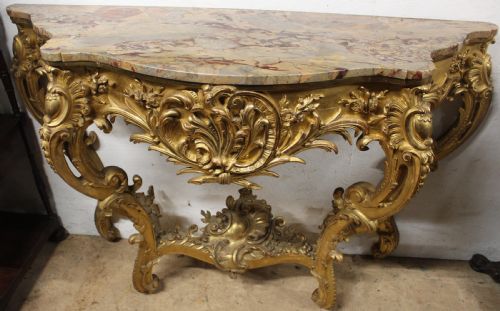
Gold Gilded Side Table
A gold gilded side table brings reflective warmth and classical proportion to a room, uniting carved wood or metal with polished stone surfaces.
Gold Gilded Side Table
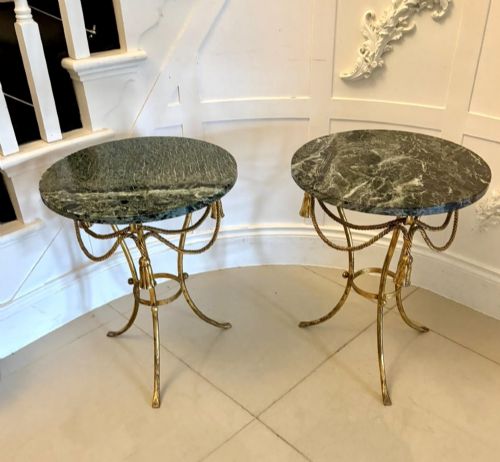
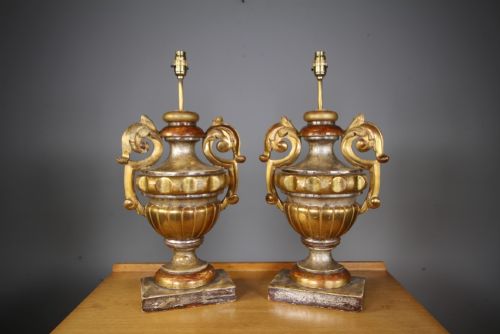
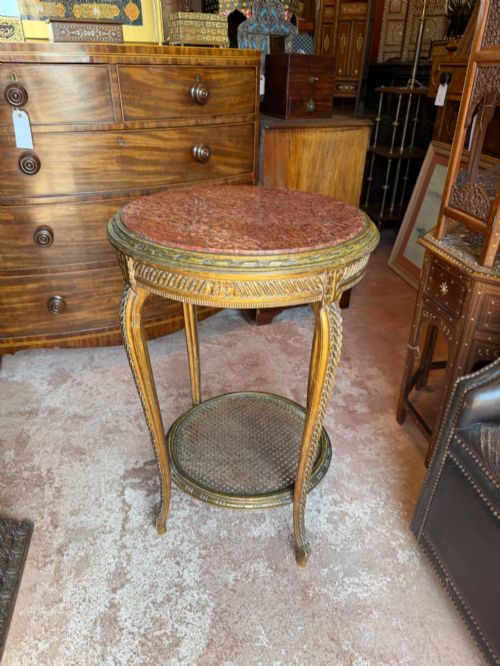
A gold gilded side table encompasses console tables, lamp tables, and occasional stands originating primarily from the eighteenth and nineteenth centuries. These pieces reflect European interior design traditions, particularly Italian and French stylistic movements.
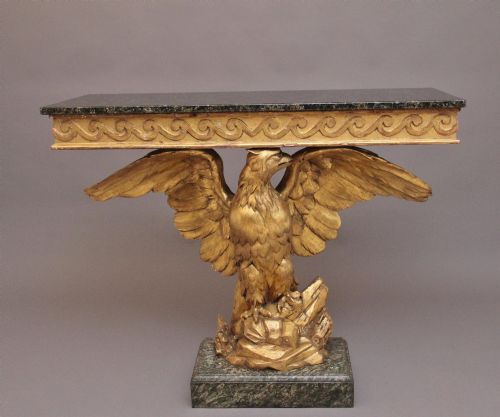
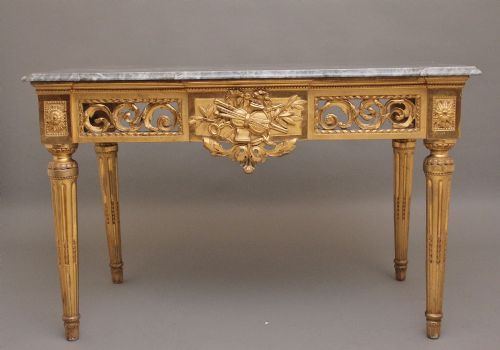
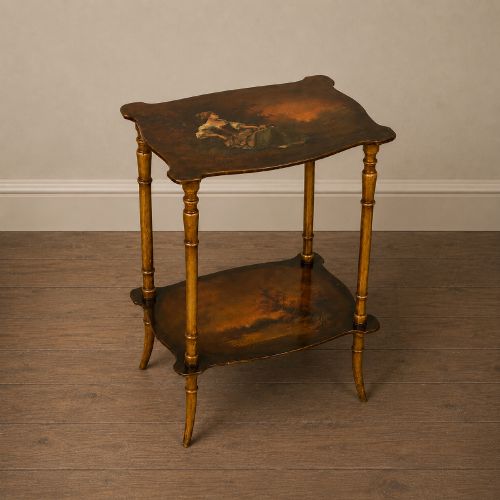
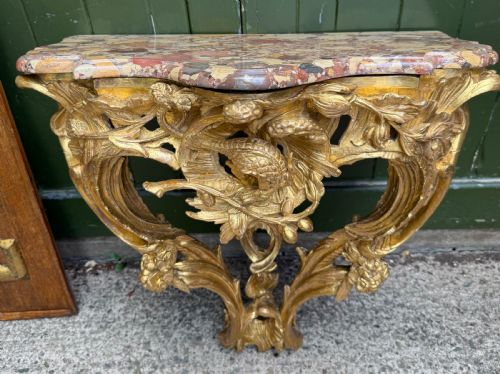
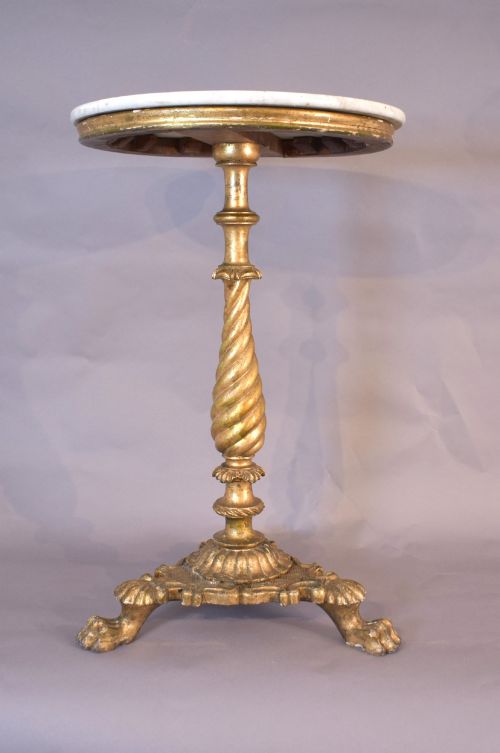
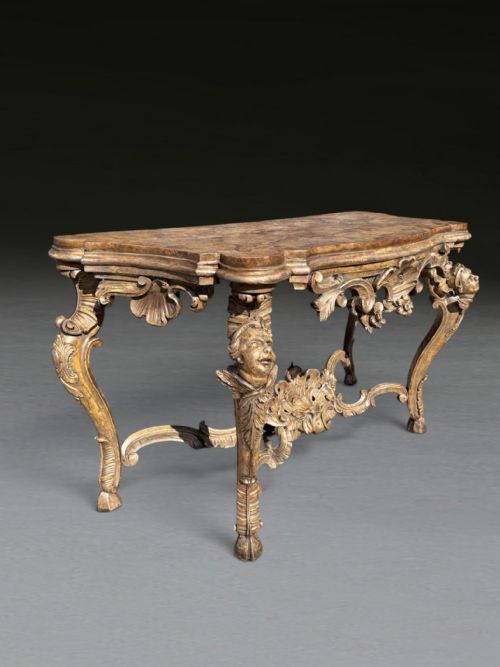
Console tables designed for wall placement frequently feature heavy marble tops paired with carved giltwood bases. Smaller occasional tables and tripod stands utilise gilt bronze, brass, or painted finishes alongside circular stone or wood surfaces.
Examples span the Baroque, Rococo, and Neoclassical periods, alongside later revivals from the early twentieth century. Buyers encounter both grand architectural consoles and intimate salon tables within the current selection.
How they were made
Craftsmen built the structural framework using lime wood, pine, walnut, or cast metals, applying gesso as a smooth preparation layer before gilding. Gold leaf or silver gilt was then laid meticulously over the prepared surfaces to achieve a luminous metallic finish.
Tops were fashioned from solid or figured marbles such as verde and breccia, alongside onyx and polished timber. Carved details - including lion's paws, floral mouldings, and swans - were worked directly into the wood or cast in ormolu and gilt bronze.
Listings feature items spanning from the mid-eighteenth century to the 1930s, utilising giltwood, marble, gesso, and ormolu.
What varies in quality
The distinction between tiers rests upon the depth and crispness of the carving and the purity of the gilding technique. Finer items display hand-chiselled bronze mounts and deeply sculpted wooden foliage rather than shallow surface moulding.
The selection of the stone top dictates much of the visual weight, with thick, figured marble slabs and breccia inserts marking superior manufacture. Original integration between the base and the stone surface denotes higher workshop standards.
The Gold Gilded Side Table Glossary
- Giltwood
- Wood that has been coated with gold leaf or powder over a prepared gesso ground. This technique provides the characteristic reflective surface seen on period frames and furniture bases.
- Console table
- A table designed to stand against a wall, frequently secured with brackets. These pieces often feature elaborate front legs and flat backs.
- Ormolu
- Finely chased and gilt bronze used for decorative mounts and decorative objects. The term derives from the French for ground gold.
- Gesso
- A plaster mixture applied to wood surfaces as a base for gilding and painting. It creates a smooth, absorbent ground for metallic leaf.
- Breccia marble
- A composite marble made of angular fragments cemented together in a fine-grained matrix. It produces striking patterned surfaces on nineteenth-century tabletops.
Gold Gilded Side Table: Frequently Asked Questions
Where should a gold gilded side table sit?
Console variants belong against a prominent wall in a hallway or reception room, often paired with a matching mirror above. Smaller occasional versions function effectively beside seating or as lamp stands.
Their reflective surfaces catch natural light, making them suitable for brightening darker corners or narrower passages within a domestic interior.
How do I identify a Neoclassical table?
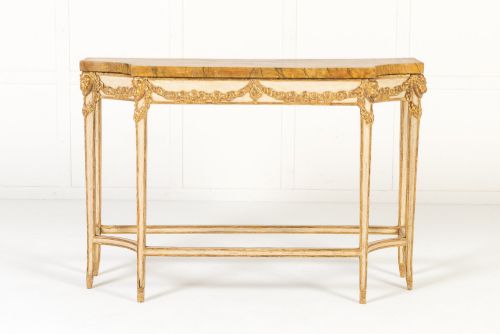
Neoclassical pieces rely on symmetry, straight lines, and classical motifs derived from antiquity, contrasting with earlier curved Rococo forms. Look for restrained proportions and architectural detailing.
Executed in giltwood or painted finishes, these tables frequently incorporate marble tops and balanced geometric supports characteristic of the late eighteenth and early nineteenth centuries.
Are marble tops original to these tables?
Period tables generally retain their heavy stone inserts, which were cut specifically to fit the wooden or metal frame rebates. Veined varieties like verde and breccia are typical of Italian and French production.
Checking the underside reveals the seating arrangement where the stone rests directly upon the structural rails of the gilded base.
How do I care for giltwood surfaces?
Giltwood requires gentle dusting with a dry, soft brush to protect the delicate metallic leaf from abrasion. Moisture and chemical polishes must be strictly avoided.
Maintaining stable room humidity prevents the underlying gesso and wood from expanding, which preserves the integrity of the gilded decoration over time.