
Gilded Hall Console Table
A gilded hall console table brings weight and surface into an interior, combining carved wood and marble to anchor an entrance space.
Gilded Hall Console Table
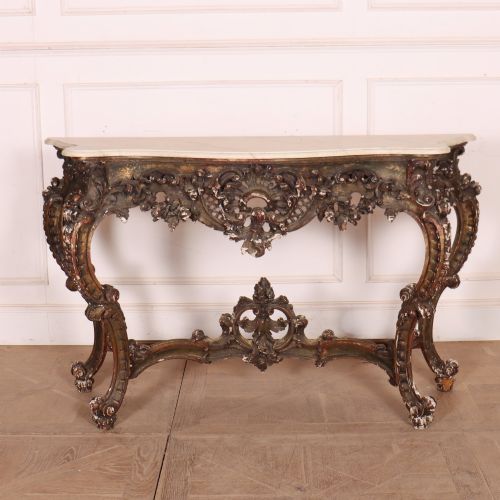
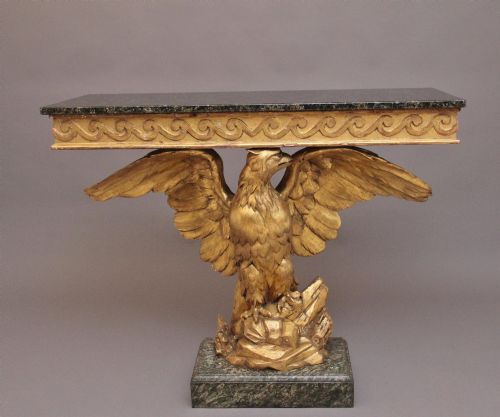
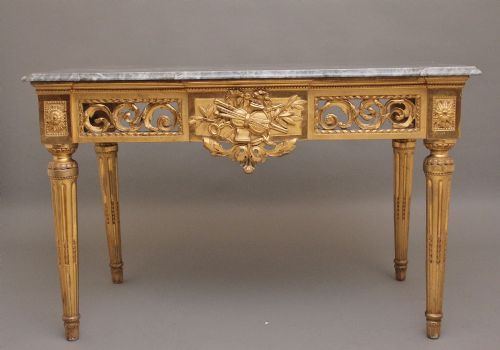
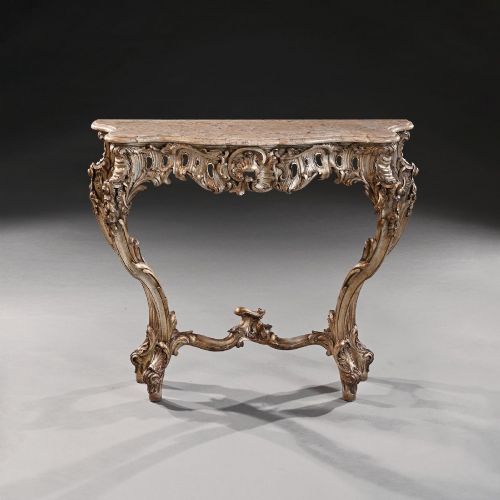
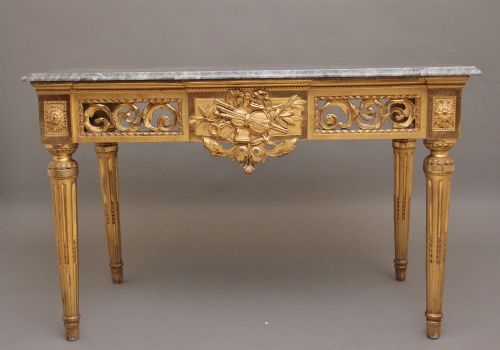
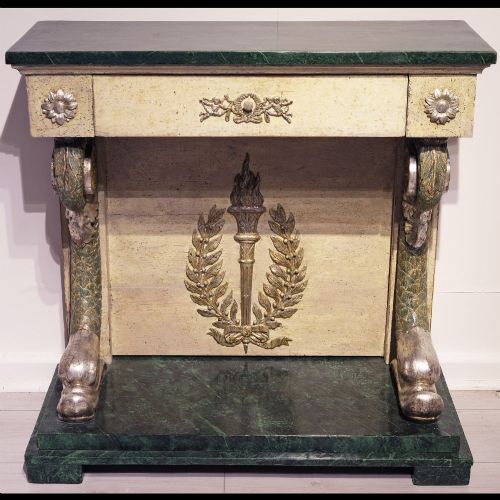
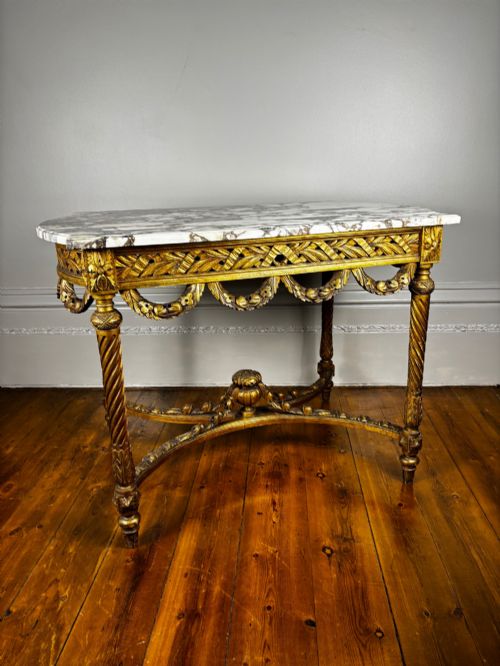
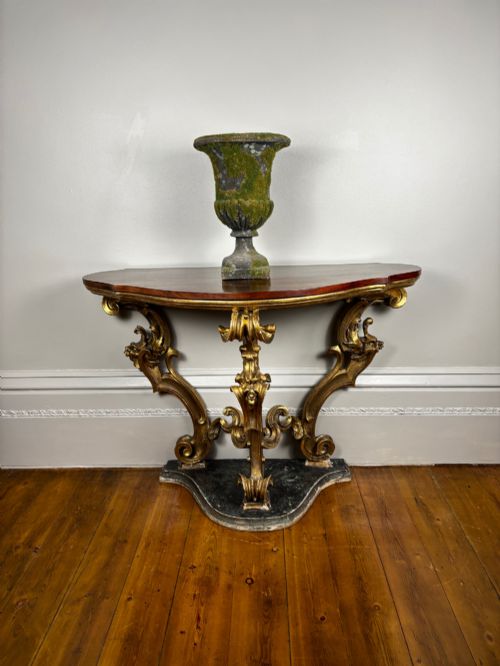
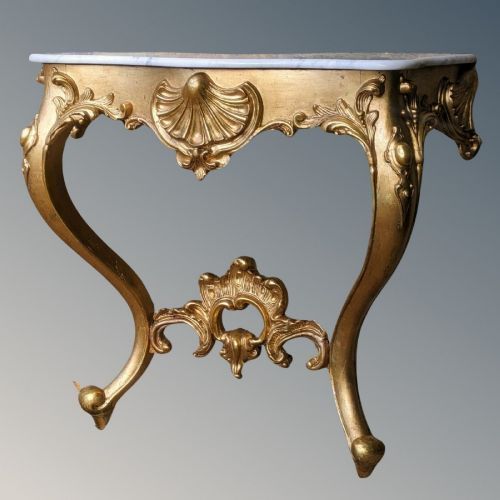
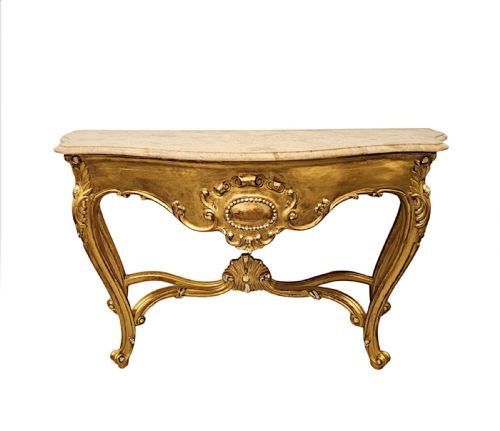
A gilded hall console table appears primarily in eighteenth and nineteenth-century forms, often originating from Italian, French, and Swedish workshops. These pieces frequently feature shaped marble or onyx tops resting on carved wooden frames designed to stand flush against a wall.
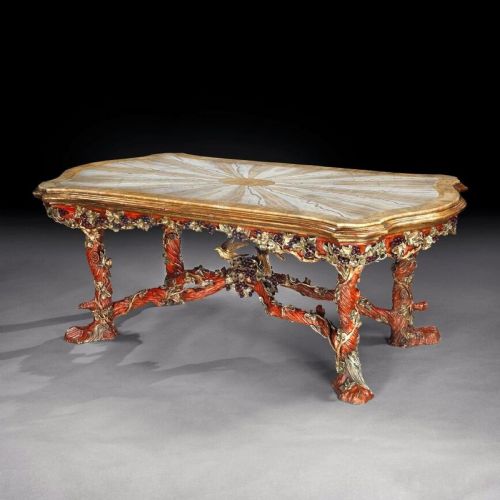
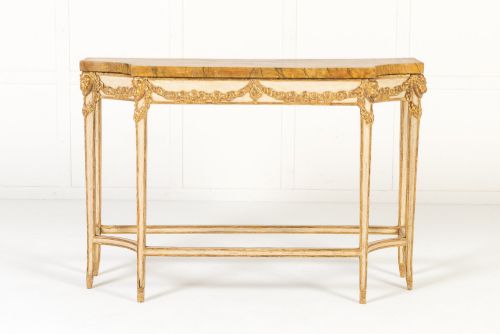
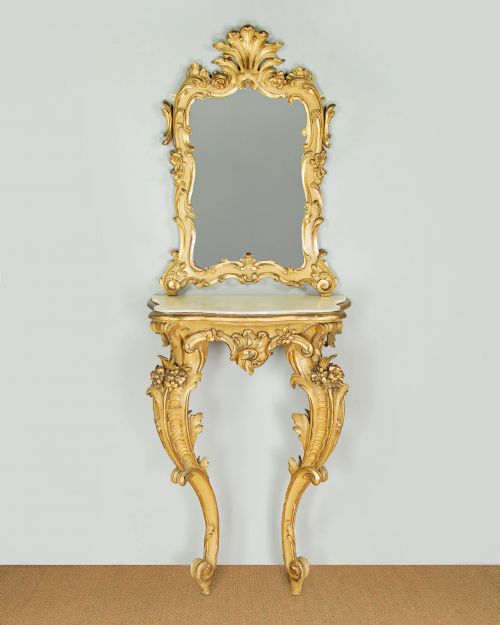
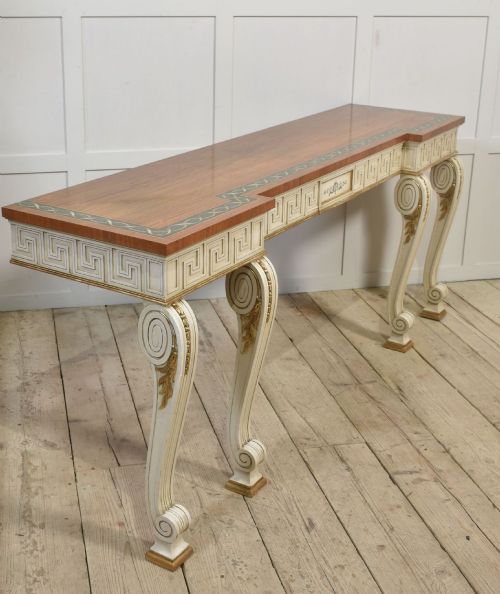
Makers produced these tables in various regional styles, including Venetian, French Rococo, and Neoclassical iterations. Variations extend to integrated mirror sets and companion centre tables sharing similar painted or gilt finishes.
Materials and Construction
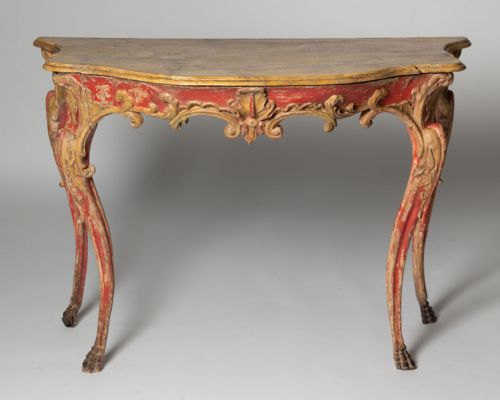
Artisans built these tables using carved wood, gesso, and applied gold leaf or silver gilt to achieve their reflective surfaces. Many examples incorporate painted details alongside parcel gilding on walnut, oak, or other timber substrates.
Heavy stone tops in marble, breccia, or onyx rest upon the wooden bases, requiring substantial joinery and robust structural support to bear the weight.
Listings span the eighteenth and nineteenth centuries, with materials ranging from basic pine and paint to fine giltwood, gesso, and heavy marble.
Distinctions in Execution
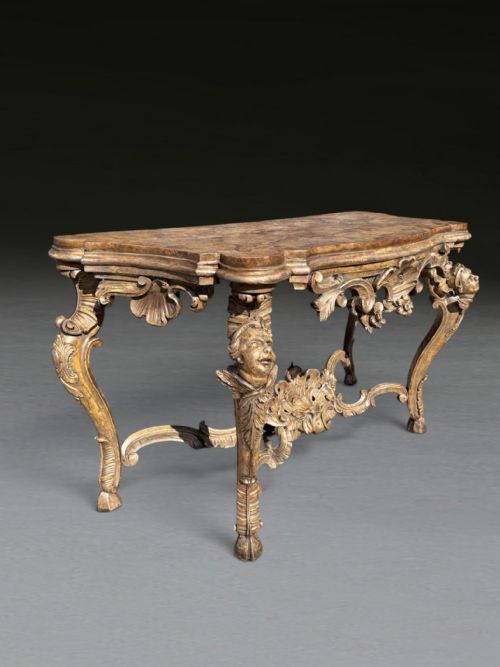
Quality rests in the depth and precision of the carved wood details and the crispness of the gesso work beneath the gold leaf. Sculptural elements such as lion's paw supports or intricate foliage display the hand of a skilled maker.
The selection of the stone top also dictates distinction, with thick, figured marble or breccia slabs marking out the more ambitious commissions compared to simpler painted pine or softwood frames.
Amleto Bertoni
The Gilded Hall Console Table Glossary
- Giltwood
- Timber coated with gold leaf applied over a prepared gesso ground. This finish provides a bright, reflective surface that catches light in a hallway.
- Console Table
- A table designed to stand against a wall, traditionally supported on the front by console brackets or legs rather than four independent corners.
- Gesso
- A plaster-like mixture applied to wood surfaces as a smooth base for gilding or painting. It allows intricate relief ornamentation to be carved before finishing.
- Serpentine Front
- A table front characterised by a curving line that bends outward in the centre and inward at the sides. This contour requires precise carpentry to fit the stone top.
Gilded Hall Console Table: Frequently Asked Questions
Where should a console table go?
A gilded hall console table sits primarily against a wall in an entrance hall or reception room where floor space is limited. Because the back is often left unfinished or designed to meet the wall, it functions best as a stationary focal point.
Pairs of these tables also appear in larger saloons or flanking architectural doorways, sometimes matched with tall pier mirrors.
How do I style a marble top?
The stone surface of a marble top console table provides a cool, durable shelf for lamps, ceramics, or decorative objects. Keeping heavy items distributed evenly prevents undue strain on the wooden frame.
Items with soft bases protect the polished stone from scratches while maintaining the display.
What is the difference between Rococo and Neoclassical?
Rococo pieces lean into asymmetrical scrolls, C-scrolls, and exuberant floral carvings associated with French and Italian workshops. These designs emphasise flowing movement and theatrical decoration.
Neoclassical pieces shift toward symmetry, straight lines, and classical architectural motifs derived from antiquity, reflecting a more restrained aesthetic.
Are these tables meant to be freestanding?
Most antique console tables rely on the wall for balance and stability, occasionally featuring flat rear legs or wall fixings. Centre tables, by contrast, are finished on all four sides for placement in the middle of a room.
Checking the finish on the back of the frame clarifies whether the table was built to stand away from the wall.