

Carved Wood Wall Console
A carved wood wall console brings sculptural presence to a room, offering a surface that floats against the panelling without demanding floor space.
Carved Wood Wall Console
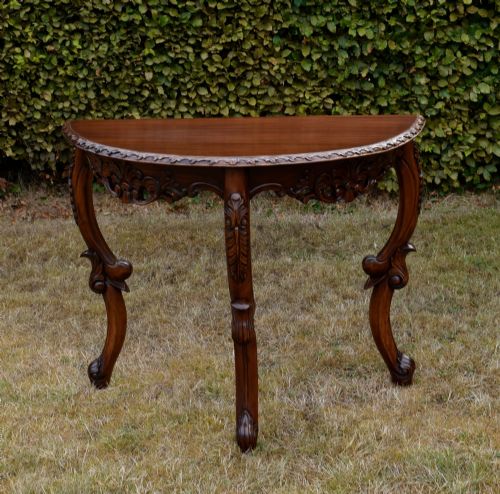
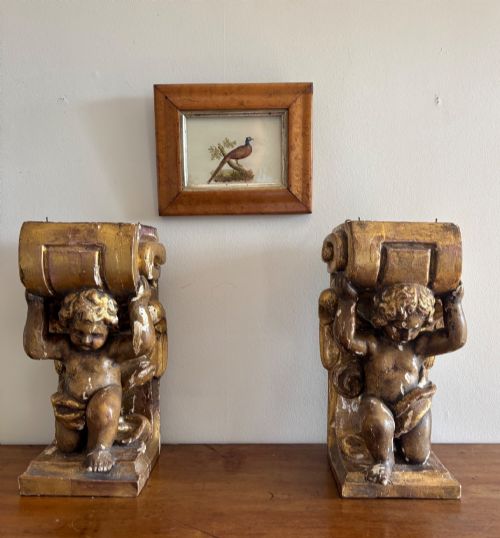
A carved wood wall console encompasses wall-mounted brackets, demi-lune ledges and tables supported against vertical surfaces. These architectural pieces emerge primarily from the eighteenth and nineteenth centuries, spanning French, Italian, English and Gustavian traditions. They serve both decorative display functions and practical uses in hallways and reception rooms.
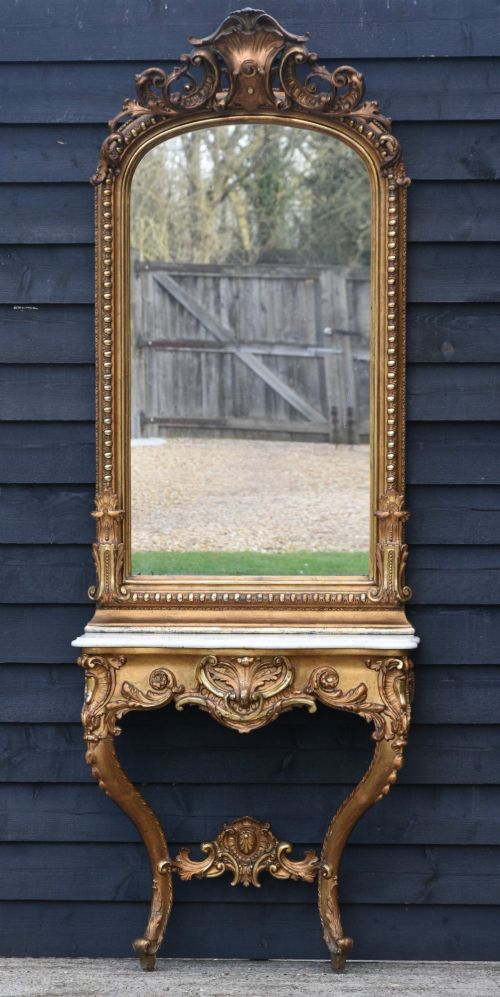
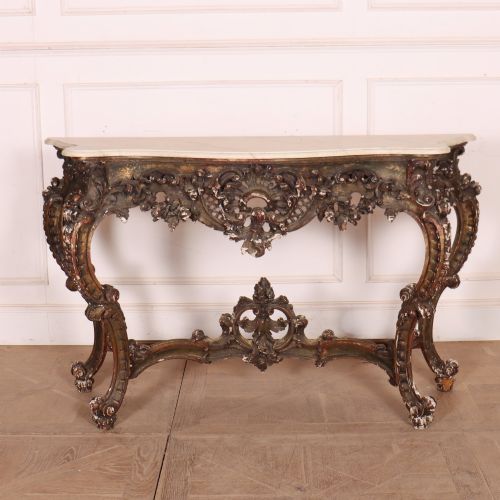
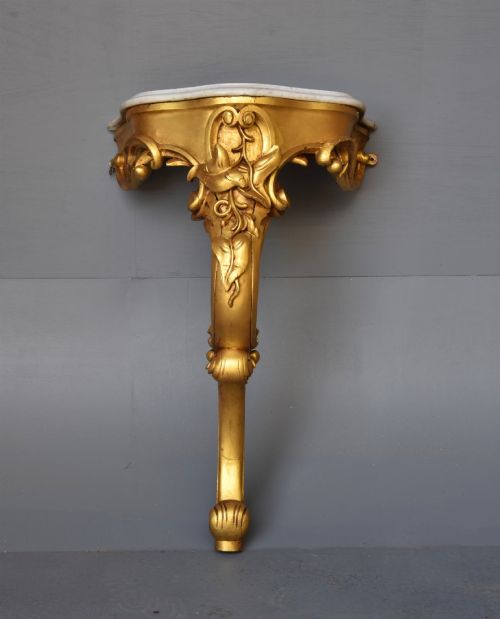
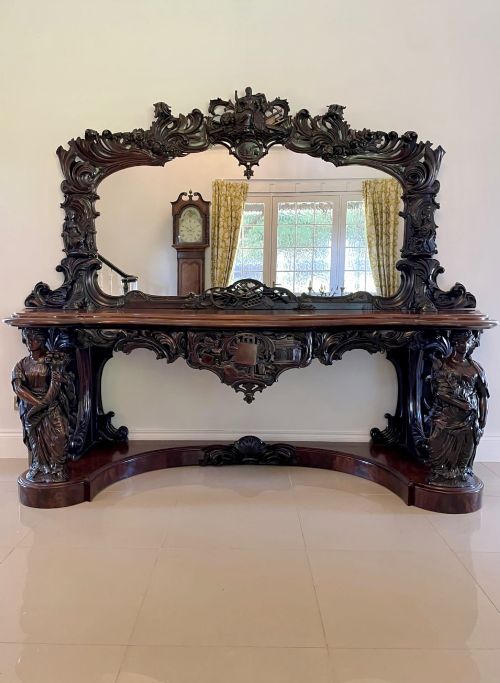
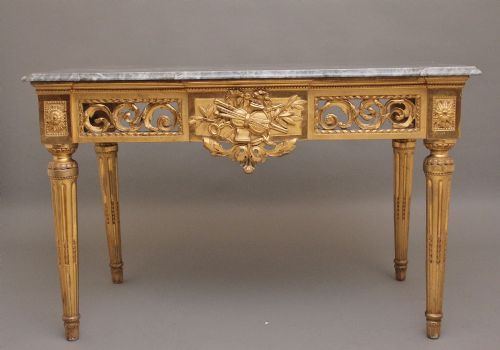
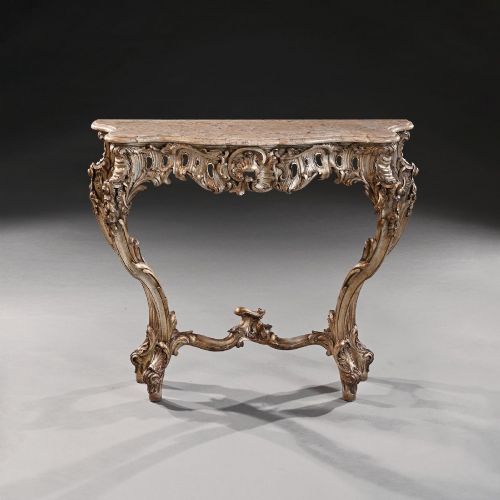
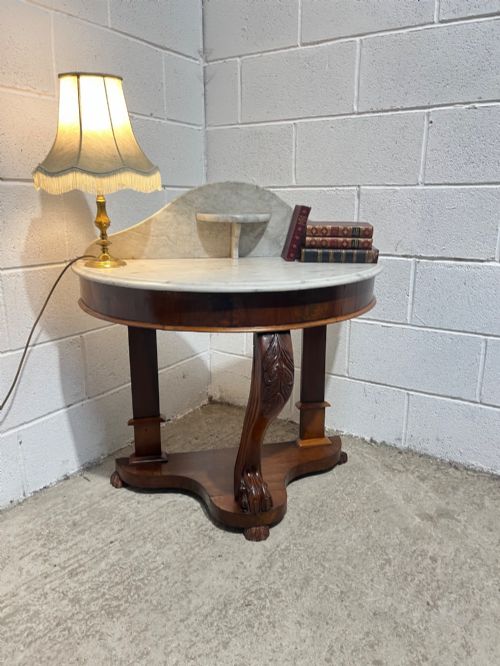
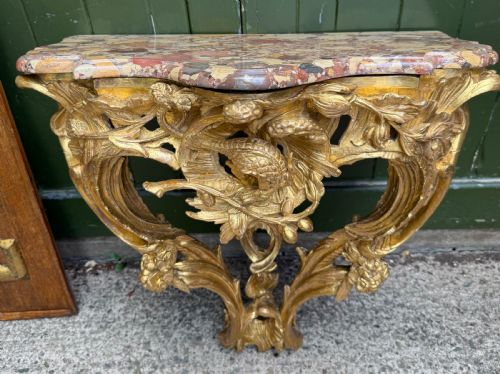
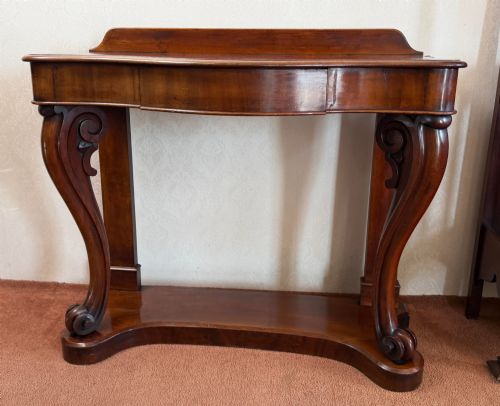
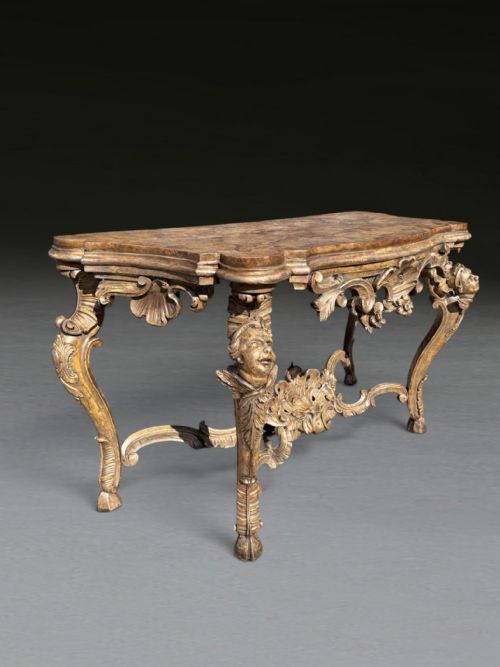
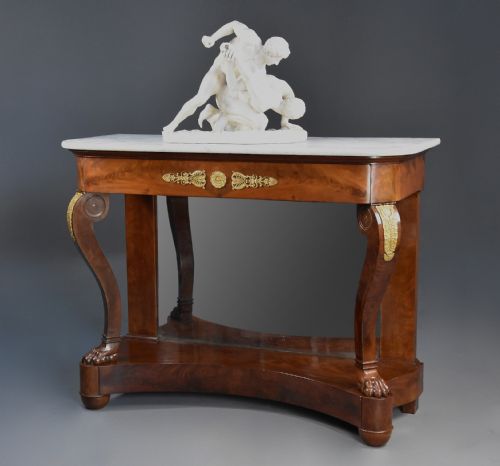
The selections available here rely heavily on nineteenth-century interpretations of Rococo, Baroque and Neoclassical styles. Visitors encounter giltwood finishes paired with shaped marble tops, alongside painted mahogany and walnut examples. Wall brackets and smaller consoles appear frequently alongside large exhibition-grade pier tables.
Origin points range from Venetian workshops to French provincial ateliers, showing distinct regional carving habits. Some pieces stand as simple painted pine or mahogany brackets, whilst others demonstrate elaborate Italian gilding with lion paw supports. This variety allows collectors to match specific period interiors.
Materials and construction methods
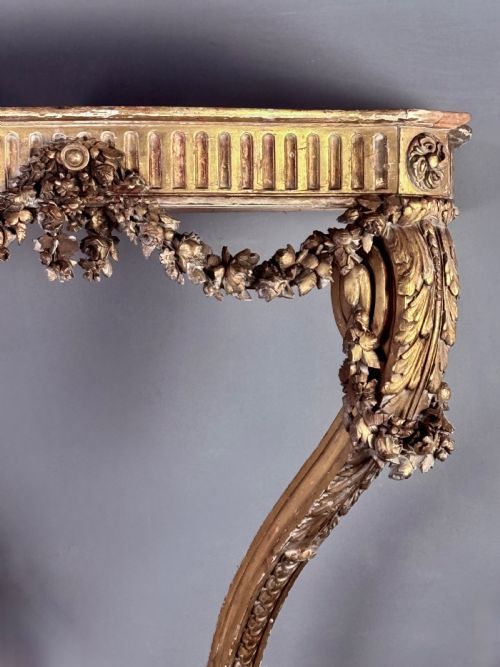
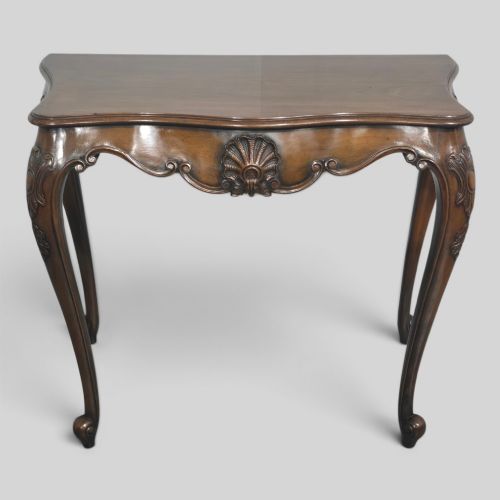
Makers shaped these consoles from solid timber foundations including mahogany, walnut, padauk and pine, applying gesso layers to prepare surfaces for extensive carving. Artisans then executed intricate foliate scrolls, cherubs and architectural motifs by hand using specialised gouges and chisels. Giltwood variants received applications of gold leaf laid over bole, while others retained natural wood finishes or decorative paint.
Heavy marble slabs in breccia, white and figured varieties frequently formed the upper surfaces, resting securely on the timber framework. French and Italian pieces often utilised pine or softwoods as a carcass base before applying the intricate gesso relief and gilding. Structural integrity relied on robust wall-mounting iron brackets or sturdy rear legs designed to bear the weight of heavy stone.
Listings feature items from the eighteenth, nineteenth and early twentieth centuries, constructed in mahogany, giltwood, marble and paint.
Distinctions in craftsmanship and design
The depth and crispness of the hand-carved detail separate ordinary production from superior examples. High-grade pieces show undercut foliage and expressive figures rather than shallow, mechanical moulding. The quality of the gilding and the selection of the marble slab, such as figured breccia versus plain stone, dictate the standing of the piece.
Proportion and scale play significant roles in determining execution standards. Exhibition-quality consoles maintain balanced architectural harmony despite heavy ornamentation, whereas lesser items can appear overcrowded or clumsy in their scrollwork. Original surfaces undisturbed by aggressive modern restoration command greater respect from discerning buyers.
Felix Alfred Ternisien
The Carved Wood Wall Console Glossary
- Console table
- A table designed to be fixed against a wall, traditionally supported by front legs or wall brackets.
- Giltwood
- Timber that has been coated with thin sheets of gold leaf over a prepared gesso and bole ground.
- Demi-lune
- A half-moon shape characteristic of certain console tables designed to sit flush against flat walls.
- Breccia
- A type of variegated marble composed of angular fragments embedded in a fine-grained matrix, often used for table tops.
- Gesso
- A plaster-like mixture applied to wood surfaces to create a smooth base for fine carving and gilding.
Carved Wood Wall Console: Frequently Asked Questions
How do I secure a wall console?
Most wall-mounted consoles and brackets require robust fixing directly into structural wall studs or masonry using appropriate heavy-duty screws and wall plugs. Due to the weight of the timber and marble tops, professional installation is often advisable.
Ensuring the rear battens or iron brackets bear the load correctly prevents accidental tipping or separation from the plaster.
How do I clean a giltwood console?
Giltwood surfaces require extremely gentle dusting with a soft, dry ostrich feather brush or clean microfiber cloth. Moisture and chemical cleaning agents will strip the delicate gold leaf and underlying gesso.
Avoid touching the gilded areas with bare hands, as natural skin oils can degrade the metallic finish over time.
Are marble tops removable?
Marble tops on antique consoles are usually heavy slabs that simply rest within a wooden rebate or upon the frame without permanent fixings. This allows the stone to be lifted off to lighten the piece during transport.
Care must be taken when lifting, as the stone edges are vulnerable to chipping if knocked against walls.