





Serpentine Marble Console
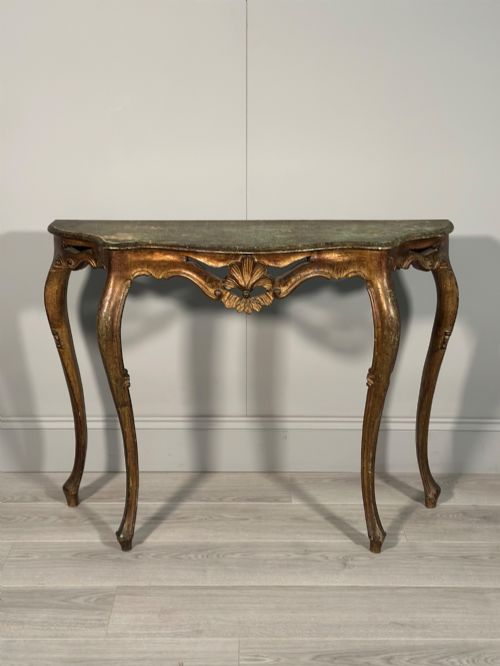
A serpentine marble console brings architectural presence to an interior, combining a flowing stone surface with a carved wooden frame.
Serpentine Marble Console
When you search for a serpentine marble console, you encounter tables designed to sit flush against a wall, frequently featuring a characteristic curving stone top that undulates outward and inward. The pieces available span several centuries, with nineteenth-century examples forming the core of the selection alongside eighteenth-century works and later twentieth-century iterations.
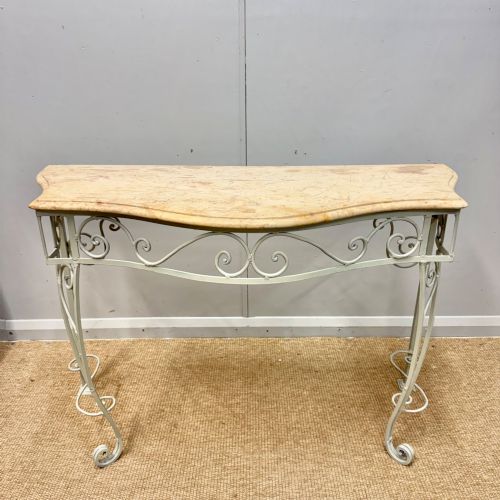
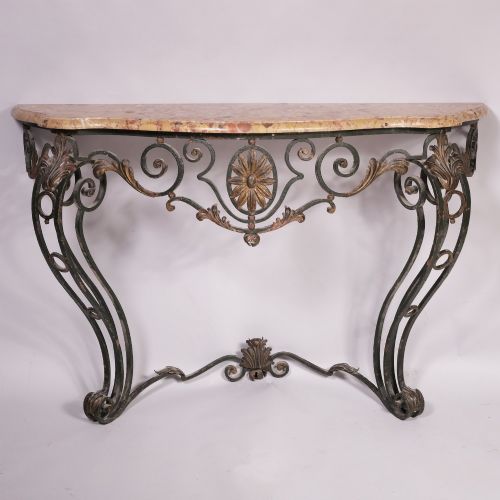
The forms encompass console tables, pier tables, centre tables, and side tables originating from French, Italian, Irish, and English workshops. Frames range from heavily gilded and carved wooden structures to simpler oak, walnut, and wrought iron supports.
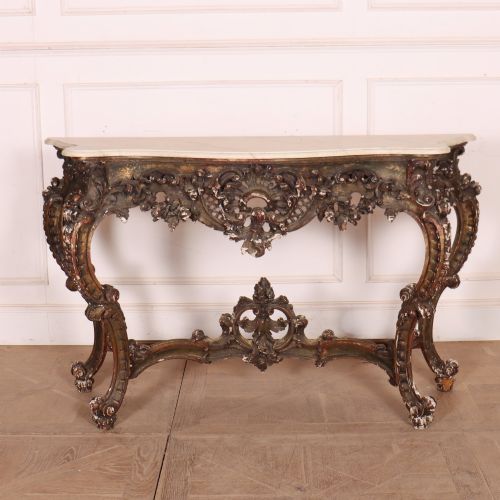
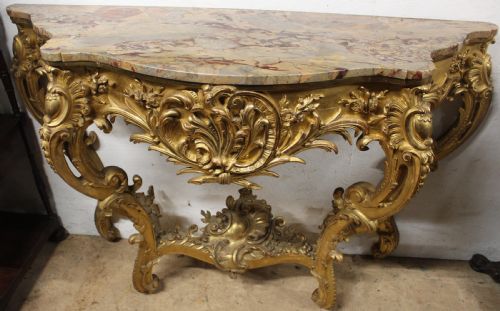
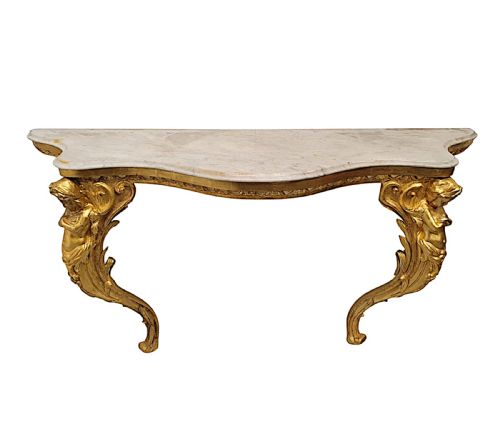
Buyers most commonly meet nineteenth-century French and Italian designs showcasing Rococo Revival or Louis XVI style influences. These pieces rely on the interplay between the heavy, cool touch of marble and the warm texture of carved or painted timber frames.
Materials and construction
The primary material combination unites a shaped slab of marble with a supporting frame constructed from timbers such as oak, walnut, mahogany, or carved gessoed wood. Stonemasons cut and polished the marble tops to follow the undulating serpentine profile, requiring considerable skill to achieve smooth, consistent curves.
Supporting frames utilise traditional joinery and hand-carving techniques, often finished with layers of gold leaf, paint, or clear polish. Giltwood and gesso surfaces received meticulous application of metallic leaf over prepared grounds, while iron versions incorporated forged metal supports beneath the stone.
Serpentine Marble Console Retail Price Guide 2026
Typical asking prices for serpentine marble console among the pieces listed under this phrase on Sellingantiques today, from the lower quarter to the upper quarter. They describe what is for sale here now, not the wider market.
Some nineteenth-century makers curved the heavy marble tops so precisely that dust has no flat surface to settle upon.
Assessing quality and execution
Quality reveals itself in the depth and sharpness of the wood carving and the crispness of the serpentine marble edge profile. Finer examples display hand-chiseled detailing on gilded frames and substantial, well-figured marble slabs that fit precisely into their wooden rebates.
Proportion and structural integrity distinguish superior pieces from standard workshop productions. Tables with balanced scrollwork, intact original gilding, and thick, undamaged stone tops demonstrate the higher standards of period craftsmanship.
The Serpentine Marble Console Glossary
- Serpentine
- A shape characterised by a double-curved line that curves outward at the centre and inward at the sides, or vice versa. This contour defines the characteristic profile of both the marble tops and wooden frames.
- Console table
- A table designed to stand against a wall, traditionally secured to the wall with brackets or legs at the front. These pieces served decorative and functional roles in formal reception rooms and halls.
- Giltwood
- Timber that has been coated with a thin layer of gold leaf or powder. This finish appears frequently on continental console frames from the eighteenth and nineteenth centuries.
- Pier table
- A low table designed specifically to stand against the wall beneath a wall mirror or between windows. They share similar forms with console tables and feature prominently in period interiors.
- Gesso
- A plaster-like mixture applied to wood surfaces as a base for gilding or painting. It allowed craftsmen to carve crisp decorative details before applying gold leaf.
Serpentine Marble Console: Frequently Asked Questions
What is a serpentine marble console?
A serpentine marble console is a wall-mounted or freestanding table featuring a stone top with an undulating, wave-like front edge. These tables combine decorative stone surfaces with supportive wooden frames.
Craftsmen produced them across various European workshops, particularly in France and Italy, during the eighteenth and nineteenth centuries to furnish grand interiors.
Where should I place one?
These tables suit hallways, living rooms, and dining spaces where floor space is limited against a wall. Because their backs often finished plainly, they sit naturally flush against vertical surfaces.
Pairing a console with a mirror hung directly above follows historical placement conventions and balances the visual weight of the carved frame.
How do I identify the period?
Dating relies on stylistic clues found in the carving, the choice of secondary woods, and the treatment of the gilt or paint finishes. Rococo Revival and Louis XVI styles indicate nineteenth-century revivals of earlier eighteenth-century aesthetics.
Examining the construction methods underneath the top and behind the apron reveals the age of the joinery and material preparation.
How do I care for the marble?
Marble surfaces require gentle cleaning with warm water and a soft cloth to avoid scratching the polished finish. Acidic liquids such as wine, citrus, or vinegar can etch the stone and should be wiped away immediately.
Using coasters and protective pads prevents surface marking while preserving the original sheen of the historical marble.