



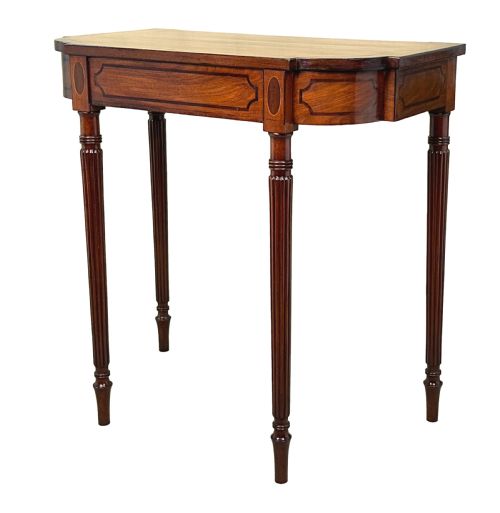


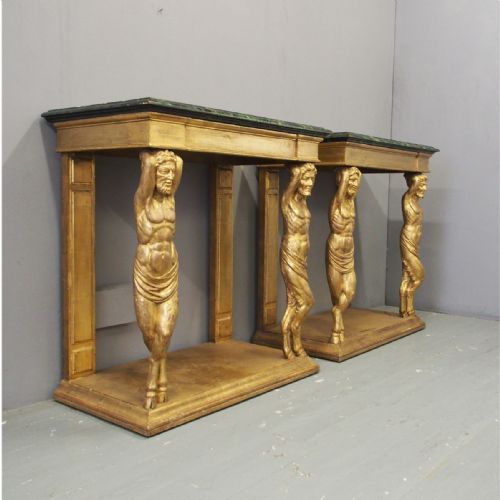


Classical Entry Table
A classical entry table brings architectural presence and refined lines to an interior, making an immediate focal point in a hallway.
Classical Entry Table
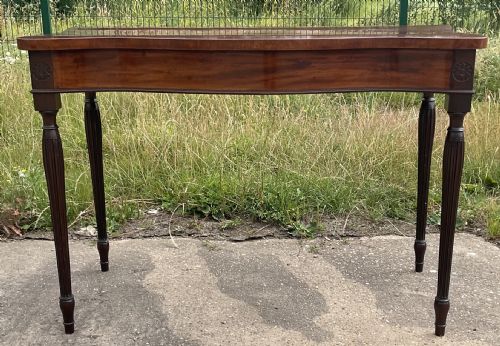
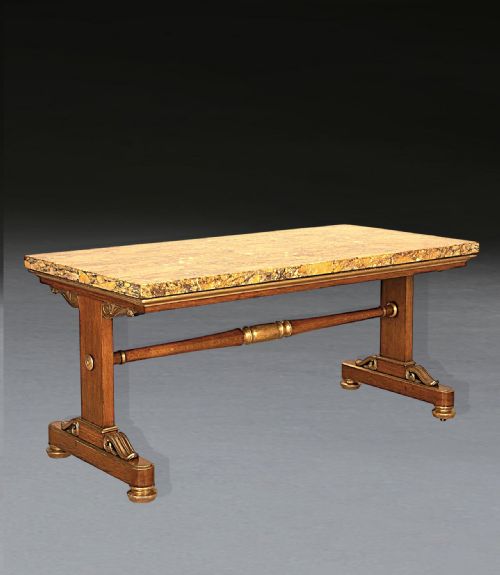
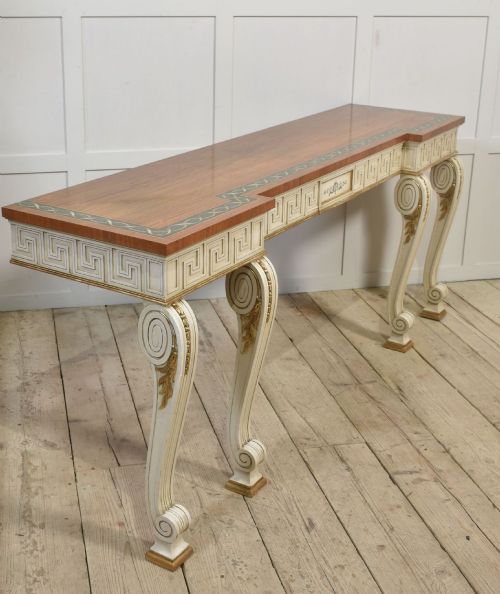
A classical entry table is typically represented on this page by console tables and centre tables spanning the eighteenth, nineteenth, and early twentieth centuries. These pieces draw on Regency, Neoclassical, William IV, Georgian Style, Italian Neoclassical, Victorian Classical Revival, Baroque, and Louis XVI Style design vocabulary. Forms range from pier tables designed to stand against a wall beneath a mirror to freestanding round centre tables.
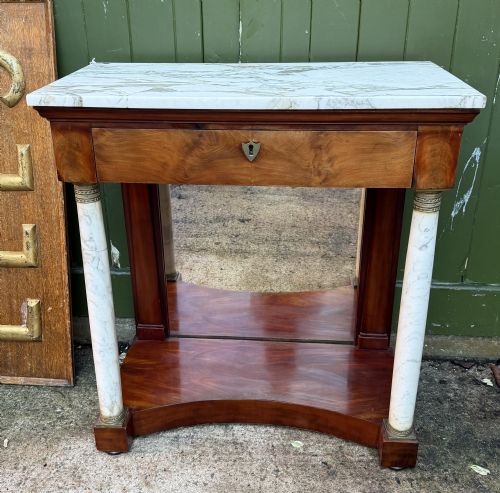
Origin and period markers vary widely among the current selection, encompassing English pine, French Empire-style pieces, and Italian Neoclassical faux porphyry and marble examples. Buyers encounter formats incorporating associated pier mirrors, serpentine fronts, and architectural proportions inspired by empirical design. The overarching category prioritises formal symmetry and historical ornamentation.
Materials and construction methods
Makers utilised dense timbers such as mahogany, oak, and pine as the structural foundation for these tables, frequently applying painted finishes, parcel gilt, or gesso details. Surface enrichment involved carved wooden elements like rams and maiden heads, alongside applied bronze ornaments on select forms.
Heavy stone tops in marble and Siena marble define a significant proportion of these pieces, requiring robust framing to support the weight. Artisans also employed specialised surface treatments such as faux porphyry to replicate expensive decorative minerals.
Classical Entry Table Retail Price Guide 2026
Typical asking prices for classical entry table among the pieces listed under this phrase on Sellingantiques today, from the lower quarter to the upper quarter. They describe what is for sale here now, not the wider market.
Rams and maiden heads stare out from beneath the marble.
Assessing quality in construction and design
Distinction across the range rests on the ambition of the carving and the integrity of the materials, particularly the selection of solid mahogany or the quality of the marble top. Tables featuring intricate giltwood details or specialist painted faux finishes demonstrate a higher level of workshop investment.
Structural refinement shows in the handling of architectural elements, from classical columns to centaur and Corinthian motifs. Better examples maintain crisp lines in the gesso and giltwork, whereas simpler pieces rely on restrained timber surfaces.
Freeman’s
The Classical Entry Table Glossary
- Console table
- A table supported against a wall by wall brackets or legs, historically designed for placement in a hallway or reception room.
- Centre table
- A freestanding table intended to sit in the middle of a room rather than against a wall.
- Pier mirror
- A tall mirror designed to hang on the pier between windows, frequently paired with a matching console table underneath.
- Giltwood
- Wood that has been coated with thin gold leaf or gold paint to give a metallic finish.
- Porphyry
- An igneous rock with large crystals, imitated in furniture surfaces for its rich purple or reddish decorative appearance.
Classical Entry Table: Frequently Asked Questions
What is a classical entry table used for?
These tables provide a formal surface in entrance halls and reception spaces for displaying decorative objects or lighting. Historically, they anchored architectural schemes alongside matching mirrors.
They serve primarily as statement furniture pieces rather than for heavy domestic storage, often framing the entrance of a home.
How do I place one in a hallway?
Console variants stand flush against a wall, frequently beneath a painting or pier mirror to create a vertical composition. Their narrow depth allows them to fit circulation spaces without blocking passage.
Freestanding centre tables require more open floor space to be viewed from all sides, making them better suited to larger entryways.
How do I distinguish Regency from Victorian styles?
Regency and early nineteenth-century pieces tend to follow cleaner neoclassical architectural lines with restrained use of mahogany and giltwood. Victorian examples often incorporate heavier revival ornamentation, such as Baroque-inspired rams and maiden heads.
Material choices like Siena marble and specific bronze ornaments help separate the delicate classical interpretations from later revivals.
Are marble tops original to these tables?
The evidence shows that many console and centre tables incorporate marble or Siena marble tops as part of their primary design. These heavy stone surfaces were integral to Neoclassical and French styles.
Checking the fit against the wooden framework helps confirm the relationship between the stone top and the base structure.