




Gold Framed Silk Embroidery
These gold framed silk embroidery pieces bring needlework and textile art into interiors with period wooden frames and giltwood surrounds.
Gold Framed Silk Embroidery
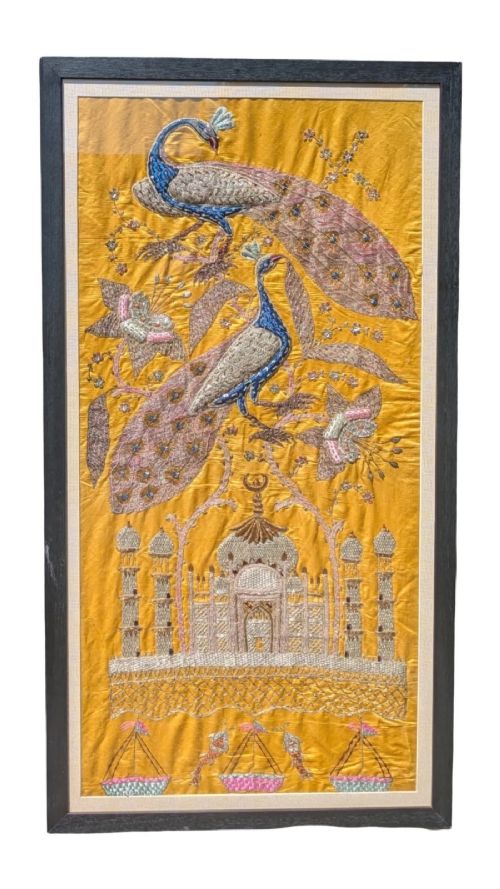
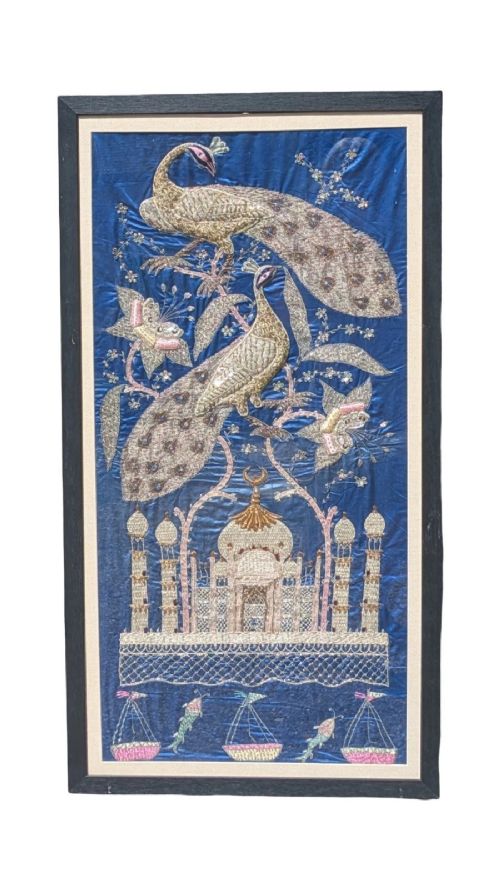
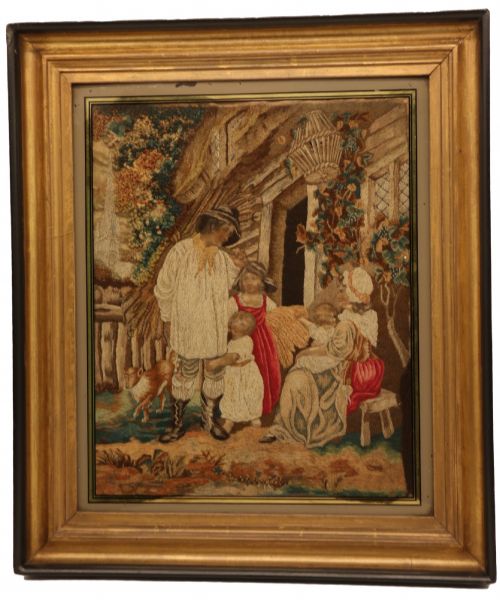
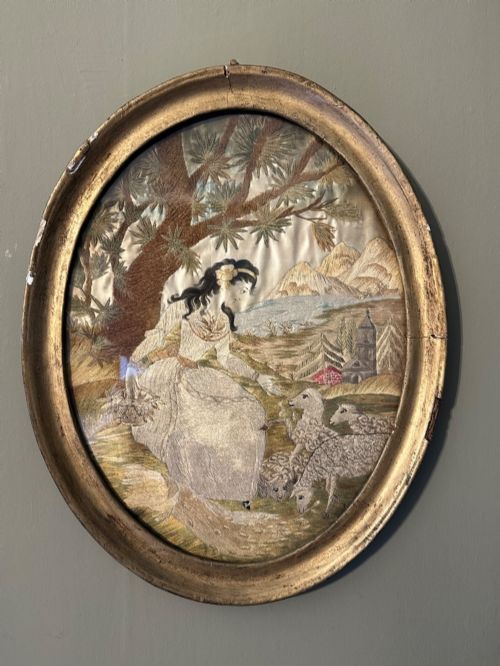
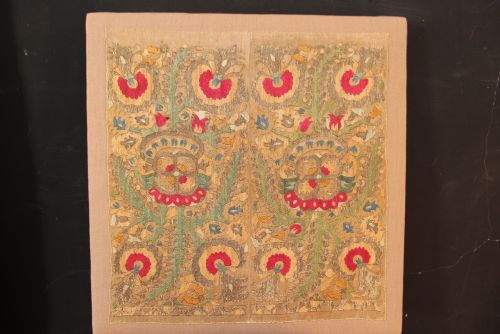
When searching for gold framed silk embroidery, collectors encounter textile art ranging from eighteenth-century needlework pictures to nineteenth-century crewel work and pictorial panels. The objects span domestic scenes, topographical views such as Epsom Park or Abingdon, royal commemorations, and traditional overseas motifs including Indian Taj Mahal panels and Chinese embroidered robes.
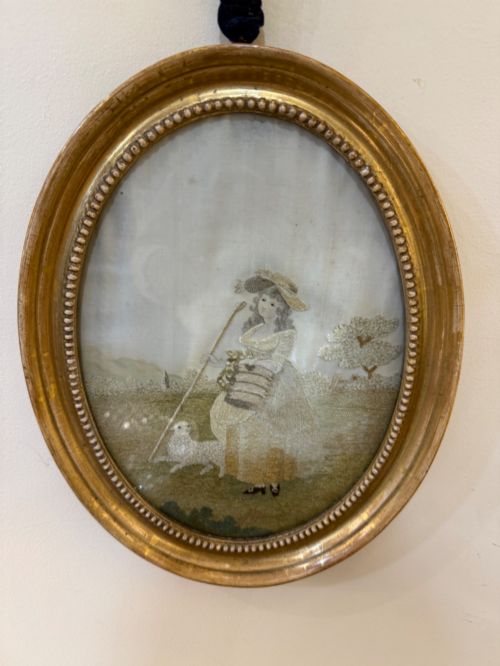
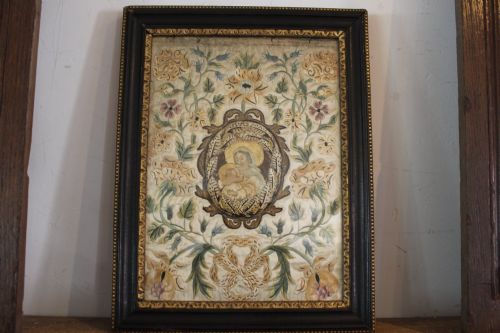
The versions most commonly met on this page include nineteenth-century framed textile art and Georgian needlework pictures housed in period gilt wood or mezzotint frames. These pieces combine fine silk grounds with metallic thread work, presenting subjects that vary from seventeenth-century stumpwork depicting King Charles II to Ottoman and Turkish fragments.
Materials and construction
Makers utilised fine silk grounds combined with wool, linen, and metallic thread to build pictorial and geometric designs. Hand-painted elements occasionally augmented the needlework, particularly in nineteenth-century English pictures depicting landscapes and architecture.
Framing utilised wood finished with water gilding, creating giltwood and oval gilt frames that often incorporated mezzotint black glass. These surrounds protect the textile panels while defining the visual boundary of the artwork.
Listings incorporate items from the seventeenth, eighteenth, nineteenth, and twentieth centuries, utilising silk, glass, wood, wool, and metallic thread.
Factors that define quality
Quality rests upon the intricacy of the needlework and the preservation of the silk ground and metallic threads. Pieces featuring detailed long stitch work, stumpwork relief, or sophisticated integration of gold-wire thread demonstrate superior technical execution by the maker.
The integrity of the original framing contributes substantially to the standard of the piece. Contemporary or period-correct water gilded wood frames and intact mezzotint glass elevate the overall refinement of the framed textile.
The Gold Framed Silk Embroidery Glossary
- Stumpwork
- A raised embroidery style popular in the seventeenth century, utilising padding and wire to create three-dimensional figures and motifs. Examples frequently depict historical or biblical subjects.
- Mezzotint glass
- Dark glass used in framing during the Georgian and Regency periods, providing a contrasting border that enhances the tones of the silk embroidery.
- Crewel work
- Embroidery executed using wool yarn on a linen or silk ground, often seen in early nineteenth-century pieces on this page.
- Giltwood
- Wood carved and coated with gold leaf or gilt, forming the decorative frames that house these textile panels.
Gold Framed Silk Embroidery: Frequently Asked Questions
How do I care for silk embroidery?
Keep framed textiles away from direct sunlight to prevent fading of the delicate silk and metallic threads. Maintain stable indoor humidity to protect both the fabric ground and the antique wooden frame.
Avoid hanging pieces in damp areas such as kitchens or bathrooms. Dust the exterior glass gently with a dry microfibre cloth without applying pressure to the surface.
Are these frames original?
Many pieces retain their original water gilded wood or mezzotint frames, particularly those dating from the Georgian and Regency eras. These original housings complement the needlework and indicate period-appropriate mounting.
Examination of the timber backing and gilding wear helps confirm whether a frame has remained with the textile since its creation. Replacements do occur, so checking the fit and joinery provides further context.
What subjects appear in these works?
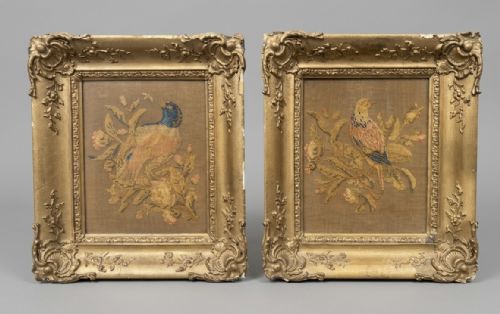
The listings encompass a wide variety of subjects including horse racing tracks, architectural landmarks like the Taj Mahal, royal artillery commemorations, and traditional bird studies. Mythological and historical figures also feature prominently in older panels.
Domestic scenes, landscape watercolours combined with embroidery, and overseas robes reflect the diverse origins and cultural influences of these textiles.
How are seventeenth-century pieces identified?
Seventeenth-century examples often employ raised stumpwork techniques and specific historical iconography, such as depictions of King Charles II. The materials and stitch types correspond to seventeenth-century needlework traditions.
Examining the reverse of the panel and the characteristics of the silk ground helps distinguish these early works from later nineteenth-century revivals.