
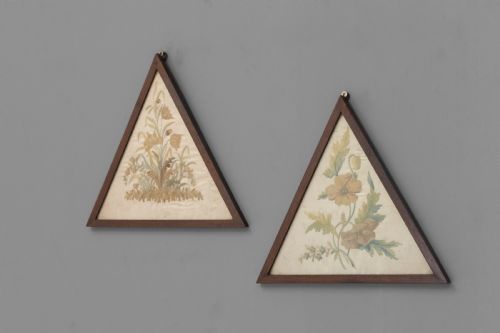


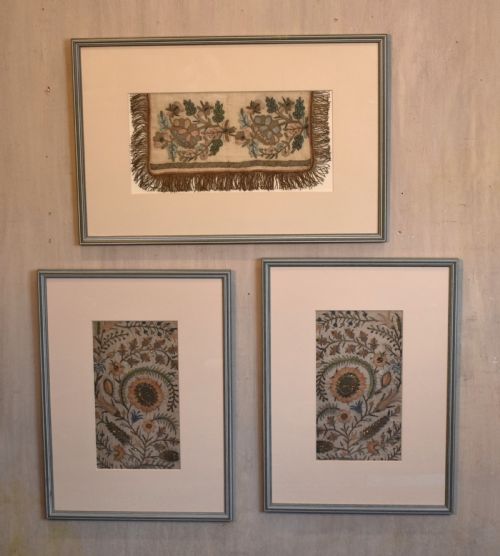


Cream Silk Needlework Panel
A cream silk needlework panel brings centuries of texture, pattern and textile art into a room.
Cream Silk Needlework Panel
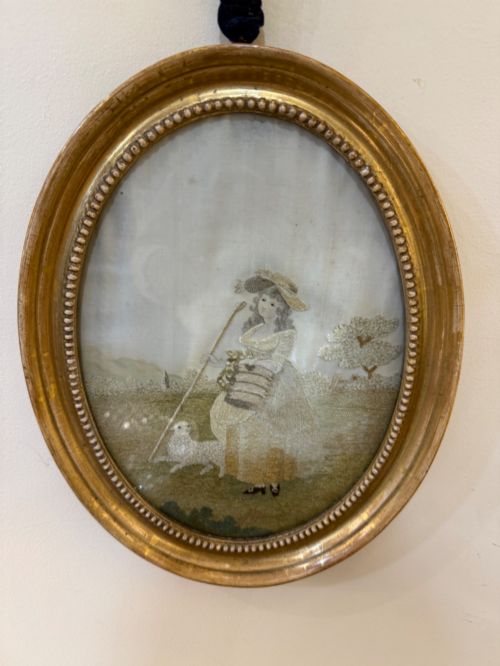
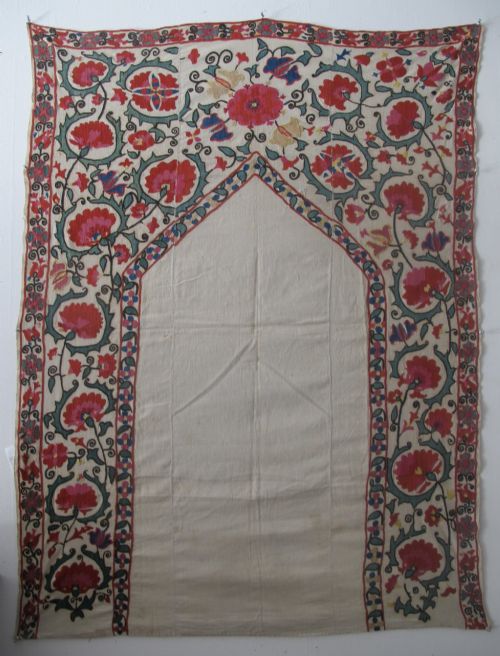
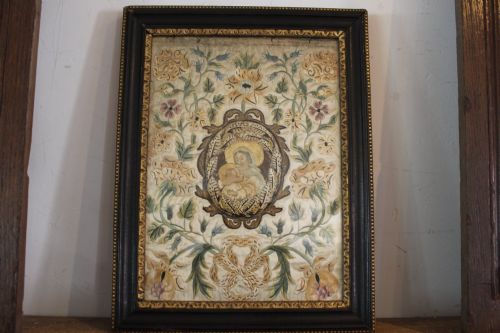
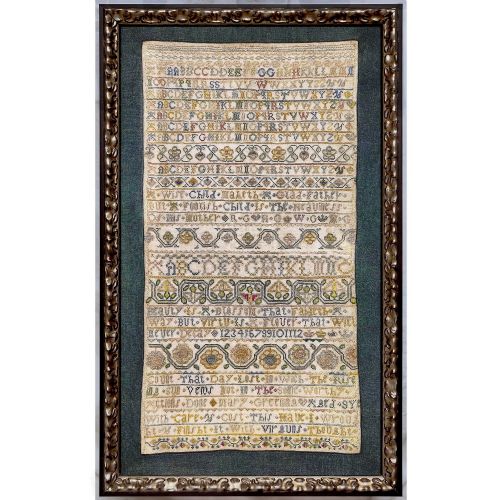
A cream silk needlework panel represents historical textile artistry, ranging from English samplers to Central Asian suzanis. When searching for a cream silk needlework panel, buyers encounter framed pictures, wall hangings and large embroidered cloths originating from the seventeenth century through to the early twentieth century. English country house pieces and regional Asian works dominate the selection.
The format varies from narrow bands and prayer designs to expansive wall art. Makers worked on backgrounds of silk, linen or cotton, utilising metallic threads and silk threads to build pictorial and geometric motifs. These textiles served as devotional works, domestic practice pieces and decorative wall hangings.
What varies in quality
The standard of execution separates master works from simpler exercises, evident in the tension of the stitches and the precision of the needlework. Superior examples display complex pictorial compositions, balanced use of silk and metallic threads, and well-preserved ground fabrics.
Age and origin also influence distinction, with seventeenth-century English pieces and mid-nineteenth-century Central Asian examples showing remarkable depth in design and material survival.
Several panels preserve the quiet hours of eighteenth-century makers who stitched birds, alphabets and gardens stitch by careful stitch.
Iida Takashimaya Company
The Cream Silk Needlework Panel Glossary
- Suzani
- A type of embroidered tribal textile originating from Central Asia, traditionally worked in silk on a cotton or linen ground. These large wall hangings often feature bold floral and architectural motifs.
- Sampler
- A piece of needlework produced to demonstrate skill in various stitches and patterns. Early examples frequently include alphabets, numerals and maker signatures.
- Giltwood
- Wood carved and coated with gold leaf or a gold-coloured finish. This material appears on the frames housing antique textile panels.
- Metallic Thread
- A flat or twisted thread containing precious metal or metal alloys used in embroidery. It adds reflective highlights to floral and geometric designs.
- Nim-Suzani
- A smaller version of the traditional Central Asian suzani wall hanging. These half-sized panels share the same elaborate needlework and regional designs.
Cream Silk Needlework Panel: Frequently Asked Questions
What is a suzani panel?
A suzani is an embroidered tribal textile from Central Asia, typically featuring large-scale botanical or architectural designs worked in vibrant silk threads.
These panels were traditionally created as part of a bride's dowry and served as wall hangings or decorative covers within the home.
How do I care for antique silk?
Antique silk requires protection from direct sunlight and high humidity to prevent the delicate fibres from degrading and losing their natural strength.
Display these panels away from windows and glazed where possible, using archival mounting methods that avoid direct pressure on the fabric.
How old are these needleworks?
The available pieces span from the seventeenth century through to the early twentieth century, encompassing Stuart, Georgian and later Victorian periods.
Each era brings distinct stitching styles, from early English band samplers to nineteenth-century regional Asian embroideries.
Where were these panels displayed?
Historical needleworks were mounted on walls as framed art, hung as textiles to insulate rooms, or used as decorative covers on furniture.
Today, collectors typically frame them under glass or mount them on fabric-wrapped stretchers for display as wall art.