
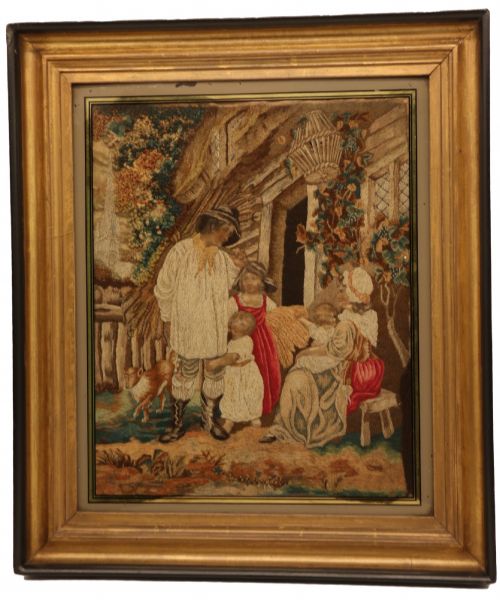
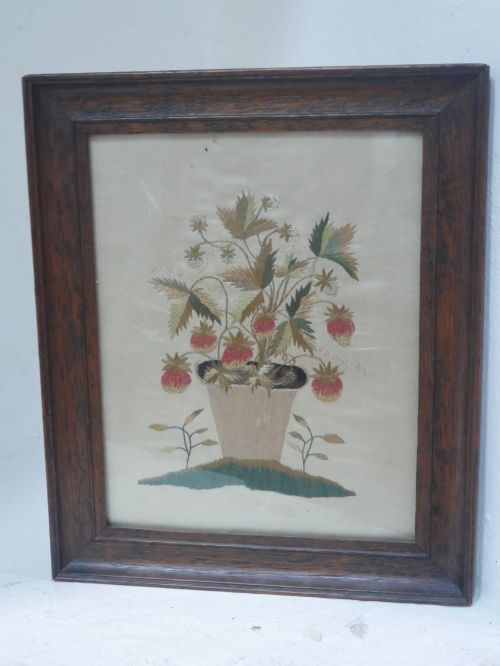
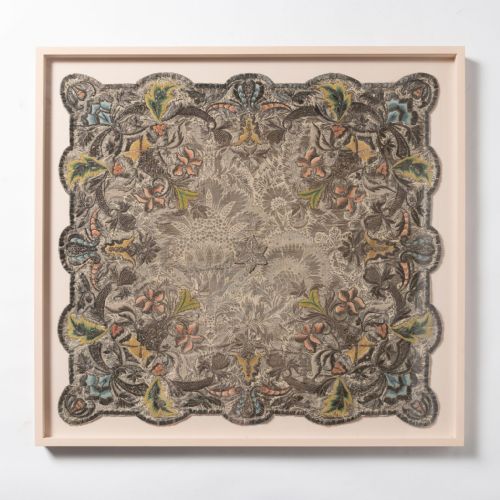
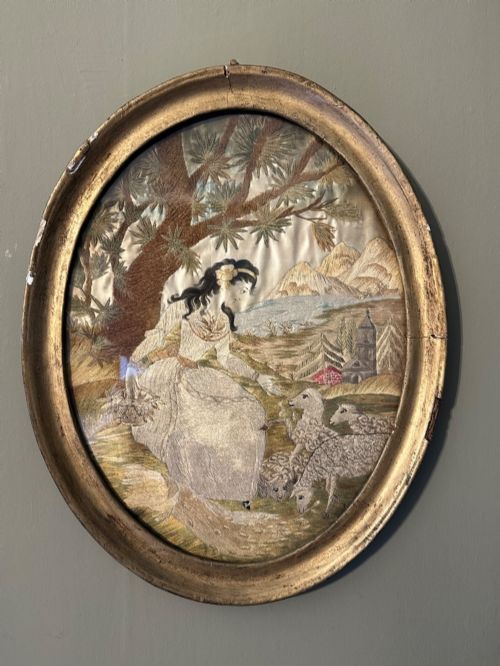

Framed Silk Embroidery Art
Framed silk embroidery art brings centuries of needlework into domestic interiors through textile pieces preserved behind glass in period frames.
Framed Silk Embroidery Art
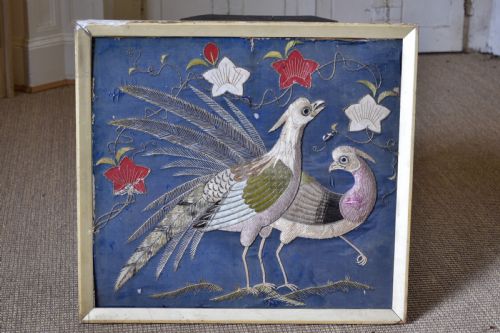
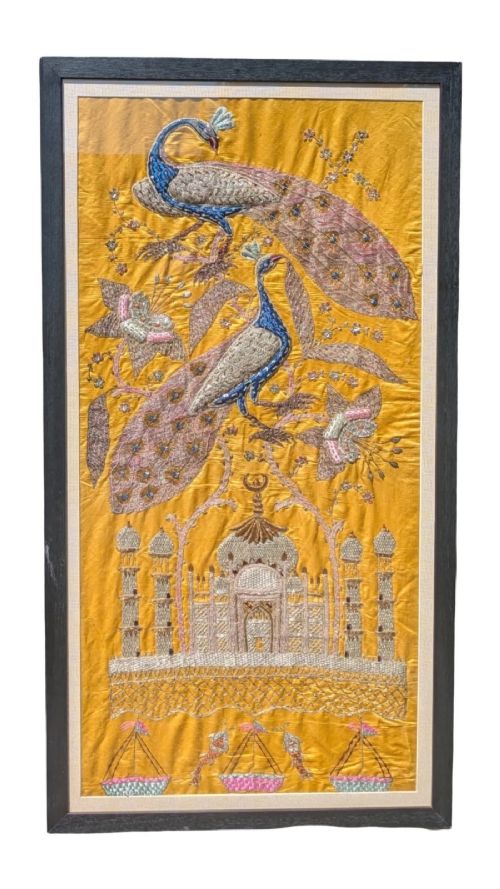
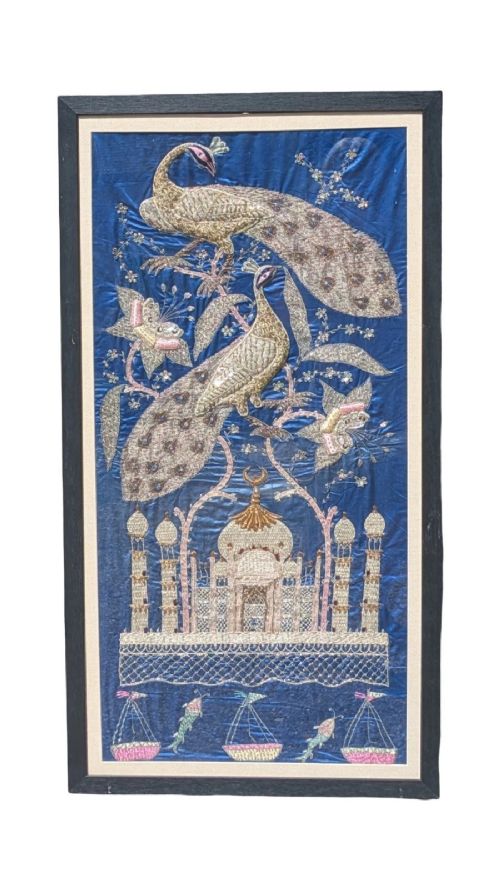
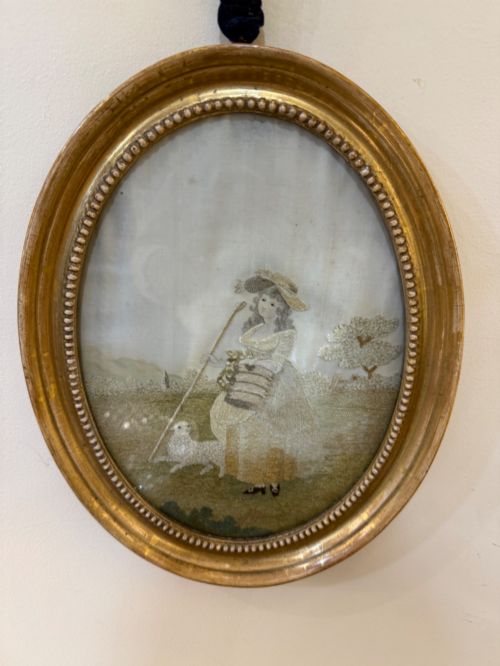
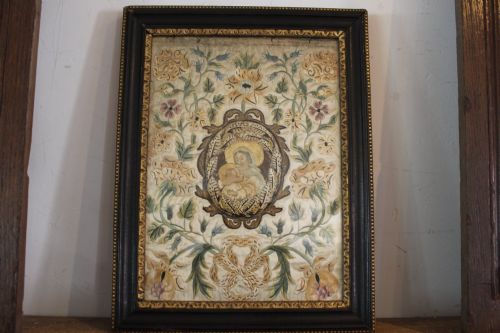
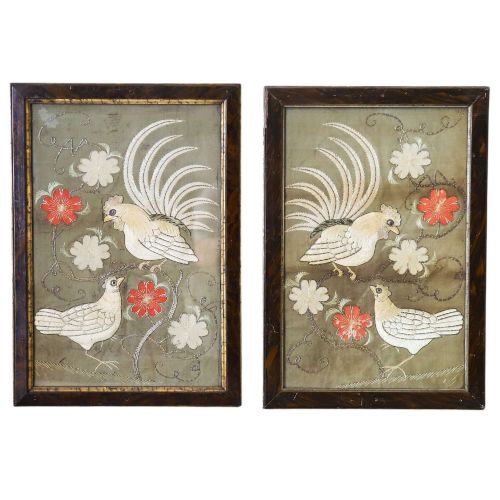
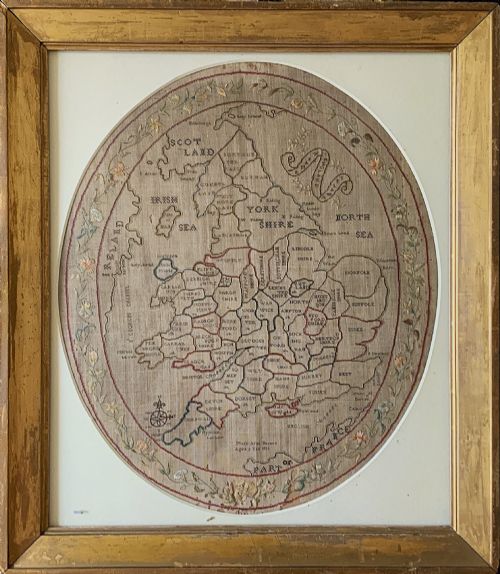
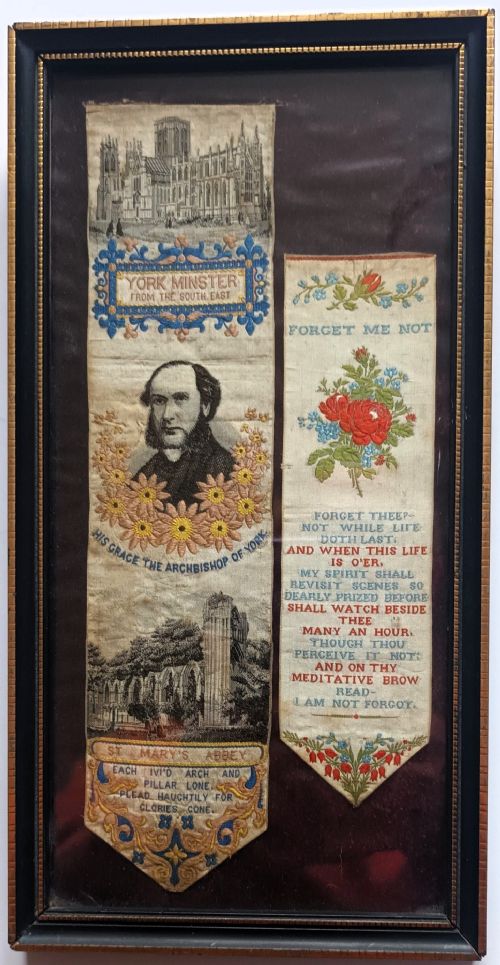
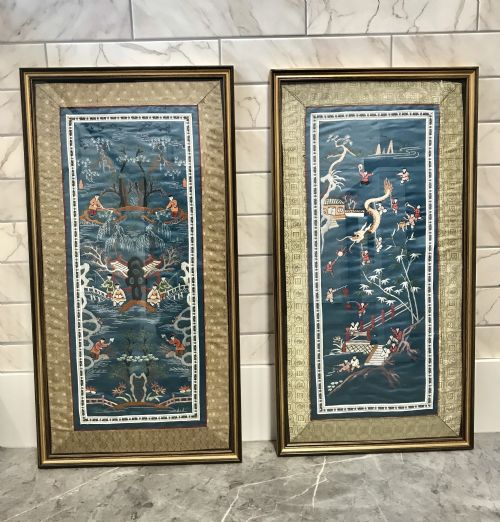
Framed silk embroidery art encompasses historical needlework panels, samplers, and pictorial scenes created across the seventeenth, eighteenth, and nineteenth centuries. Buyers encounter English map samplers, Chinese silk panels, and European pastoral pictures mounted for wall display.
The selection ranges from early Stuart stumpwork panels and Georgian cartography to nineteenth-century floral studies and Asian export textiles. Most examples arrive protected beneath glass within wooden or gilt frames appropriate to their origin.
Materials and technique
Maker execution relies primarily on fine silk threads, wool, and metallic thread stitched onto linen, cotton, or silk grounds. Hand-painted details frequently supplement the needlework on pictorial panels and maps.
Framing methods incorporate traditional timber surrounds, including giltwood, gold leaf, and faux tortoiseshell, which protect the textile fibres from atmospheric exposure and handling.
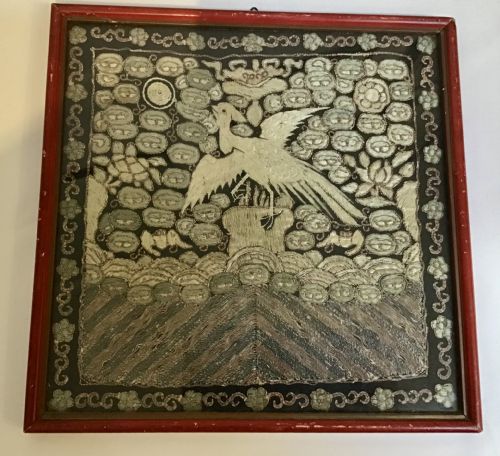
Listings feature seventeenth-century Stuart stumpwork, eighteenth-century Georgian maps, and nineteenth-century Chinese rank badges executed in silk and metallic thread.
Variations in quality
Quality rests upon the precision of the needle technique, the complexity of the stitch variety, and the structural integrity of the fabric ground. Finer works display intricate shading, secure metallic threadwork, and well-preserved pigments.
The relationship between the textile and its enclosure dictates overall standard, where period-appropriate framing and clear glass protection preserve the condition of the embroidery over centuries.
Stevens of Coventry
The Framed Silk Embroidery Art Glossary
- Stumpwork
- A raised embroidery style popular in the seventeenth century that uses padding and wire supports to create three-dimensional figures and motifs. It often depicts historical or biblical scenes.
- Sampler
- A piece of needlework produced to demonstrate proficiency in various stitches and alphabets, frequently featuring names, dates, and maps. These function as historical records of education.
- Verre Églomisé
- A technique involving the gilding and painting of designs onto the reverse side of glass panels. These frames provide a reflective border around historical pictures.
- Rank Badge
- An embroidered square worn on the robes of Qing Dynasty officials to denote social standing. They incorporate symbolic birds and animals stitched in silk and metallic thread.
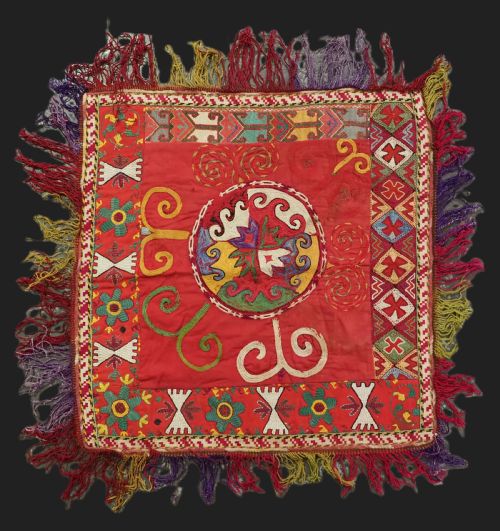
- Suzani
- Large embroidered tribal wall hangings originating from Central Asia, traditionally worked in silk on cotton grounds. They display bold botanical motifs.
Framed Silk Embroidery Art: Frequently Asked Questions
Where should I hang these textiles?
Position embroidered panels away from direct sunlight to prevent the fading of silk floss and painted details.
Stable room temperatures and low humidity protect the organic fibres from degradation.
How do I identify a 17th-century panel?
Early examples often employ stumpwork techniques depicting court figures alongside characteristic botanical elements. The linen grounds and hand-spun threads show distinct age variations.
Construction methods on the reverse side typically reveal hand-hewn stretchers and early fastening nails.
What is a band sampler?
Band samplers consist of horizontal rows displaying varied repeating geometric patterns and alphabet sequences. Makers worked these narrow strips to practice stitch variations.
They represent some of the earliest surviving formats of domestic needlework.