






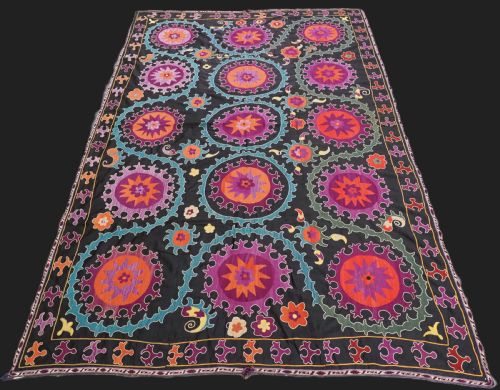
Oriental Embroidered Wall Art
Oriental embroidered wall art brings historic silk and metallic thread needlework into domestic spaces, offering collectors rich textures and traditional imagery.
Oriental Embroidered Wall Art
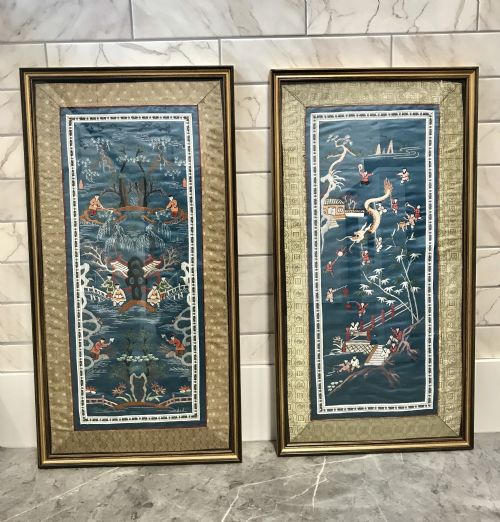
Oriental embroidered wall art spans the nineteenth and early twentieth centuries, featuring framed panels, large hangings, and textiles originating from China, Japan, and Central Asia.
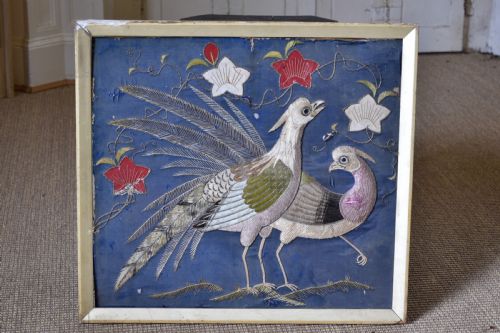
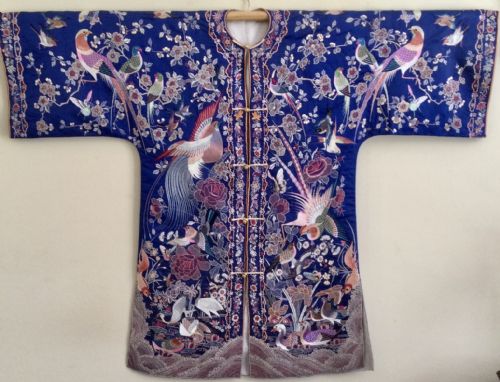
Buyers encounter diverse forms including detailed depictions of pheasants, tigers, dragons, trees, and geese, alongside items like child's robes and Suzani textiles.
Most examples employ traditional hand sewing techniques on grounds of silk or cotton, reflecting styles such as Qing Dynasty, Japanese Meiji Period, and Central Asian folk art.
Materials and Construction
Needlework of this type relies on fine silk threads combined with metallic thread, sequins, and occasionally glass protection to create layered, durable surfaces.
Makers set these elaborate stitchworks onto woven grounds of silk or black cotton, sometimes mounting them within wooden or lacquer frames for display.
Oriental Embroidered Wall Art Retail Price Guide 2026
Typical asking prices for oriental embroidered wall art among the pieces listed under this phrase on Sellingantiques today, from the lower quarter to the upper quarter. They describe what is for sale here now, not the wider market.
Geese depicted in flight across these silks often carry an uncanny sense of aerodynamic momentum achieved purely through directional stitching.
Assessing Quality and Execution
Quality rests upon the intricacy of the hand sewing and the density of the threadwork, distinguishing standard panels from works executed to the highest standard.
The preservation of the ground material and the complexity of the rendered subjects, such as multi-figure scenes or relief elements, determine the visual impact of each piece.
Iida Takashimaya Company
The Oriental Embroidered Wall Art Glossary
- Suzani
- A type of embroidered and decorative tribal textile made in Central Asia, traditionally worked in silk on a cotton ground.
- Meiji Period
- The era in Japanese history spanning from eighteen sixty-eight to nineteen twelve, known for exceptional textile arts.
- Qing Dynasty Style
- Aesthetic characteristics originating from the last imperial dynasty of China, often featuring dragons, floral motifs, and formal symmetry.
- Chinoiserie
- European interpretation and imitation of Chinese and East Asian artistic traditions, frequently influencing decorative schemes.
Oriental Embroidered Wall Art: Frequently Asked Questions
How are these textiles mounted for display?
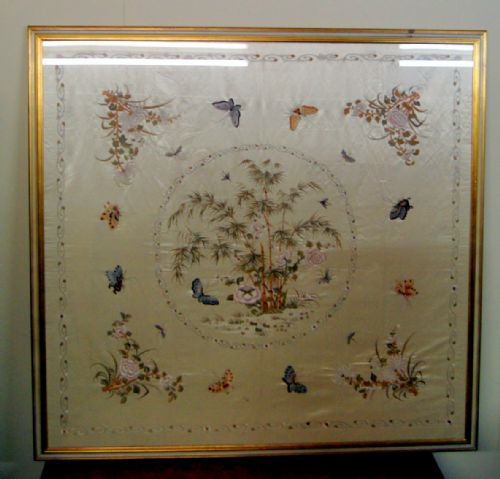
Many examples are framed under glass to protect the delicate silk threads and metallic work from environmental damage. Others are presented as large hanging panels designed to be supported by rods or fixed mounts.
Buyers should ensure the hanging method distributes weight evenly across the backing fabric to prevent distortion over time.
What subjects typically appear on these panels?
Common motifs include mythological creatures such as dragons, alongside natural subjects like tigers, pheasants, geese, trees, and floral arrangements. These designs often carry symbolic meanings rooted in their respective cultural traditions.
The complexity of these scenes generally reflects the purpose and origin of the specific textile art.
How do I care for antique silk embroidery?
Protect the textile from direct sunlight to prevent the silk threads and dyed grounds from fading. Keeping the piece away from excessive moisture and fluctuating humidity preserves the structural integrity of the fabric.
Professional framing with conservation materials offers the best defence against dust and physical handling.
How can I distinguish regional styles?
Chinese pieces frequently display imperial symbols like dragons and formal floral arrangements, while Japanese works often focus on naturalistic fauna such as birds in flight. Central Asian Suzanis present distinct geometric and floral medallion patterns on heavier cotton grounds.
Examining the stitch types and ground fabrics helps clarify the geographic origin of each work.