




Oriental Textile Art
These pieces of oriental textile art bring together centuries of needlework, weaving, and painting from across Asia.
Oriental Textile Art
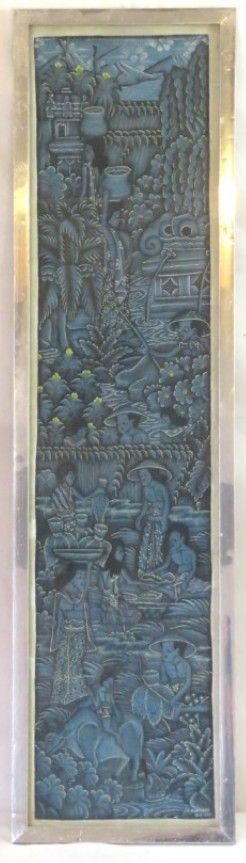
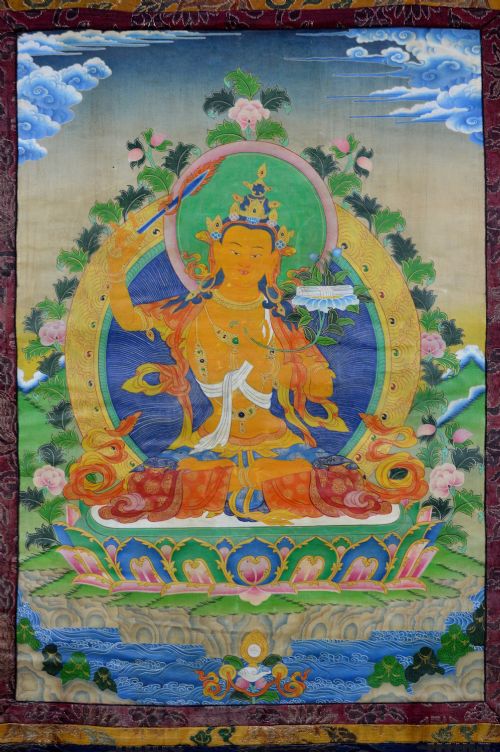
Oriental textile art encompasses a diverse array of historical items, ranging from framed silk embroideries and painted silk panels to tribal storage bags and woven carpets. When searching this phrase, a buyer encounters everything from intricate Chinese robes and Japanese pictorial textiles to nomadic Persian salt-bags and Turkmen torbas. The pieces vary widely in function, shifting from utilitarian objects intended for nomadic life to decorative panels created for courtly display.
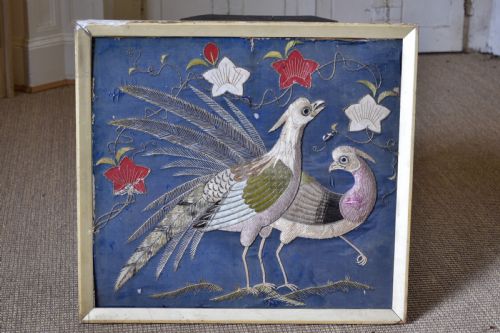
The material record spans the nineteenth and early twentieth centuries, drawing on traditions from China, Japan, Central Asia, Persia, and the Ottoman Empire. Buyers frequently meet framed embroideries featuring dragons, birds, and figures alongside structural fragments such as Suzani coats and Jajim lengths. Each category reflects the specific cultural heritage and domestic or ritual requirements of its region of origin.
Materials and construction
Silk and wool form the primary foundation for these works, supported by cotton grounds, metallic thread, and felt applique work. Artisans utilised hand-spun wool and delicate silk threads to build dense pictorial or geometric surfaces, often mounting textiles on wood and glass for preservation. Uzbek coats received quilted and padded layers for winter utility, while Persian and Turkmen storage pouches combined flat-weave backs with elaborate pile or embroidered faces.
Needlework techniques range from fine hand-sewn embroidery depicting tigers and flowers to complex metal thread embellishments on jackets and panels. Dyers and weavers employed natural sources to achieve deep coloration in rugs like the Ningshia pillar carpet and Yomut chuvals. Structural integrity relied on tight knotting, soumak weaving, and precise stitching executed over decades of traditional production.
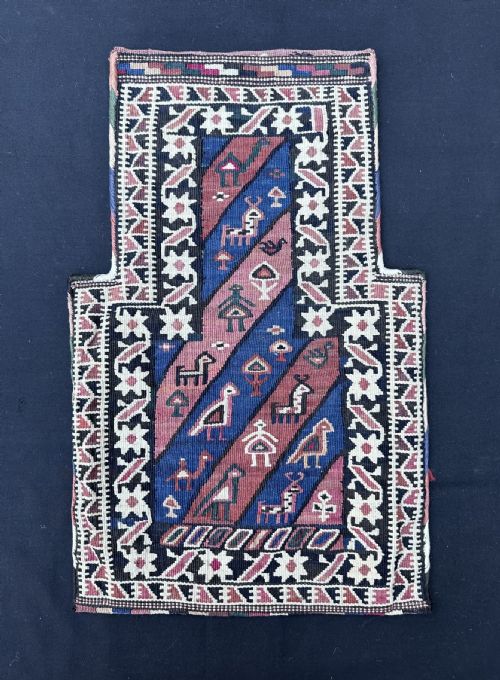
Nomadic salt-bags once held household minerals safely away from wandering desert goats.
Assessing quality and execution
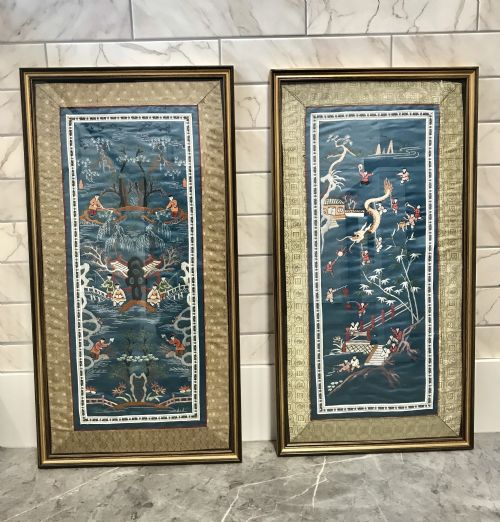
Quality in these textiles rests upon the fineness of the hand-stitching, the complexity of the design layout, and the preservation of the materials. Pieces executed with tight, uniform silk embroidery on secure cotton or silk grounds sit at the upper end of the scale. The density of the pictorial detail, such as multi-layered depictions of dragons, birds, and human figures, distinguishes ambitious workshop pieces from standard decorative output.
Condition and completeness also dictate distinction, particularly for nomadic storage bags retaining their original plain weave backs and structural tassels. The clarity of the dye work and the integrity of the metallic thread contribute heavily to the visual power of an item. Superior examples maintain their structural coherence whether displayed flat as wall art or preserved within protective frames.
Iida Takashimaya Company
The Oriental Textile Art Glossary
- Suzani
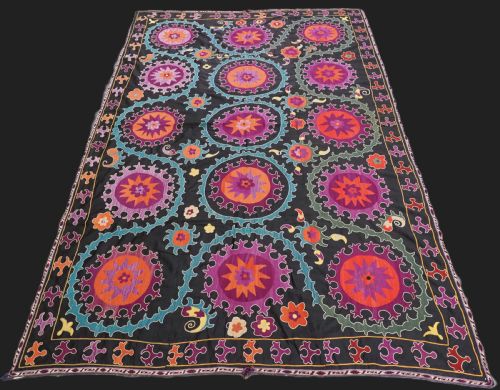
- A type of embroidered and decorative tribal textile made in Tajikistan, Uzbekistan, and other parts of Central Asia. These large panels typically feature bold floral motifs worked in silk thread on a cotton ground.
- Torba
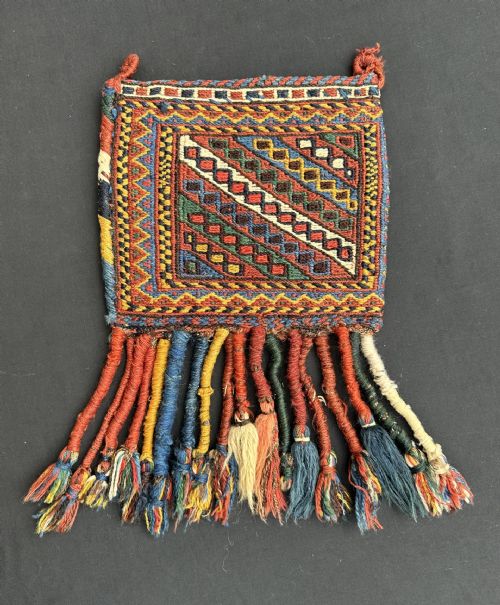
- A small Turkmen tent-storage bag wider than it is high. Collectors prize these pieces for their geometric guls and precise tribal weaving.
- Soumak
- A flat-weave rug technique that wraps the weft threads over the warp to create a durable, textured surface. Shahsavan bag faces frequently utilise this method.
- Ikat
- A dyeing technique where yarns are tie-dyed before weaving to create distinctive feathered patterns. Chapan coats often display this method.
- Jajim
- A flat-woven textile produced in strips and joined together, traditionally used as a coverlet or wrapping cloth. Surviving examples demonstrate geometric striped designs.
Oriental Textile Art: Frequently Asked Questions
How were tribal bags used?
Nomadic groups utilised pouches like salt-bags, spindle bags, and chuvals for household storage inside tents and during seasonal migrations. These containers held personal possessions, bedding, or provisions while serving as functional elements of domestic decoration.
Over time, many of these utilitarian containers became detached from their nomadic context. Today, collectors appreciate them primarily as flat textile art mounted on walls.
How do I care for framed silk?
Silk textiles require protection from direct sunlight to prevent the fading of natural dyes and the degradation of delicate fibres. Keeping them behind glass shields the fabric from atmospheric dust and physical handling.
Maintain stable indoor humidity and temperature levels to avoid stressing the antique materials. Professional framing using acid-free backing materials ensures the longevity of mounted wall art.
What defines Chinese embroidery panels?
Chinese embroidery panels incorporate detailed pictorial narratives using fine silk threads on woven grounds. Common motifs include dragons, tigers, garden birds, flowers, and human figures rendered with exceptional density.
These panels often originated as components of robes or decorative screens before being framed for display. Their execution showcases the high technical standards of nineteenth and early twentieth-century workshops.
How are tribal regions identified?
Tribal attribution relies on specific structural patterns, border designs, and structural formats associated with distinct groups such as the Yomut, Tekke, or Afshar. Each region developed a distinct visual vocabulary of guls, colours, and weaving techniques.
Comparing the materials, knotting structures, and colour palettes against documented historical examples clarifies tribal origins. Nomad groups passed these design traditions down through generations with subtle regional variations.