




Oriental Textile Wall Art
Oriental textile wall art brings together intricate embroidery, tribal weavework and painted silk from across Asia to hang on a room's wall.
Oriental Textile Wall Art
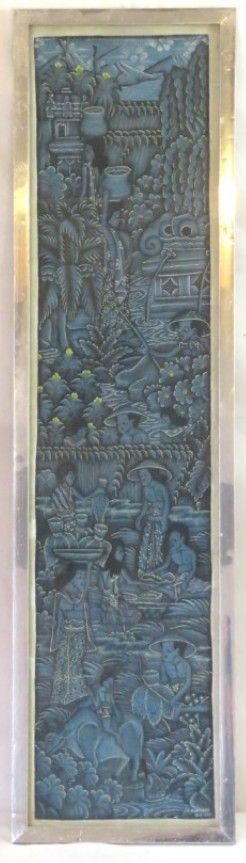
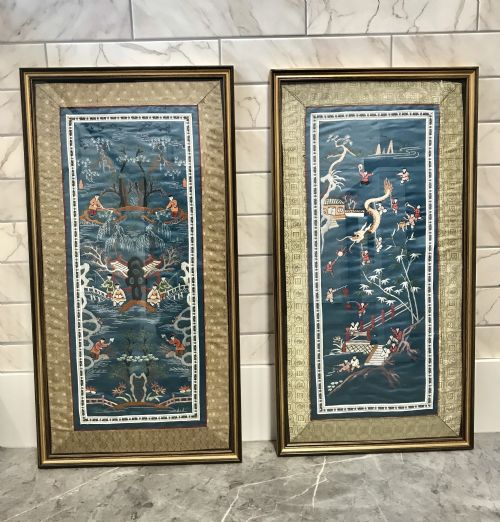
Oriental textile wall art encompasses framed silk embroideries, painted fabrics, and repurposed tribal bags or rugs from Asian traditions. Buyers encounter pieces ranging from Chinese Qing dynasty panels and Japanese silk textiles to Persian tribal weavings and Central Asian Suzanis. These works bring rich colour, historical depth and tactile presence directly to an interior setting.
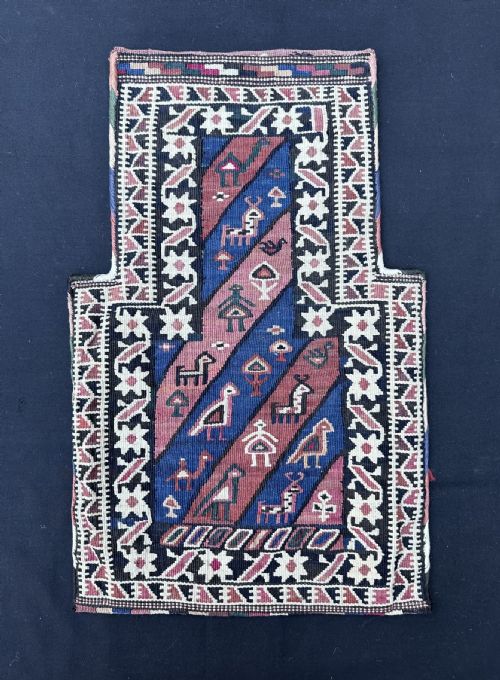
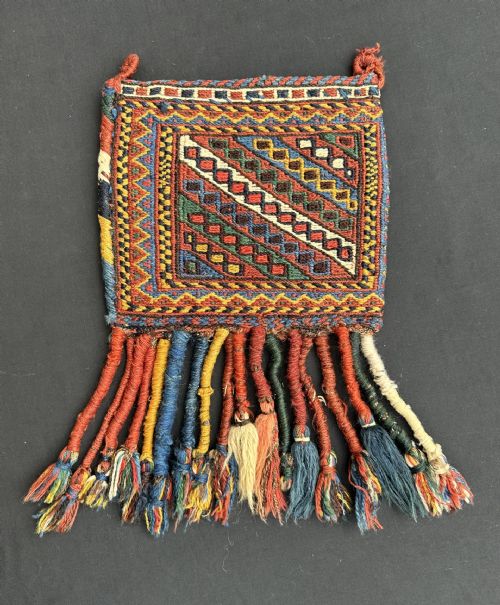
The selection leans heavily toward nineteenth and early twentieth century examples, including nineteenth century embroideries, Chinese silk panels from nineteen hundred, and nomadic pieces produced across Persia and Turkmenistan. Many items originate as functional objects, such as Yomut torbas, saddle bags or coat panels, which find new life mounted and displayed as wall art.
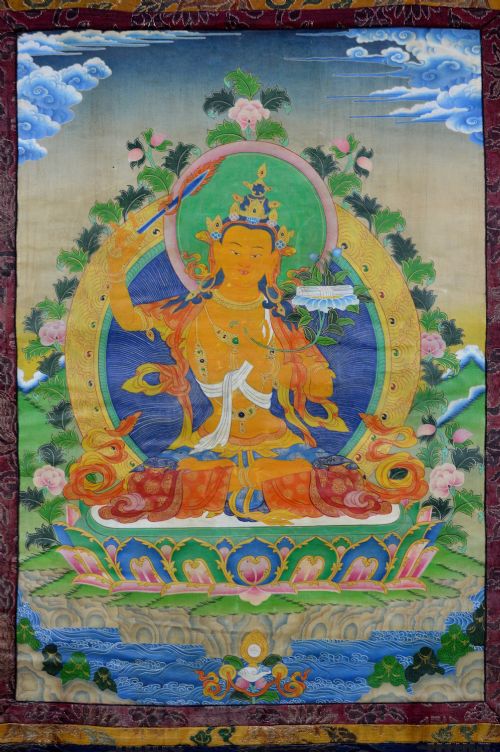
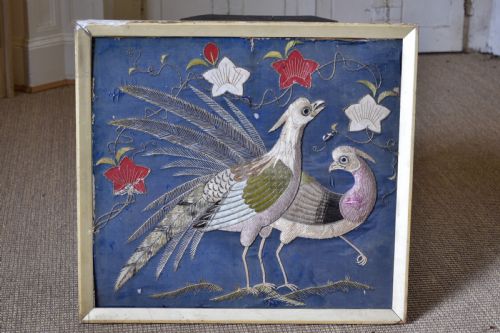
Framed watercolours on fabric and Tibetan Buddhist paintings sit alongside heavily embroidered hangings featuring tigers, dragons, birds and figures. Whether selecting a small framed silk piece or a larger mounted textile, the focus remains on historical textiles adapted for interior display.
Materials and construction methods
Makers utilised fine silk, wool, cotton and metallic threads, often working on grounds of hand-spun wool, felt or black cotton. Natural dyes provided deep palettes for Persian and Turkmen tribal weavings, while Chinese and Japanese works relied on dense, meticulous silk embroidery under glass or mounted on frames.
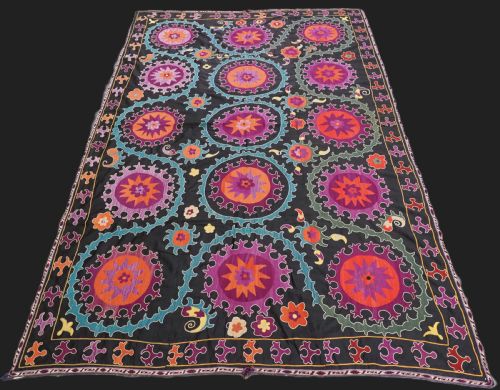
Techniques combine hand sewing, applique work, and specialised weaving methods such as Soumak or pile construction. Uzbek Suzanis feature silk stitching on cotton foundations, whereas pieces like Rasht embroideries incorporate silk and felt applique work to build complex pictorial surfaces.
Structural elements often involve framing or mounting for display, preserving fragile fabrics like painted silk or delicate embroidered robes. Padding, quilting and backing cloths found on coats and storage pouches provide durability and structural integrity for textiles intended to hang.
The selection includes Persian tribal motifs, Chinese Qing dynasty embroidery, and Turkmen guls adapted for wall display.
Distinctions in quality
Quality rests upon the precision of the needlework, the fineness of the materials and the integrity of the design. Superior examples exhibit tightly controlled silk stitches, clear pictorial details in figures and animals, and well-preserved natural dyes that retain their original strength.
The complexity of the composition separates standard decorative items from exceptional works, such as panels featuring intricate dragon and tiger motifs or multi-gul tribal trappings. Condition also plays a role, with intact mounting, minimal textile loss and original backing fabrics elevating a piece.
Iida Takashimaya Company
The Oriental Textile Wall Art Glossary
- Suzani
- An embroidered tribal textile from Uzbekistan, typically featuring bold floral motifs worked in silk on a cotton ground. These large hangings were traditionally made as part of a bride's dowry.
- Torba
- A small Turkmen wall pouch or storage bag featuring characteristic guls. When mounted, the geometric tribal patterns function effectively as decorative wall hangings.
- Soumak
- A flat-weave technique utilising a wrap-and-weft method that creates a durable fabric with a braided texture on the face. Shahsavan weavers frequently employed this structure for bag faces.
- Jajim
- A flat-woven textile produced in strips and joined together, often utilising wool or silk. These striped cloths demonstrate traditional nomadic weaving patterns.
- Gul
- A medallion or repeating octagonal motif used extensively in Turkmen and Central Asian carpet and textile design. Each tribal group utilised distinct gul patterns to identify their lineage.
Oriental Textile Wall Art: Frequently Asked Questions
How do I hang a fragile textile on the wall?
Mounting the textile behind glass or securing it to a padded, fabric-covered board distributes the weight evenly. This protects delicate silk fibres and historic embroidery from dust and direct tension.
Professional framing ensures the piece does not bear its own weight directly from stitching. Keep mounted textiles away from direct sunlight to prevent natural dyes and silk from fading.
What is the difference between a Suzani and a tribal bag face?
Suzanis are large, decorative embroidered hangings created in Central Asia with sweeping floral designs on cotton grounds. They were made to adorn domestic interiors.
Tribal bag faces, such as those from Yomut or Afshar groups, originate from smaller utilitarian storage pouches or saddle bags. They feature geometric tribal motifs and guls rather than large floral patterns.
How can I tell the age of an oriental textile?
Age is indicated by the type of dyes used, the wear patterns on the fabric, and the characteristics of the weave or embroidery. Nineteenth-century pieces often display subtle variations in natural colour and hand-spun materials.
Examining the back of the textile reveals stitching techniques and fabric grounds consistent with historical production periods like the Qing dynasty or nineteenth-century Persia.
Are these pieces cleaned or restored?
Historic textiles require careful, specialist conservation rather than standard washing to preserve fragile threads and natural dyes. Minor stabilization helps secure loose sections of embroidery or applique work.
Maintaining the original material integrity is standard practice, ensuring the historic character of the textile remains unaltered by heavy restoration.