


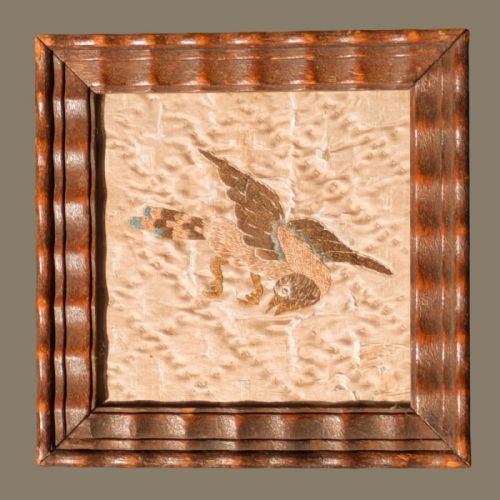


Bird Silk Embroidery
These bird silk embroidery pieces are textile artworks spanning centuries of needlecraft tradition, bringing feathered subjects into homes through careful stitching.
Bird Silk Embroidery
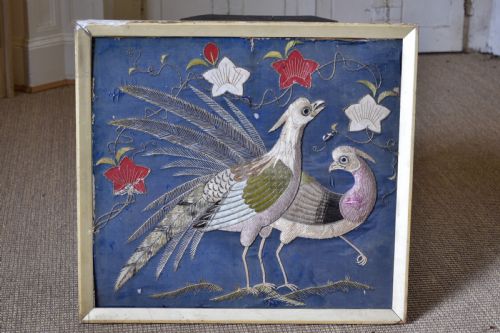
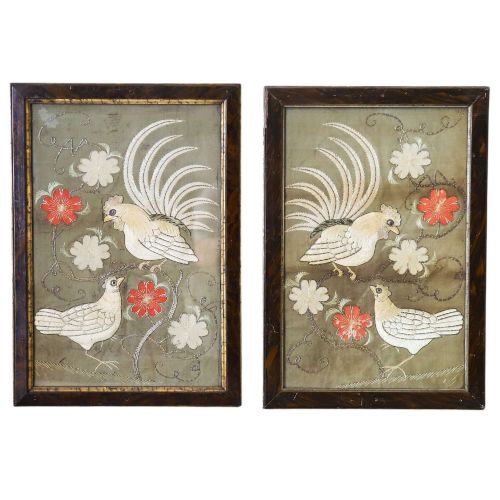
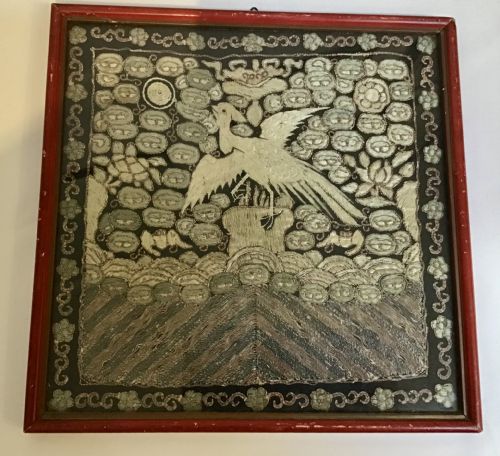
When you search for bird silk embroidery, you find textile panels and framed wall art depicting avian subjects from diverse global traditions. These works range from intricate Chinese rank badges and garden bird scenes to Japanese panels featuring geese in flight and European depictions of cockerels.
You are most likely to meet nineteenth-century framed examples on this page, alongside earlier Georgian needlework and pieces originating from Greece and France. The forms are predominantly framed textiles and wall art, designed to preserve delicate stitching under glass.
The aesthetic vocabulary shifts between Chinoiserie, Victorian Rococo Revival, Qing Dynasty, and Meiji Period styles. Each piece captures birds in domestic, natural, or heraldic settings using needle and thread on fabric.
How they were made
These works rely on silk threads combined with wool, fabric, and metallic thread to build texture and colour across the composition. Artisans stitched these materials onto supportive fabric bases, frequently incorporating gold leaf and gilt wood into the surrounding frames.
Techniques varied by region and period, encompassing the fine needlework of Chinese rank badges and Japanese panels alongside the robust execution of Greek island textiles and Georgian commemorative works. Framing methods included faux tortoiseshell and gilt surrounds designed to protect the fragile textile panels.
Geese in flight and attentive cockerels dominate the avian cast, sharing space with Mandarin ducks and royal artillery.
What varies in quality
The standard of execution rests in the finesse of the needlework and the preservation of the silk and metallic threads. Superior examples demonstrate tight, controlled stitches that render the plumage and posture of the birds with anatomical conviction.
Framing and mounting also distinguish the tier of the piece, with original gilt wood or period surrounds maintaining the integrity of the textile. The complexity of the composition, from single birds to elaborate garden scenes with multiple species, separates standard decorative panels from masterworks.
The Bird Silk Embroidery Glossary
- Rank badge
- A square insignia worn on the robes of officials in imperial China to denote status. These textiles often feature birds and were later framed as independent artworks.
- Chinoiserie
- A European artistic style reflecting Chinese motifs and techniques. It appears in western interpretations of eastern bird and floral designs.
- Meiji Period
- A Japanese historical era marked by the opening of trade and distinct artistic output. Works from this time often display meticulous naturalistic silk embroidery.
- Gilt wood
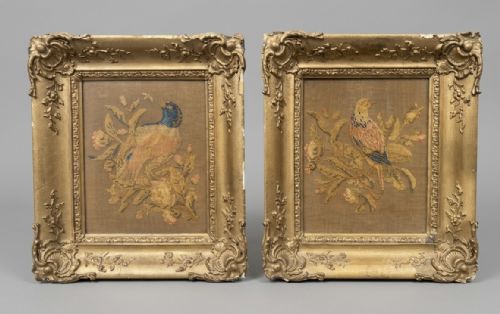
- Wood coated with a thin layer of gold leaf or gold paint. Frames of this description frequently enclose nineteenth-century textile panels.
- Needlework
- The broader craft of decorative sewing and stitching using various threads. In these listings, it encompasses silk, wool, and metallic thread compositions.
Bird Silk Embroidery: Frequently Asked Questions
What is bird silk embroidery?
Bird silk embroidery comprises textile panels and framed artworks stitched with silk threads to represent avian subjects. These pieces originate from multiple centuries and cultural traditions.
They reflect diverse regional styles, ranging from Chinese imperial rank badges to European needlework and Japanese panels.
How were these embroideries framed?
Many period examples feature specialised surrounds such as gilt wood frames or faux tortoiseshell settings. These enclosures protected the delicate silk and metallic threads from dust and handling.
Over the centuries, owners frequently reframed older textile panels to suit contemporary interior tastes.
How do I date a piece?
Dating relies on stylistic indicators, framing materials, and textile characteristics associated with specific periods like the Georgian era or the Meiji period. Chinese Qing Dynasty pieces often display distinct formatting like rank badges.
Examining the type of thread and the fabric ground provides further clues to the origin and age of the work.
Where were these pieces made?
The listings show origins spanning China, Japan, France, Greece, and Britain. Each region utilised distinct stitching techniques and colour palettes.
Asian works often focus on garden birds and natural motifs, while European pieces frequently include domestic fowl or heraldic subjects.
How should I care for them?
These textile artworks require protection from direct sunlight to prevent the silk threads and fabrics from fading. Keeping them behind glass shields the delicate stitching from atmospheric dust and moisture.
Stable indoor temperatures help preserve both the fabric ground and any wooden or gilt frames.