
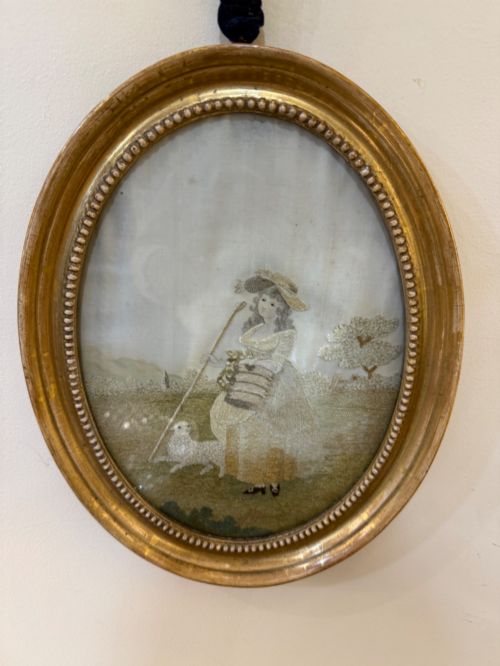
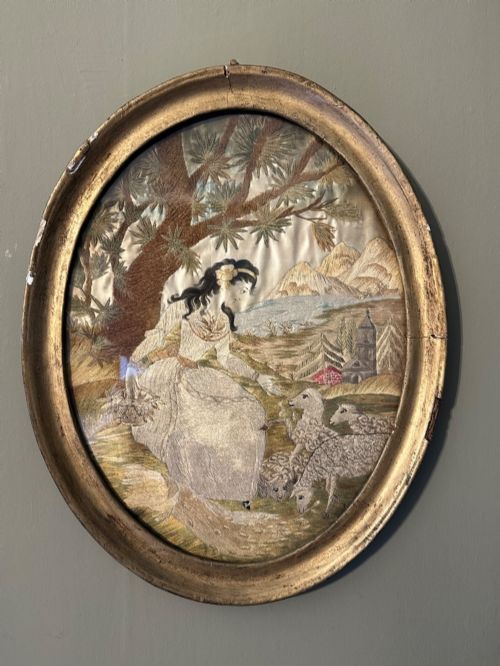


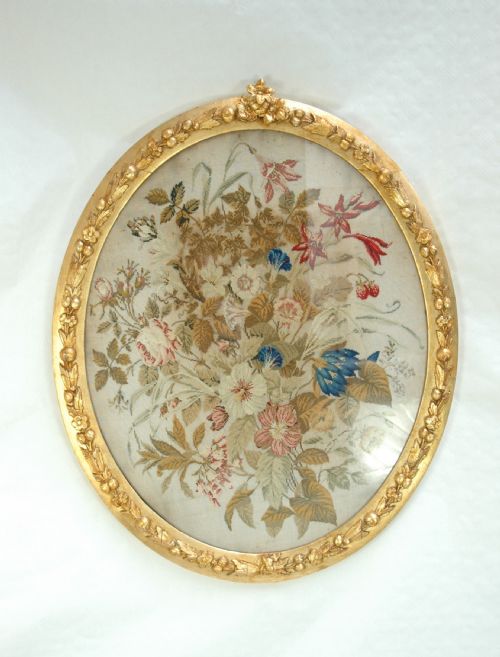


Gilt Oval Needlework Picture
A gilt oval needlework picture brings together fine textile art and classical framing, offering a striking focal point for any interior.
Gilt Oval Needlework Picture
A gilt oval needlework picture comprises textile artistry housed within an oval frame, drawing on periods such as the Georgian, Regency, and Victorian eras. These works range from detailed silk and wool embroideries to map samplers and religious subjects.
The pieces on this page appear primarily as framed wall art, utilising materials like silk thread, felt, and wool alongside watercolour elements. Most examples date from the eighteenth and nineteenth centuries, reflecting the domestic needlework traditions of those periods.
Buyers encounter various forms, including pastoral scenes with figures in gardens and architectural subjects like Abingdon. The inclusion of original water gilded frames and specialised glass enhances their period character.
How they were made
Makers combined traditional textile techniques such as silkwork, woolwork, and tapestry with painted elements like watercolour on paper or fabric. Stitches were worked meticulously by hand to build up botanical and figurative details.
Framing played a crucial role in the presentation of these works, employing carved giltwood finished with gold leaf. Specialised techniques like Verre Églomisé and mezzotint black glass were also integrated into the surrounds.
Listings span multiple centuries, including Georgian, Regency, and Victorian periods, utilising materials such as silk, wool, and gold leaf.
What varies in quality
Quality rests in the precision of the needlework and the harmonious integration of textile and watercolour elements. Finer examples display subtle shading in the silk thread and careful anatomical proportions in figurative scenes.
The enclosure matters just as much as the textile within, with original water gilded wood frames and specialised glass elevating an object above standard decorative pieces.
The Gilt Oval Needlework Picture Glossary
- Verre Églomisé
- A process of applying gold or silver leaf to glass and etching a design into the metal layer. This technique creates a reflective, decorative border often seen on antique picture frames.
- Giltwood
- Timber that has been coated with a thin layer of gold leaf or gesso and gold paint. It provides a bright, ornate finish characteristic of period frames.
- Silkwork
- Embroidery executed primarily with silk threads to achieve a smooth, lustrous surface. It allows for delicate tonal gradations in pictorial needlework.
- Sampler
- A piece of cloth featuring rows of different embroidery stitches, alphabets, or motifs. Historically used to demonstrate a maker's skill or map-making proficiency.
- Mezzotint glass
- Darkened or black glass used in framing to enhance contrast and add depth to prints and textiles. It creates a moody, atmospheric backdrop for the artwork.
Gilt Oval Needlework Picture: Frequently Asked Questions
What periods do these needlework pictures come from?
The pieces span the eighteenth and nineteenth centuries, covering Georgian, Regency, and Victorian aesthetics.
Craftsmanship and materials shifted across these decades, moving from eighteenth-century silk and religious subjects to later woolwork and felt compositions.
Are the frames original?
Many examples retain their original water gilded wood frames, which are integral to the piece.
Specialised surrounds featuring Verre Églomisé or black glass frequently accompany the needlework, preserving the historical presentation.
What materials were used in the pictures?
Makers utilised silk thread, wool, felt, and occasionally watercolour on fabric or paper.
Supports typically consist of wood and glass, housed within giltwood or decorated frames.
How should I display a needlework picture?
These works function as framed wall art, suitable for placement in living spaces and studies.
Protecting them from direct sunlight helps preserve the delicate colours of the silk and wool threads over time.