
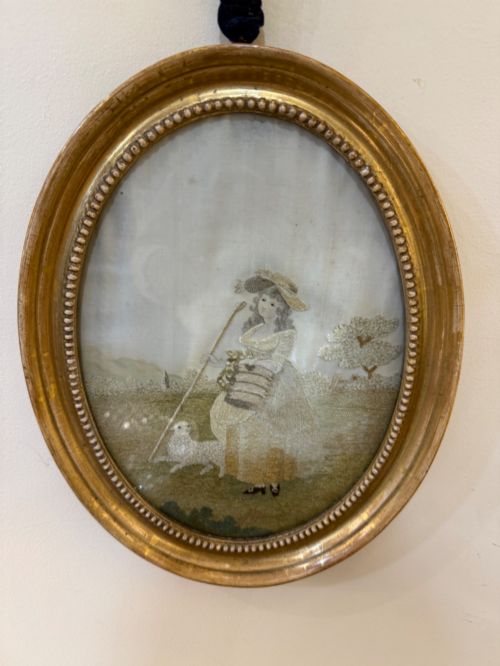
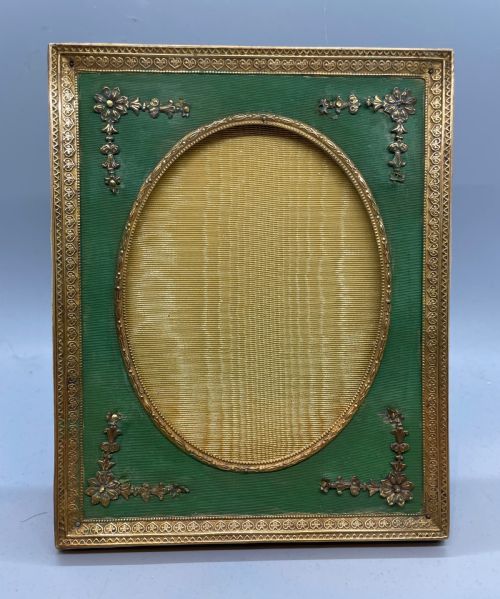
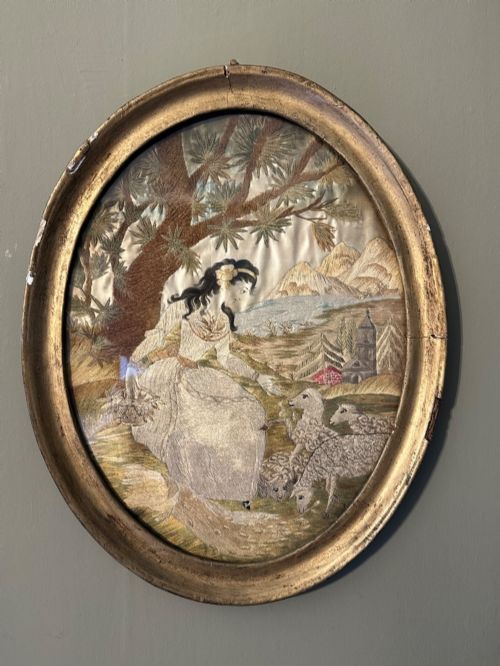


Oval Framed Silk Picture
An oval framed silk picture brings tactile texture and historic charm to a wall, offering delicate needlework preserved beneath glass.
Oval Framed Silk Picture
When you search for an oval framed silk picture, you encounter delicate textile art created across the Georgian, Regency, and Edwardian eras. These pieces combine fine silk grounds with embroidery, woolwork, or stipple engraving, presented behind glass to protect the fragile fibres.
Collectors find various forms ranging from individual depictions like an oyster seller to pairs of silk embroideries with black glass mats. The curved wooden borders define the aesthetic, framing the textile work with distinct period character.
How they were made
Protection came from fitted glass panels, often paired with mezzotint black glass borders that created a deep, polished frame around the central textile. Wood surrounds were shaped into oval profiles and finished with gold leaf, water gilding, or ormolu mounts.
One eighteenth-century needlework depicts an oyster seller, proving that historic artisans found beauty in everyday street life.
What varies in quality
The refinement of the needlework itself dictates much of the visual appeal, separating simple domestic handiwork from sophisticated pictorial compositions. Mastery of stitch direction and colour blending allows the silk threads to catch the light and render drapery or foliage convincingly.
The condition and originality of the surrounding frame also influence the piece, with water gilded wood and ormolu mounts retaining their historic character better than later replacements. Intact glass and well-preserved silk grounds without heavy fading ensure the artwork remains visually striking.
The Oval Framed Silk Picture Glossary
- Silkwork
- Embroidery executed primarily using silk threads on a fabric ground. This technique creates a smooth, lustrous surface that reflects light differently depending on the angle.
- Verre Églomisé
- A process of applying gold or metal leaf to glass and then etching a design into the metal. It frequently appears as a decorative border on historic picture frames.
- Water gilding
- A traditional framing technique using liquid gesso and Armenian bole to adhere thin gold leaf to wood. This method allows the gold to be burnished to a high gloss.
- Ormolu
- Cast brass that has been finished with a mercury-gilding process to impart a bright gold appearance. It provides ornate decorative mounts on nineteenth-century frames.
- Stipple engraving
- A printmaking method using dots of varying density to create tonal gradations rather than continuous lines. When executed on silk, it forms the basis for delicate portraiture.
Oval Framed Silk Picture: Frequently Asked Questions
How should I hang an oval framed silk picture?
Hang your piece away from direct sunlight to prevent the silk threads and watercolours from fading over time. Secure the frame using appropriate wall fixings that match the weight of the wood and glass.
Keep the textile away from damp environments such as kitchens or bathrooms to protect the organic fibres and prevent mould growth behind the glass.
How do I date a silk picture?
Examine the construction of the wooden frame, the style of the mounting, and the materials used behind the glass, such as early paper backings or hand-beaten pins. Georgian and Regency pieces often feature distinct moulding profiles and hand-carved giltwood.
The subject matter and style of the needlework or engraving also offer clues, as stipple engravings and specific costume details correspond to particular decades.
What is a mezzotint black glass mat?
A mezzotint black glass mat is a dark glass border placed around the central image to create visual depth and contrast. It frames the silk work with a glossy, reflective edge typical of Regency taste.
This technique enhances the luminosity of the textile art by drawing the eye inward toward the embroidered details.