
Gold Clasp Necklace
These gold clasp necklace pieces combine precious metal links and bead strands with secure fastenings, offering both practical wear and decorative detail.
Gold Clasp Necklace
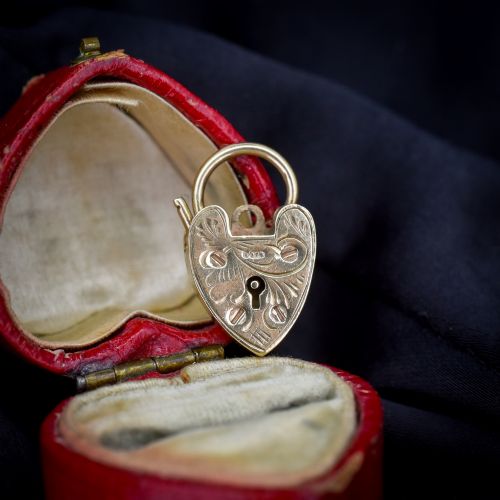
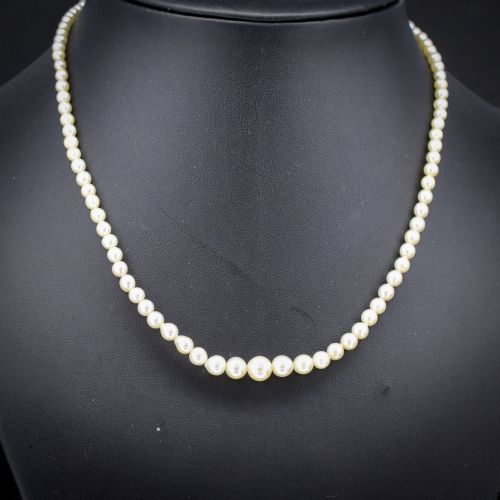
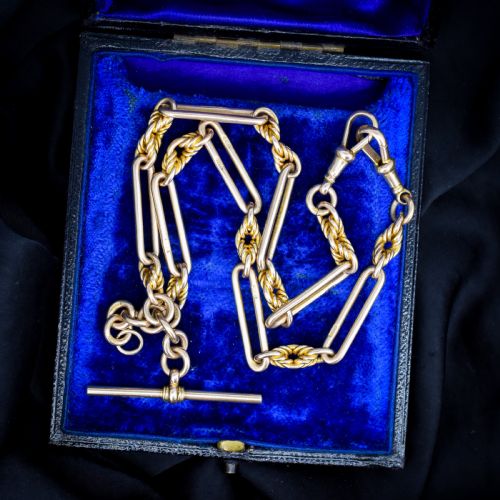
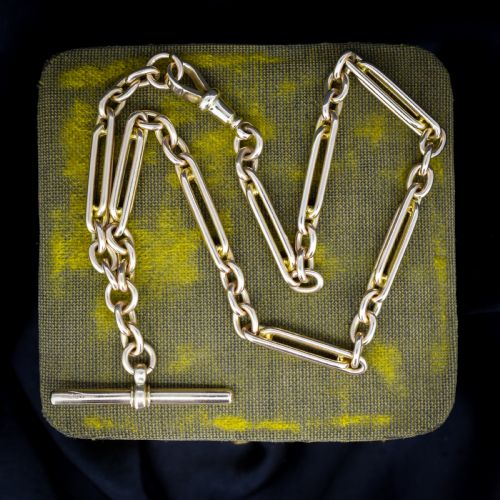
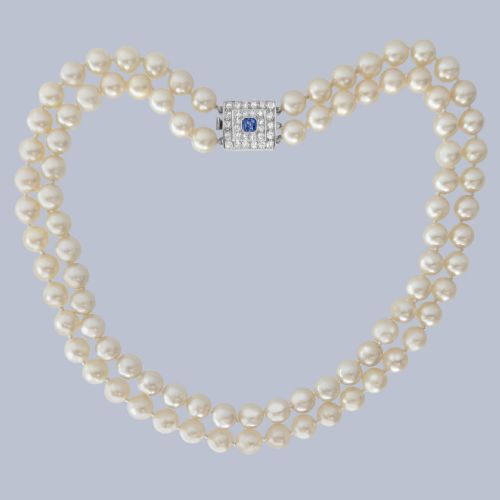
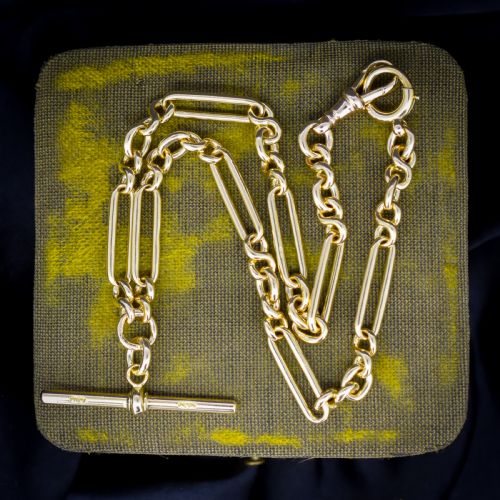
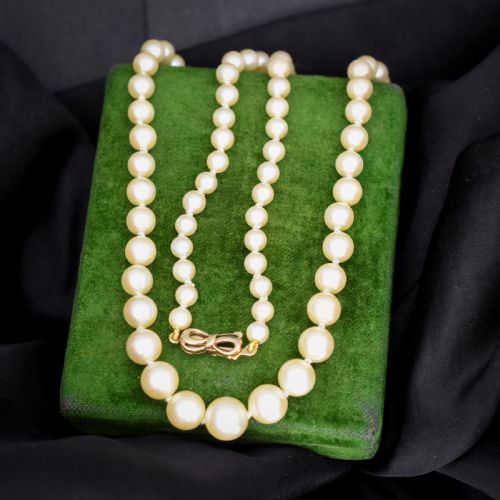
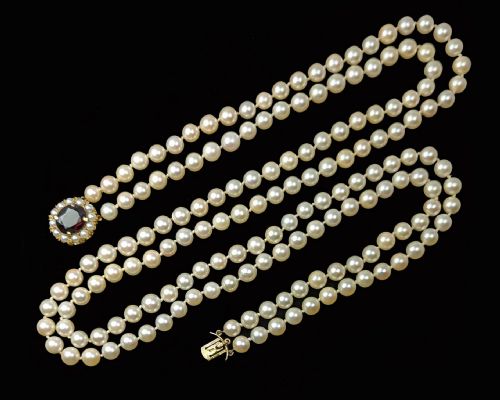
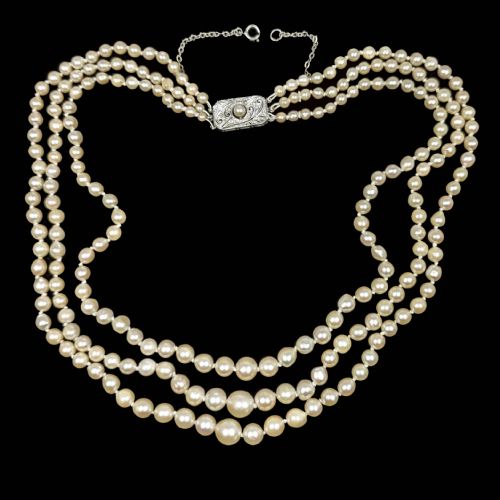
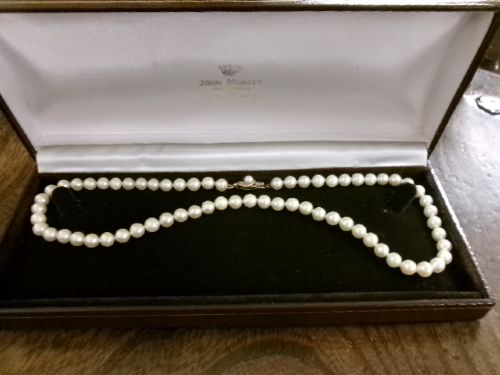
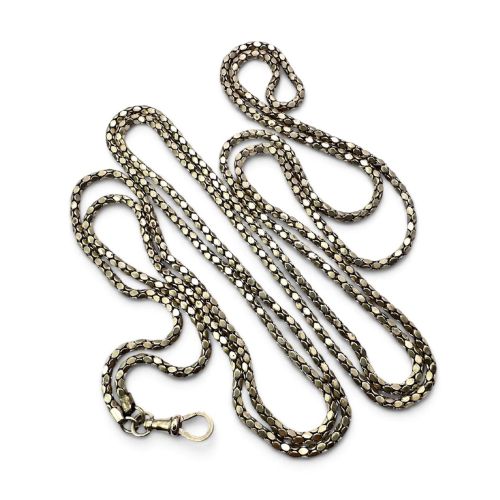
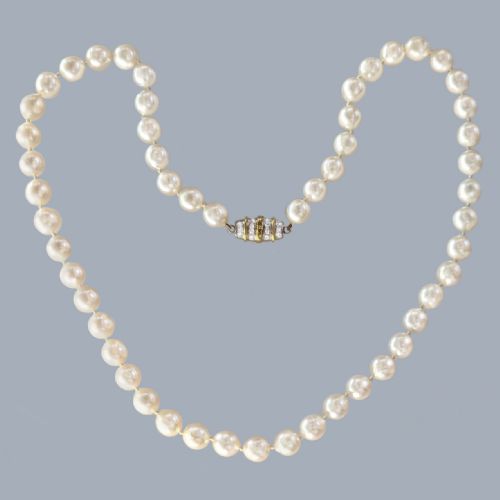
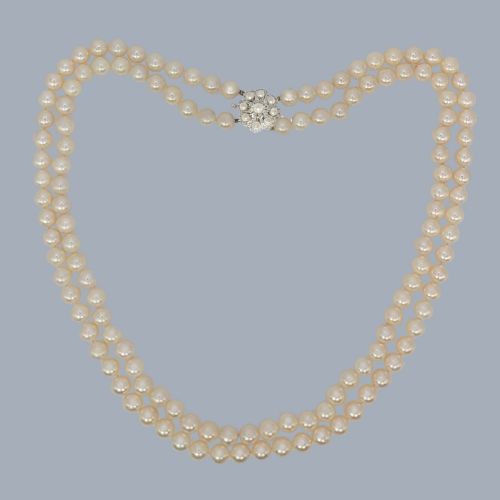
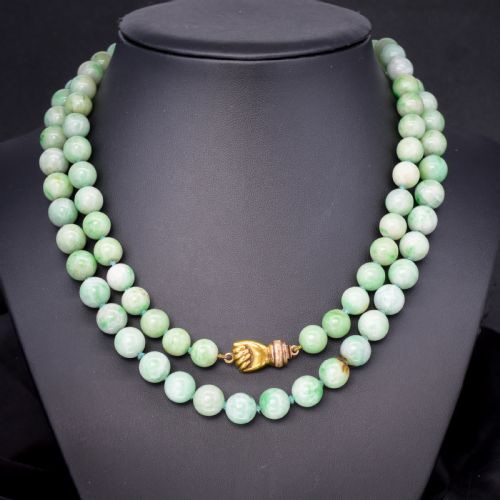
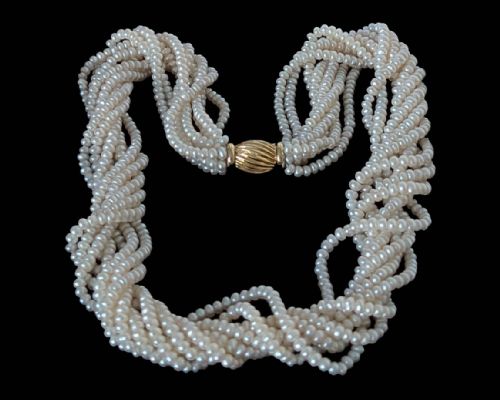
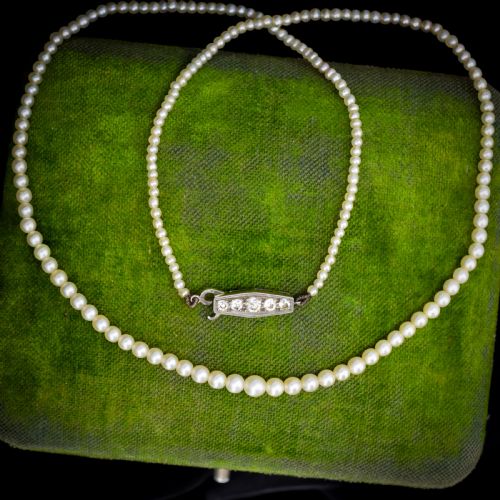
When you search for a gold clasp necklace, you encounter two distinct traditions of neckwear spanning from the Victorian era through the mid-twentieth century. The first group consists of substantial gold link chains, including watch chains, albert chains, and trombone links, where the fastener functions as an integrated structural component or dog clip. The second, more numerous category comprises single, double, or multi-strand bead necklaces finished with an ornamental gold clasp set with diamonds, sapphires, garnets, or pearls.
The selections on this page draw heavily from mid-century twentieth-century design, particularly pieces dated to the 1950s and 1960s alongside earlier Edwardian and Art Deco examples. Cultured and freshwater pearls dominate the beaded strands, paired with yellow, white, or rose gold clasps that double as decorative centrepieces. Link chains from the Victorian and Edwardian periods appear frequently, reflecting an era when practical utility chains were repurposed for everyday neckwear.
Materials and construction methods
Gold purity varies across the pieces, with 9ct and 18ct yellow and white gold forming the primary framework for both chains and clasps. Beaded strands utilise hand-knotting techniques between individual cultured pearls, seed pearls, coral, or gemstone beads to prevent friction and loss.
Clasps incorporate traditional bench-working methods, utilising box closures, swivel dog clips, and ornate floral or geometric cluster faces set with rose-cut or old-cut diamonds, rubies, and sapphires. Hallmarks stamped onto links and clasp tongues provide official records of assay office origins and dates.
Several vintage watch chains feature hallmarked links stamped individually along the entire length, proving that bureaucracy can occasionally be decorative.
Distinctions in construction and material grade
Quality separates ordinary production pieces from superior examples through the uniformity of the bead strands and the complexity of the clasp metalwork. Graded pearls matching closely in size, lustre, and surface orient indicate higher initial selection standards than uneven or heavily blemished bead runs.
Structural integrity in link chains and clasps depends on the robustness of the hinge mechanisms, the crispness of chased or engraved details, and the presence of certified gemstones. Fully hallmarked components and professional re-stringing on silk thread ensure lasting stability for daily wear.
Garrard Crown Jewellers·Cropp and Farr·Unoaerre Italy
The Gold Clasp Necklace Glossary
- Albert chain
- A short length of watch chain originally secured to a waistcoat, frequently adapted as a short necklace.
- Dog clip
- A spring-loaded swivel fastener commonly found on antique and vintage watch chains.
- Trombone link
- An elongated hollow or solid gold link alternating with smaller connecting rings, popular in nineteenth and early twentieth-century chains.
- Cultured pearl
- An organic gem formed by introducing an irritant into an oyster or mollusc under controlled conditions.
- Barrel clasp
- A cylindrical screw or push-in fastener that fastens securely within the profile of a bead necklace.
Gold Clasp Necklace: Frequently Asked Questions
How do I wear a multi-strand pearl necklace?
Multi-strand necklaces sit closely against the collarbone, making them well-suited for open necklines and formal attire.
Ensure the strands lie flat without twisting by checking the alignment of the gold clasp at the back of the neck before fastening.
Can antique watch chains be worn as necklaces?
Many antique albert chains and watch chains measure between fourteen and twenty inches, allowing them to be worn directly around the neck.
The integrated dog clips and swivel clasps attach easily to jump rings or decorative pendants.
How do I know if pearls are cultured or natural?
Gemmological certificates provided with specific pieces verify the origin of pearls through specialised testing methods.
Under magnification, cultured pearls show specific surface characteristics that distinguish them from imitation glass or plastic beads.
What is the best way to store gold clasp necklaces?
Store pearl necklaces flat in soft-lined compartments to prevent the silk threading from stretching over time.
Keep heavy gold chains separated from delicate bead strands to avoid scratching the polished metal surfaces.